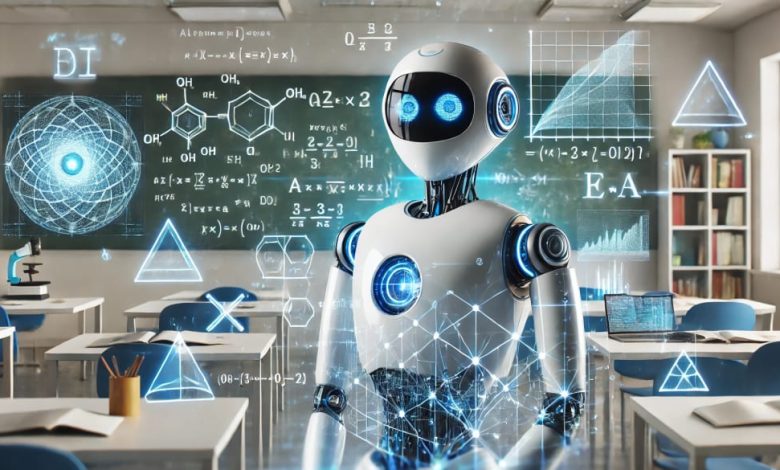
Artificial intelligence (AI) has revolutionized almost all the spheres of contemporary education. AI-based technologies are enabling teachers and learners to close the divide between education and achieve quality education wherever they are and anytime, be it in personalized tutoring or automated processes. In mathematics, which is usually viewed as a challenging area, AI has provided more than calculators, to create a new approach to comprehend and develop problem-solving skills. With the increased need to adaptively and accessibly solve mathematical problems, AI-based numbers solvers are currently taking center stage in the larger edtech innovation ecosystem, reinventing the interactions between students and numbers, logic, and reasoning.
The Evolution of AI in Mathematics Education
There has always been a strong association of mathematics education with technology. The evolution began with simple calculators, which were later enhanced by computer algebra systems that are now powered by intelligent solvers using artificial intelligence in the learning process. The earliest instruments were able to supply answers, but they did not have any contextual meaning.
The combination of natural language processing (NLP) and symbolic reasoning has allowed AI systems to be able to understand a problem written in plain language, discern intent, and provide step-by-step solutions. These new developments have transformed math tools into more active digital tutors, which have the capability of reasoning, explanation, and interaction—promoting a better understanding of mathematical logic.
How AI Math Solvers Work
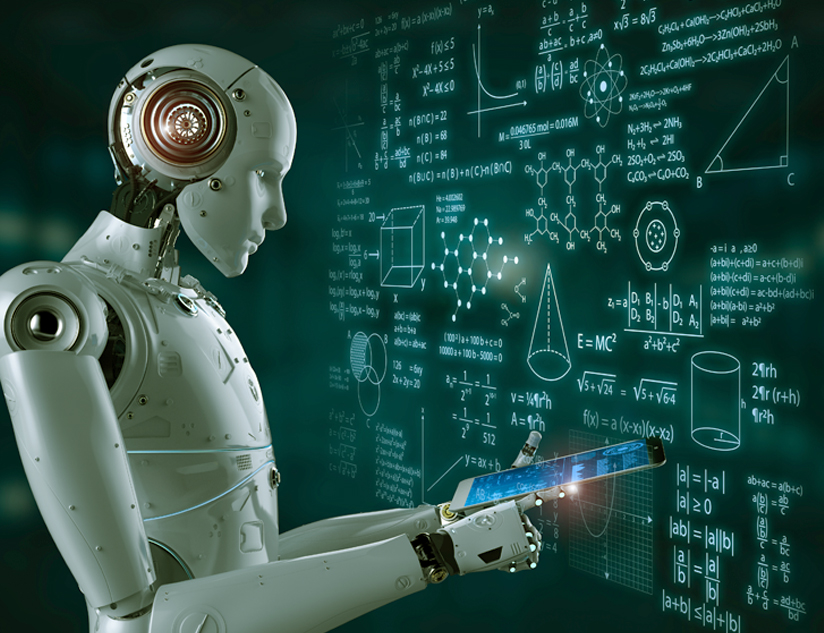
The fundamental idea of AI math solvers is to use pattern recognition, symbolic computation, and language modeling to solve problems in a way comparable to that of humans. In a user input of a math problem, the problem recognition algorithms are first used to analyze the type of equation (algebraic, geometric, statistical, or calculus-based equation). It then decomposes the issue into symbolic elements, implements suitable formulas, and generates step-by-step arguments that are a reflection of that which a teacher explained.
Modern solvers also provide real-time feedback, enabling learners to identify their errors and understand why a particular answer is correct.
Some platforms, such as Math Solve, demonstrate how AI models process and explain mathematical problems using both textual and visual representations. This approach transforms abstract concepts into interactive learning experiences, making mathematics more intuitive and engaging for digital learners.
Benefits for Students and Educators
The benefits of AI-based learning tools extend beyond mere convenience. In the case of students, these platforms provide students with an adaptable way of learning since they are able to adapt to their own pace and level of proficiency. The low-achieving learners are guided to overcome their problems, whereas the talented learners are given the opportunity to work on more complex ones.
Another major benefit is accessibility. Smartphones, tablets, and laptops can use AI math solvers, which makes them accessible to learners irrespective of their location and resources. They also assist the use of multilingual inputs, and text-to-speech capabilities, which make them important tools of inclusive education.
To teachers, these systems are electronic teaching aids. They save time on the mundane clarifications so that teachers can concentrate on conceptual teaching and tutoring students. In addition to that, they offer student progress analytics, allowing educators to adjust lesson plans to meet specific student needs and monitor learning deficiencies.
Limitations, Ethics, and Academic Integrity
AI math solvers also bring up a number of ethical and practical issues despite the mentioned advantages. The excessive use of AI-generated answers may also lead to the elimination of the ability to think critically and solve problems when all learners do is look in these tools to be suggested a shortcut. The issue of accuracy is also problematic; even highly developed AI systems fail sometimes to interpret complex word issues or unclear feeds.
Academic integrity concerns are also raised because the students can use AI to do their assignments without fully grasping the concept. Thus, learners and educators need to stress that AI is an aid, not a learning substitute. Accountability and assistance can be managed in a healthy balance by using clear use policies, digital literacy pedagogy and classroom integration planning.
The Future of AI-Assisted Learning
Looking ahead, AI math solvers are expected to integrate more seamlessly with learning management systems (LMS) and classroom environments. Future tools may combine cognitive modeling, gamification, and adaptive testing to deliver even more customized educational journeys.
The collaboration between teachers and AI will probably be core to this development. Instead of replacing the educators, AI systems will become more efficient in teaching, with repetitive tasks being automated and diagnostic feedback delivered in real-time.
Simultaneously, policymakers and schools should build regulatory frameworks to solve data privacy, reduction of bias and fair access to digital learning technology. By making AI a force of empowerment rather than a dividing force in education, responsible innovation will see it through.
Conclusion
AI-powered math solvers are reshaping how students and educators approach mathematical learning in the digital age. They integrate automation with raising and making learning more interactive, inclusive, and effective. Nevertheless, the future of AI in education lies in the responsible use of the technology, that is, in making sure that technology will not substitute human knowledge. With the further development of digital learning, the key to all this is to utilize AI to facilitate creativity, curiosity and critical thinking in each learner.