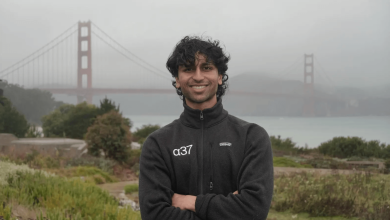
In this interview for AI Journal, Anuj Arora reflects on more than two decades of shaping digital ecosystems across global retail and financial environments, offering a clear view of how artificial intelligence is transforming the industry at every layer. Arora describes a decisive shift from reactive operations to predictive intelligence that interprets customer intent, anticipates demand, strengthens security, and quietly powers the interconnected systems that keep retail functioning.
He also explains how real-time analytics now guide day-to-day decision making, how AI-enabled supply chain intelligence reduces delays and improves accuracy, and how modern fraud detection relies on behavioral insight rather than static rules. With a background spanning enterprise architecture, cybersecurity research, and large-scale modernization across Fortune 500 environments, Arora outlines what it takes for organizations to move beyond isolated experiments and build AI into the core of long-term strategy. His perspective frames the next era of retail as one defined by intelligent infrastructure, secure digital foundations, and responsive ecosystems built to meet rising global expectations.
You have spent more than two decades shaping digital ecosystems for global retail and financial environments. How do you see AI transforming the retail experience from the inside out, both for customers and for the organizations that support them?
Looking back over the last twenty years, the biggest shift I’ve seen is that AI has shifting retail from being reactive to being genuinely predictive. On the customer side, it helps understand intent at a much deeper level
- What people are looking for.
- What they might want next.
- How to make the experience feel more natural.
- What is the regional community trend?
- Inventory predictions.
Personalization is a valuable aspect for a better customer experience.
But the real transformation is happening behind the scenes. Retailers are using AI to manage operations in ways that just weren’t possible before. It streamlines inventory decisions, highlights issues before they become problems, and gives teams the ability to respond to customer needs almost instantly. So, it’s improving the front-end experience, but it’s also rebuilding the entire engine underneath that can sense what’s happening across the business in real time. Inventory, supply chain, fraud, customer behavior… everything is connected.
Your work spans cloud strategy, enterprise architecture, and AI-enabled modernization. How are retailers using real time analytics to make smarter business decisions and deliver more responsive customer experiences?
Real-time analytics is becoming the backbone of how retailers run their day-to-day operations. Instead of relying on reports that come in hours or days later, teams now see what’s happening as it happens.
That means you can understand buying trends live, adjust promotions immediately, identify when a product is starting to spike, or fix the customer journey before it leads to abandonment. When you combine this with AI models that can interpret those signals, retailers can shift from making decisions looking in the rear-view mirror to making decisions with a real-time dashboard of the business.
You have led major efforts in security and resilience engineering. As AI becomes more embedded in retail operations, what are the most important steps retailers must take to keep customer data secure and maintain trust?
Security becomes even more critical as AI enters more parts of the retail ecosystem. The first step is really about mindset: treat every interaction, every API, every dataset as something that needs to be verified, protected, and observed.
Retailers must put consistent, strong governance around AI models — where the data comes from, how it’s used, who can access it. And equally important is using AI to enhance security itself. Modern threats move too quickly for manual processes, so retailers need automated monitoring, anomaly detection, and real-time alerts.
Ultimately, customer trust is tied to how seriously we take security. Without that trust, even the best AI doesn’t matter.
Retail supply chains are becoming increasingly complex. How can AI powered intelligence help retailers reduce delays, forecast demand more accurately, and build more adaptive global operations?
Supply chains today are extremely complex, and even small disruptions can ripple across the world. What AI does really well is make sense of patterns and signals that humans just don’t have the bandwidth to process.
It can identify shifts in demand earlier, optimize where inventory should be placed, and predict potential delays in shipping routes or fulfillment centers. Over time, these systems become more accurate, allowing supply chains to adjust automatically instead of waiting for someone to intervene.
In many ways, AI is helping build a supply chain that’s more resilient, more predictable, and a lot less dependent on guesswork.
Fraud prevention is a growing challenge across retail. From your background in cybersecurity and threat detection, how do AI systems change the way retailers identify and mitigate fraud in real time?
Fraud has become incredibly sophisticated, and manual or rule-based systems simply can’t keep up anymore. AI approaches fraud by looking at behavior — small signals in transactions, devices, or user actions that wouldn’t stand out individually but form a pattern.
It helps retailers distinguish between genuine customers and malicious activity with much better accuracy. It also reduces friction for real customers, which is just as important. Instead of blocking legitimate users, AI helps keep their journeys smooth while stopping the bad actors in the background.
It’s one of the areas where AI delivers a very direct and measurable impact.
You often speak about intelligent, future ready digital ecosystems. What does an AI driven customer journey look like when personalization, automation, and secure infrastructure all work together?
For me, an AI-driven journey is one where the customer doesn’t have to work hard. Everything just feels intuitive. The search understands context, recommendations feel relevant, checkout feels simpler, and support is available instantly — without feeling intrusive.
And behind the scenes, automation ensures the right product is available, the right security checks are happening, and the right decisions are being made without slowing anyone down.
When you combine personalization, automation, and strong infrastructure, the experience feels seamless — and that’s what customers expect now.
Your career includes hands on engineering, enterprise architecture, and strategic advisory roles. How can retail leaders bridge the gap between experimentation with AI and building long term, scalable transformation across the business?
A lot of organizations start with AI pilots, maybe a small recommendation model or a chatbot, all those efforts are useful. But real transformation happens when AI is treated as a core capability, not a side project.
Leaders need a strong foundation: clean data, secure cloud environments, clear governance, and teams that understand how to collaborate across technology and business. And more importantly, they need to tie AI to real business outcomes—speed, accuracy, revenue, customer satisfaction.
When those pieces are in place, scaling AI becomes much more natural. It stops being an experiment and becomes part of how the company operates.
Looking ahead, what breakthrough AI capabilities do you believe will shape the next era of retail, and how should global organizations prepare for the shift?
We’re going to see big leaps in the next few years. Generative AI will completely reshape search, content creation, and product discovery. Supply chains will see more autonomous adjustments. Security will rely more heavily on AI to counter AI-driven threats.
Another major shift will be in how internal teams work. Merchandising, customer support, marketing — AI will enhance productivity across all of them, not replace them. Organizations that prepare now by investing in architecture, governance, and skills will be the ones leading the industry when these capabilities become mainstream.
AI is moving from being a tool to being the foundation of how modern retail operates.