
AI is no longer just assisting work – it’s replacing it. In 2026, repetitive, manual tasks across every business function are being automated entirely. From data entry and document handling to customer interactions and internal workflows, processes that once required constant human input are now handled faster, more consistently, and at scale by AI systems.
What’s driving this shift isn’t a single breakthrough, but the combination of more capable models, reliable automation, and tools built for specific workflows. As a result, businesses are no longer just optimizing manual work, they’re removing it altogether.
Data and Back-Office Operations: Eliminating Manual Processing
Back-office teams have spent decades doing the same thing: receiving documents, reading them, extracting information, and entering it into another system. It’s slow, error-prone at scale, and consumes skilled people’s time on work that adds no analytical value.
AI document processing removes that loop entirely. Modern tools ingest unstructured documents, invoices, receipts, purchase orders, contracts, HR forms and convert them into structured, usable data without a human touching them. The AI reads the document, identifies the relevant fields, validates the output, and routes it to the right system.
In finance, this means invoice processing that used to take a team days can run overnight. In HR, onboarding document intake that requires manual review gets handled automatically, with exceptions flagged for human attention rather than every record passing through a person’s hands. The accuracy argument, once the main objection, has largely been settled. Well-trained document AI now matches careful human review on standard document types, and outperforms it on volume and consistency. The remaining human role shifts from processing to exception handling, which is a better use of that time anyway.
Operations teams processing purchase orders and supply chain documentation see similar results. When the input format is consistent enough for AI to learn, manual entry becomes optional. Most back-office document workflows clear that bar.
Complex Workflows and Regulated Environments
Regulated industries don’t just deal with documents, they deal with documents that have to be right, submitted correctly, and compliant with requirements that change. Government contracting is one of the clearest examples of how much manual work that creates.
A single government bid can require hours of research across multiple portals, careful review of solicitation requirements, compliance verification, and a proposal tailored to specific evaluation criteria. Multiply that across dozens of active opportunities and a small contracting team hits a ceiling fast.
Government contracting AI tools handle the research and drafting load that eats that time. They monitor opportunity pipelines, parse solicitation documents, flag compliance requirements, and generate draft responses built around the specific terms of each bid cutting prep time significantly without cutting corners on accuracy.
The same pattern applies across procurement workflows and compliance-heavy industries more broadly. When the rules are codified and the documents are structured, AI can navigate them faster than humans and with a lower error rate. The human role becomes review and sign-off rather than research and drafting from scratch.
For regulated industries, this matters beyond efficiency. Missed requirements and submission errors have real consequences, lost contracts, compliance failures, delayed approvals. AI that tracks requirements systematically reduces that risk alongside the time cost.
Customer Operations and Service Automation
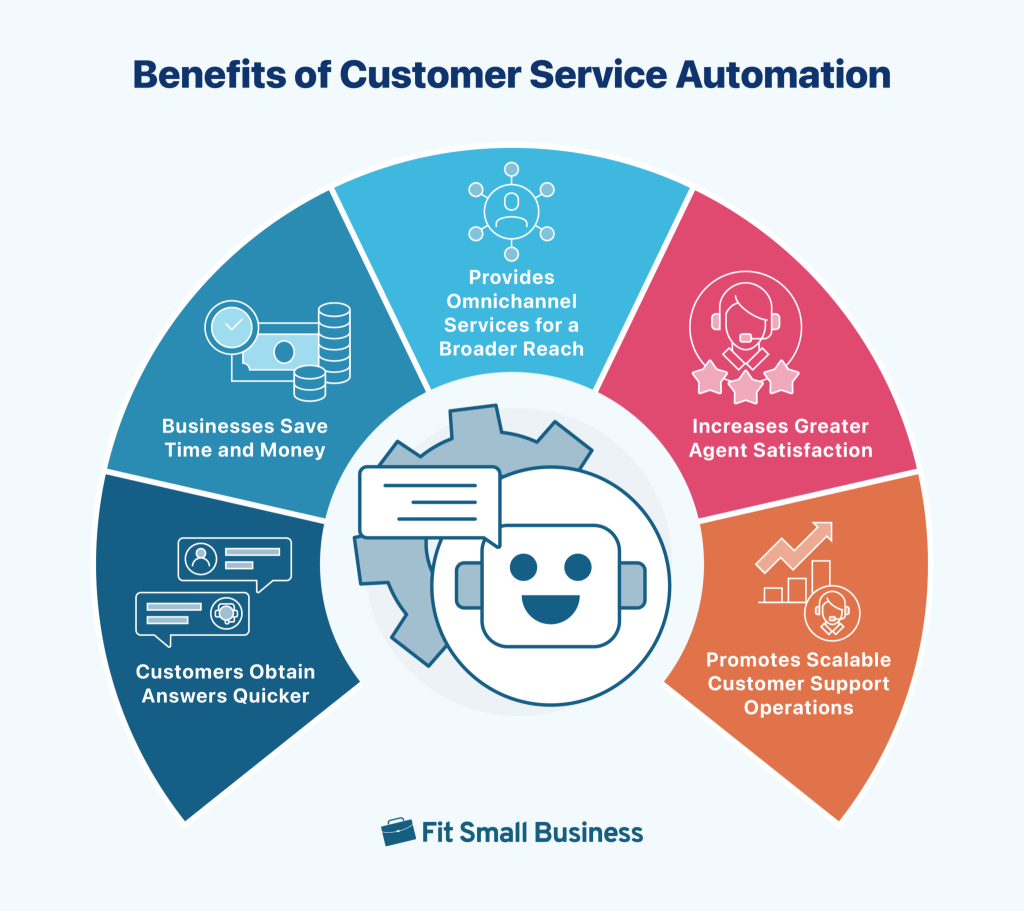
Every business that takes inbound calls has the same problem. A meaningful portion of those calls are simple, predictable, and entirely handleable without a human, but they still require one. Someone has to answer, gather information, confirm details, and complete the request. At volume, that staffing cost adds up fast.
Voice AI is now handling that category of interaction end-to-end. The technology has matured enough to manage natural conversation, handle variations in how people phrase requests, and complete transactions without escalation. In industries like hospitality, AI replaces manual order-taking during peak hours capturing orders accurately, handling modifications, and confirming back to the customer, all without wait times or staffing constraints.
The same logic applies to retail and service businesses managing appointment bookings and customer inquiries. When the interaction follows a predictable structure, voice AI handles it consistently. The calls that genuinely need a human. complaints, complex requests, exceptions – get routed to one. The rest resolve automatically.
Beyond phones, customer operations automation extends to chat, email triage, and support ticket classification. The common thread is that AI handles the volume while humans handle the judgment calls. For businesses running lean support teams, that division makes the difference between manageable and overwhelmed.
The 24/7 availability argument matters too, particularly in food service and hospitality. A restaurant not answering calls during a dinner rush loses orders. An AI phone ordering system that answers every call regardless of how busy the kitchen is doesn’t have that problem.
Marketing and Content Execution Layers
AI has made content generation dramatically faster. Copy drafts, social captions, email sequences, and variations tasks that used to take hours now take minutes with the right prompts and tools. But generating content is only half the workflow. Getting it out consistently, across multiple channels, still requires coordination and execution
That’s where dedicated platforms remain essential. Social media management tools like Hootsuite, Buffer, and Ordinal handle scheduling, publishing, cross-platform distribution, and team workflows. While they increasingly incorporate AI for content suggestions and optimization, their core value is operational ensuring content is delivered reliably, at scale, and on schedule.
The practical marketing workflow in 2026 reflects this split. AI accelerates content creation and iteration, humans review and guide strategy, and execution platforms manage distribution across channels. Each layer supports a different part of the process, and removing one creates friction elsewhere.
Where AI is genuinely eliminating manual work in marketing is in the research and iteration phases, A/B test analysis, performance reporting, audience segmentation, and trend monitoring. The creative and strategic judgment still sits with humans, while the data processing and pattern recognition that informs those decisions increasingly does not.
Internal Operations and Support Systems
IT support teams field the same categories of requests repeatedly. Password resets, software access, system errors, onboarding setup, the tickets are different but the workflows behind them are often identical. Routing them to the right person, gathering the right information, and tracking resolution status manually creates overhead that compounds across a large organization.
AI ITSM tools handle triage, classification, and routing automatically. They integrate with platforms like Slack and Jira to intercept requests where employees already make them, resolve the straightforward ones without creating a ticket at all, and escalate the complex ones with context already gathered.
The efficiency gain isn’t just speed, it’s load distribution. When AI handles tier-one requests autonomously, human support staff spend their time on problems that actually require their expertise. Response times improve across the board because the queue filling with simple requests disappears.
For operations teams managing internal workflows beyond IT, facilities requests, procurement approvals, cross-department coordination the same principle holds. Structured, repeatable requests route and resolve faster when AI handles the intake and classification layer.
End-to-End Task Execution: The Rise of AI Agents
The newest category of AI automation isn’t about processing a document or answering a call. It’s about completing multi-step tasks across systems the kind of work that previously required a human to sit at a computer, navigate between tools, and execute a sequence of actions.
AI browser automation tools do exactly that. They operate web browsers the way a human would navigating pages, filling forms, extracting data, clicking through workflows, but without the manual input. Tasks like pulling competitor pricing, submitting web-based applications, or scraping structured data from portals run automatically on a defined schedule.
For development and operations teams, this closes a gap that API integrations couldn’t. Not every system has an API. Not every workflow can be scripted cleanly. Browser automation handles the messy middle the web-based tools and portals that require a human interface but don’t actually need a human making decisions.
As AI agents become more capable of reasoning through multi-step sequences, this category will expand significantly. The current version automates defined, repeatable browser workflows. The direction of travel is toward agents that handle entire task chains with minimal setup executing work across systems the same way a skilled operator would, but continuously and at scale.
What This Means for How Businesses Operate
The businesses getting the most from AI in 2026 aren’t the ones that automated everything at once. Many teams are also starting to organize this work inside structured environments like a Claude Project, where context, documents, and workflows live in one place rather than being recreated from scratch each time. They’re the ones that identified where manual work was consuming disproportionate time on tasks that didn’t require human judgment, and started there.
The pattern across every function covered here is the same: AI takes the repeatable, structured, rule-following work. Humans keep the strategy, the exceptions, the relationships, and the decisions that require context AI doesn’t have. That division isn’t a consolation prize, it’s a better use of skilled people’s time than the alternative.
The remaining question for most organizations isn’t whether AI can handle a given category of manual work. At this point, for most structured tasks, it can. The question is whether the implementation is built carefully enough to trust the output. That’s where human oversight still matters most not in doing the work, but in setting up the systems that do it well.

Maria Mazur is the founder of Mazurly, a platform helping digital nomads build sustainable remote businesses. With a background in marketing and years of remote work, she helps creators build businesses that actually work from anywhere.