You might think artificial intelligence is something that exists in the distant future or only in tech companies’ research labs. But the reality is far different: AI has already woven itself into the fabric of your daily routine, quietly saving you hours each week in ways you probably haven’t noticed.
From the moment you check your email to the way you shop online, AI-powered tools are working behind the scenes to streamline tasks that once consumed significant chunks of your day. Business leaders across various industries are witnessing this transformation firsthand, both in their companies and their personal lives.
The Invisible Assistant in Your Inbox
“Most people don’t realize that their email provider is using AI to filter spam, categorize messages, and even suggest quick replies,” says Kevin Shahnazari, founder and CEO of FinlyWealth. “What used to require manual sorting and deletion now happens automatically, saving the average professional 30 minutes to an hour every single day.”
These smart filters have become so sophisticated that they can distinguish between important client communications and promotional emails with remarkable accuracy. The AI learns from your behavior—which emails you open, which you delete, which you respond to—and continuously refines its understanding of what matters to you.
Legal Work Without the Legal Wait
In the legal sector, AI is transforming processes that traditionally required hours of manual labor. Harrison Jordan, founder and managing lawyer of Substance Law, has seen AI dramatically reduce the time spent on routine legal tasks.
“Document review, contract analysis, and legal research that once took junior associates days to complete can now be done in hours with AI assistance,” Jordan explains. “This doesn’t replace lawyers; it frees us up to focus on strategy and client relationships rather than getting buried in paperwork.”
The technology can scan thousands of pages of legal documents, identify relevant clauses, flag potential issues, and even suggest language based on precedent—all in one platform. At the same time, lawyers focus on the nuanced judgment calls that truly require human expertise.
Real Estate Gets Real-Time Intelligence
The real estate industry has embraced AI to handle time-consuming tasks that once required constant human attention. Mike Aziz, co-owner of M1 Home Buyers, points to how AI has revolutionized property valuation and market analysis.
“We used to spend hours analyzing comparable sales, neighborhood trends, and market conditions for each property,” Aziz notes. “Now AI tools can aggregate and analyze all that data in minutes, giving us accurate valuations and market insights almost instantly.”
Dan Mogolesko, Owner of JD Buys Homes, adds that AI-powered chatbots and automated communication systems have transformed customer service in real estate. “Potential sellers can get answers to basic questions 24/7 without waiting for business hours. The AI handles initial inquiries, schedules appointments, and even pre-qualifies leads, so we’re only spending time on serious prospects.”
Shopping Smarter, Not Harder
E-commerce has seen some of the most consumer-facing AI applications. Rafael Sarim Oezdemir, Head of Growth at EZContacts, emphasizes how AI has made online shopping more efficient for consumers.
“Product recommendation engines powered by AI save customers countless hours of browsing,” Oezdemir explains. “Instead of scrolling through thousands of options, shoppers see personalized suggestions based on their preferences, past purchases, and browsing behavior. What might have taken 45 minutes of searching now takes five minutes.”
AI also powers virtual try-on features, size-prediction algorithms, and customer-service chatbots that answer product questions instantly, all designed to reduce time and friction in the shopping experience.
The Compound Effect of Small Time Savings
While each AI application might save you only a few minutes here and there, the cumulative effect is substantial. Consider how AI touches various aspects of your day:
Morning: Your smartphone’s AI alarm learns your sleep patterns and wakes you at the optimal time in your sleep cycle. Your news app curates articles based on your interests, saving you from sifting through irrelevant stories.
Commute: AI-powered navigation apps analyze real-time traffic data and suggest the fastest route, potentially saving 15-20 minutes each way.
Work: Email prioritization, calendar optimization, automated data entry, and smart document formatting all reduce administrative workload.
Shopping: AI handles everything from grocery list suggestions based on your habits to finding the best prices across multiple retailers.
Entertainment: Recommendation algorithms on streaming platforms save you from the dreaded “scroll paralysis,” quickly surfacing content you’re likely to enjoy.
Finance: AI monitors your accounts for fraudulent activity, categorizes expenses automatically, and can even suggest budget optimizations.
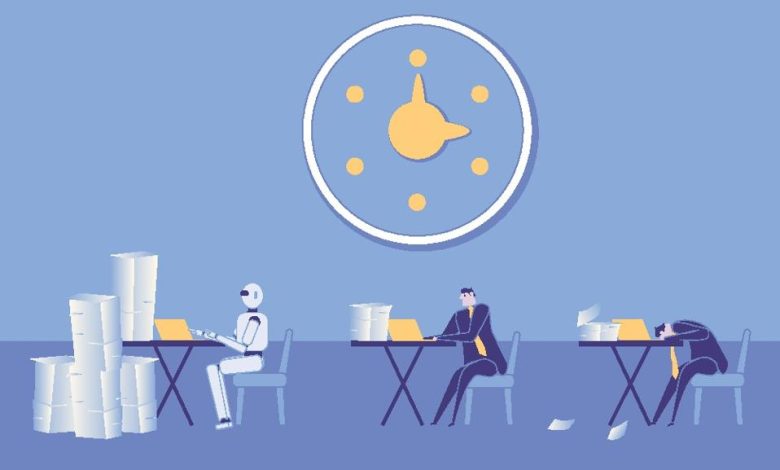
When you add it all up, most professionals save 5-10 hours per week thanks to AI automation, time that can be redirected toward high-value activities, strategic thinking, or simply achieving a better work-life balance.
The Quiet Revolution
What makes AI’s impact so remarkable is how seamlessly it has integrated into existing workflows. You don’t need to be a tech expert or work in Silicon Valley to benefit from AI. It’s already embedded in the tools you use every day: your email client, your GPS, your banking app, your favorite shopping sites.
“The best technology is the kind you don’t have to think about,” Shahnazari reflects. “AI has reached that point for many applications. It just works, making your life easier without requiring you to change your behavior or learn new skills.”
Looking Ahead
As AI continues to evolve, its time-saving capabilities will only expand. We’re moving toward a future where AI handles increasingly complex tasks, scheduling entire meetings by negotiating with other AI assistants, generating first drafts of reports, managing supply chain logistics, and providing real-time language translation.
But you don’t need to wait for the future to experience the benefits. AI is already your silent productivity partner, working tirelessly in the background to give you back the most valuable resource you have: time.
The question isn’t whether AI is saving you time; it’s how you’ll use the hours it’s already given back to you.