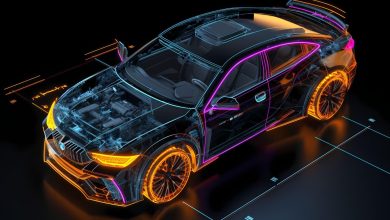
Introduction: AI Is Reshaping Data Center Infrastructure
Artificial intelligence is no longer confined to software algorithms or cloud-based applications. Behind every large language model, real-time inference engine, and AI-powered service lies a massive physical infrastructure designed to move enormous volumes of data at extreme speed. As AI workloads continue to grow in scale and complexity, data centers are undergoing a fundamental transformation.
Unlike traditional enterprise or cloud environments, AI-driven data centers are built around dense clusters of GPUs and accelerators that must exchange data continuously. This shift places unprecedented pressure on network bandwidth, latency, and scalability. As a result, fiber connectivity has become a critical bottleneck—and a key area of innovation. High-density fiber architectures are now essential to support the performance demands of modern AI computing.
The Rise of AI Workloads and Explosive East-West Traffic
AI workloads generate data traffic patterns that differ dramatically from conventional IT systems. Training and inference processes rely on large GPU clusters that communicate intensively with each other, creating massive east-west traffic within the data center. This internal traffic often far exceeds the traditional north-south flows associated with client-server architectures.
As model sizes grow and parallel processing becomes the norm, data synchronization between compute nodes must occur at extremely low latency. Even small inefficiencies in network design can significantly impact training time, operational cost, and overall system performance. This reality is pushing data center operators to rethink how their physical networks are designed, especially at the fiber layer.
Why Traditional Duplex Cabling Struggles in AI Environments
For years, duplex fiber cabling using LC connectors has served data centers well. However, AI environments expose the limitations of this approach. As speeds increase from 100G to 400G and beyond, relying on large numbers of individual duplex connections quickly becomes impractical.
The challenges include cable congestion, limited rack space, increased installation complexity, and higher risk of errors during deployment or maintenance. Managing hundreds or thousands of duplex links also drives up operational costs and reduces flexibility when scaling infrastructure. In AI-focused facilities where density and scalability are paramount, traditional cabling methods struggle to keep pace.
Parallel Optics and the Shift Toward High-Density Fiber Architecture
To overcome these limitations, data centers are increasingly adopting parallel optics and high-density fiber architectures. Instead of pushing higher speeds through a single fiber pair, parallel transmission spreads data across multiple fibers simultaneously. This approach improves scalability while simplifying cable management.
As data center architectures evolve, MPO connectors have become a practical solution for handling parallel optical transmission, allowing multiple fibers to be managed through a single interface without adding operational complexity. By consolidating many fiber connections into one connector, parallel optics reduce physical clutter while supporting high-speed transmission standards.
This architectural shift has become a cornerstone of modern AI data center design, allowing operators to deploy scalable, future-ready networks without overwhelming physical infrastructure.
MPO Connectors as a Foundation of AI Data Center Networks
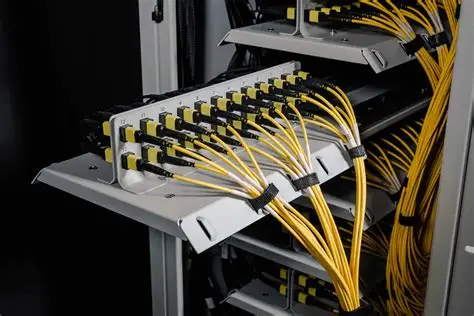
MPO connectors play a critical role in enabling high-density fiber connectivity for AI data centers. Their multi-fiber design supports efficient trunk and breakout configurations, which are commonly used in spine-leaf architectures and GPU interconnect networks. As data rates increase, MPO-based solutions allow for smoother transitions between 100G, 400G, and emerging 800G systems.
Beyond density, MPO connectivity improves deployment efficiency and long-term flexibility. Pre-terminated MPO assemblies reduce installation time and minimize the risk of errors during large-scale deployments. For AI data centers where uptime and performance are non-negotiable, these advantages are especially valuable.
As AI computing continues to evolve, MPO connectors are no longer optional components—they form the physical backbone that enables scalable, high-performance optical networks.
Selecting Reliable Fiber Connectivity Solutions for AI Infrastructure
The performance of an AI data center depends not only on architecture but also on the quality of its components. High-density fiber connectivity requires precise manufacturing, consistent performance, and strict quality control. Even small variations in connector alignment or material quality can impact signal integrity at high speeds.
For large-scale AI deployments, many operators prefer to work with established fiber connectivity manufaturers that have long-term experience in high-density data center applications. Proven manufacturing processes, rigorous testing standards, and deep understanding of data center requirements are essential when building infrastructure designed to support AI workloads.
Conclusion: Fiber Connectivity Is the Physical Backbone of AI
AI is often discussed in terms of algorithms, models, and software platforms, but its success ultimately depends on physical infrastructure. High-density fiber connectivity enables the bandwidth, low latency, and scalability required by modern AI data centers. As demand for AI computing continues to grow, fiber architecture will remain a decisive factor in data center performance.
By adopting parallel optics and high-density solutions such as MPO connectivity, data centers can build networks that are not only capable of meeting today’s demands but also prepared for the future of AI-driven computing.