In 2025, a team of researchers followed 62 people recovering from opioid addiction and asked each of them to answer short questions on their phone a few times a day. Just quick check-ins about stress, mood, cravings, and what was going on around them.
It added up to more than 14,000 tiny snapshots of daily life. On their own, the answers looked completely ordinary. A rough morning here. A stressful evening there. Nothing a clinic would ever flag.
Then they handed all of it to an artificial intelligence system, and the AI predicted who was likely to use it again the very next day, with stunning accuracy. The warning had been sitting inside those everyday answers the whole time. It just took a machine to read thousands of them together and catch the pattern as it formed.
This is the problem recovery has always had. The signs are there, but they slip by. When someone relapses, gets re-injured in rehab, or slides back into a mental health crisis, it rarely comes out of nowhere. The signals show up days earlier. We just never had a way to read them as they happened.
But that’s changing. For the first time, AI and predictive health data can read those early signals as they form, catching the quiet patterns we always missed and stepping in long before they turn into a full setback.
A Program That Studies You Before It Treats You
For decades, two people could walk into the same clinic with the same diagnosis and walk out with the same plan, even if their bodies, histories, and triggers had almost nothing in common. Recovery was built like a single recipe meant to feed everyone, and it quietly failed the people who did not match the average.
AI is rewriting that opening move. Instead of starting from a generic template, machine learning can study a person’s medical records, genetics, and lifestyle patterns and match them to the recovery paths that actually worked for people like them. One analysis found these systems can flag risk indicators weeks ahead of traditional assessments, simply by reading the patterns a busy clinician never has time to connect. The plan is shaped around the individual from day one, not adjusted after something goes wrong.
The market is moving in the same direction. The behavioral health software and services sector was valued at roughly $4.66 dollars in 2025 and is projected to keep growing at double digits through the end of the decade, much of it driven by this push toward data-driven, individualized care.
Kallum Mitterer, CEO at Nutravea, sees this as part of a deeper change in what people now expect from their health. He mentions, “People have figured out their body is not average. They do not want to hear what should work for the typical person. They want to know how they respond, in real numbers, and they want proof. That expectation is finally reaching recovery, and it is long overdue.”
AI-Adaptive Interventions for Nervous System Recovery
A significant share of chronic illness, from cardiovascular disease and insulin resistance to anxiety and chronic pain, is downstream of a nervous system stuck in sympathetic dominance. Cortisol elevation, poor heart rate variability, disrupted sleep, and impaired vagal tone are not just wellness buzzwords. They are measurable biological pathways with decades of research behind them, and they have become legitimate clinical targets in their own right. The challenge for personalized recovery has always been matching the right intervention, breathwork, sound therapy, movement, meditation, biofeedback, to the right person at the right moment in their day.
This is where AI’s real-time pattern recognition is starting to change the field. Wearables now stream HRV, respiratory rate, skin temperature, and stress proxies continuously. AI models can detect when a person is shifting into sympathetic activation and trigger an intervention before the stress response fully takes hold. Closed-loop systems that adapt the intensity, duration, and modality of recovery practices based on real-time biometrics are no longer theoretical. They are being deployed in consumer wearables, clinical biofeedback platforms, and emerging sound and frequency-based therapies.
The science underneath this is honest about its current limits. Mindfulness and HRV biofeedback have a strong evidence base. Sound therapy, breathwork variations, and other adaptive modalities have promising but earlier-stage research. The role of AI is to take the best-supported tools and make them maximally effective for the individual user, rather than running everyone through the same generic protocol.
Muhammad Talha from Pure Frequencies, works at the intersection of physiological data and nervous system recovery. “A huge amount of chronic illness lives in a nervous system stuck in overdrive, and the body responds to physical signals more reliably than it does to advice,” he says. “What AI is starting to make possible is matching the right signal, sound, frequency, breath pattern, to the exact state a person is in, in real time. A protocol that helps a calm person fall asleep is not the same protocol that helps a panicking person come down. The personalization layer is what turns these tools from generic wellness into something that actually moves the needle.”
The practical implication for personalized recovery is that the most effective interventions of the next decade will not just be matched to a person’s diagnosis. They will be matched to their nervous system state at the moment the intervention is delivered. That level of precision was impossible before continuous biometric data and AI could close the loop. It is becoming standard now.
How Consumer AI Is Reshaping Personalized Recovery Outside the Clinic
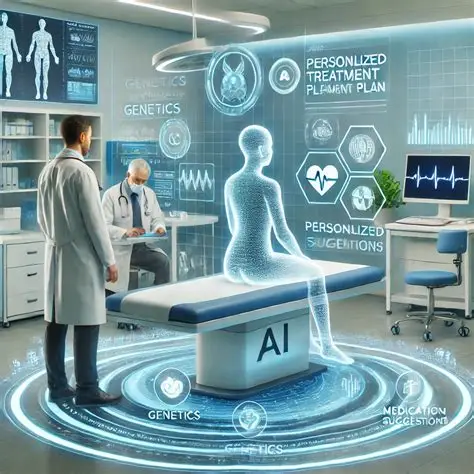
For most of medical history, recovery was something that happened in a clinic. You showed up sick or injured, received a protocol, and went home with paper instructions and a follow-up appointment in four to six weeks. What happened between visits was largely invisible to the people responsible for the outcome. That invisibility was the single biggest unsolved problem in personalized recovery, and consumer AI is the first thing in fifty years that has meaningfully closed the gap.
Roughly one in three American adults now wears a fitness tracker or smartwatch, generating continuous streams of heart rate, sleep stage, HRV, activity, and stress data. The medical-grade wearable market is forecast to exceed 100 billion dollars by 2028. But raw data is not recovery. A graph showing poor sleep does nothing for a patient who already knows they are tired. The breakthrough is what happens after the data is collected, when AI starts converting passive measurement into personalized behavioral interventions, daily nudges, and adaptive routines that update in real time as a person’s biology changes.
The shift matters because behavior, not biology, is the largest controllable variable in most chronic and recovery contexts. Adherence to physical therapy, sleep hygiene, hydration, movement, stress management, all of these decide outcomes more than the precision of the initial diagnosis. AI’s contribution is not replacing the clinician. It is staying with the patient between visits in a way no human caregiver can scale.
Ryo Chiba, CEO and Co-Founder at Trails, has watched the consumer side of this shift accelerate. “The biggest change AI has brought to personalized recovery isn’t more data, it’s the ability to translate that data into something a person will actually do tomorrow morning,” he says. “For decades, the bottleneck wasn’t information. It was knowing which two or three small things would matter most for this specific person, today, given everything else going on in their life. That is the layer AI is finally doing well, and it’s why recovery is no longer something that happens only inside a clinic.”
The practical implication for clinicians and patients is that recovery has become continuous rather than episodic. The next decade of personalized care will be defined less by what happens in a fifteen-minute appointment and more by what an AI-guided routine quietly does in the twenty-three hours and forty-five minutes around it.
Catching the Setback Before It Arrives
The hardest part of recovery has always been the silence between appointments. A person can look completely stable in a session on Monday and be sliding toward a relapse by Thursday, with no one close enough to notice. By the time the next visit comes around, the setback has already happened.
Predictive health data is closing that blind spot, and it is doing it through the body. Researchers studying alcohol use disorder recovery have shown that wearable sensors can pick up the physical fingerprints of stress, things like changes in heart rate variability and skin response, that quietly rise before a person ever reaches for a drink. Stress has long been one of the strongest triggers of relapse, but until now it lived inside the person, invisible to anyone outside.
Worn on the wrist and read by software, that hidden stress becomes a signal a care team can actually see and act on.
The same logic is now built directly into treatment software. Modern systems can watch sleep patterns, medication adherence, and stress markers in real time, then send an automatic alert to a provider the moment a worrying trend appears, turning a quiet warning into a phone call before the fall.
For Seph Fontane Pennock, Founder of Regenerated, this is a genuine reversal of how care has always worked. “We have spent a century practicing medicine that waits for something to break, then fixes it. Predictive data flips that. When you can see the risk building days early, you are treating a trajectory.”
What AI Can and Cannot Do for Mental Health Recovery
Of all the medical specialties touched by AI in the last five years, psychiatry has both the largest opportunity and the most uncomfortable conversation about limits. Mental health conditions are notoriously hard to predict, treatment response varies wildly between patients, and relapse often arrives without obvious warning signs. Machine learning models trained on speech patterns, smartphone usage data, sleep architecture, and physiological signals have shown they can flag depression relapse risk and even suicidal ideation weeks before a clinical visit would catch it. Several large health systems are now piloting these tools inside their behavioral health programs.
The accuracy figures are real and improving. Recent studies on AI-driven mental health prediction have reported sensitivity rates that outperform standard screening questionnaires for certain populations, particularly when models combine passive smartphone behavioral data with active patient-reported symptoms. The clinical implication is that recovery from depression, anxiety, or substance use disorder could become something monitored continuously rather than checked on every four to six weeks.
The harder truth, and the one the AI industry is still working through, is that prediction is not treatment. A model that accurately flags a patient at high relapse risk is only useful if a qualified clinician can act on the alert. Mental health workforce shortages mean that the bottleneck is increasingly not detection. It is the human capacity to respond. And the patient relationship, the alliance between a struggling person and a clinician who knows them, is still the strongest predictor of long-term recovery, regardless of how good the algorithm gets.
Riley Guinan, PA-C, MSPAS, Board-Certified Physician Assistant at Zellig Psychiatry, works at the intersection of these tools and the clinical reality they enter. “AI is already changing what we can see about a patient between appointments, and that is genuinely useful. I can know whether a patient’s sleep cratered last week, whether their phone-based behavioral patterns suggest a depressive episode building,” he says. “But none of that replaces the clinical conversation. The danger is treating the algorithm like a diagnosis. Used well, AI extends the reach of psychiatric care. Used poorly, it gives people a false sense that an app is treating them when what they actually need is a person.”
The practical move for patients and health systems is to treat predictive AI in mental health as an early-warning layer, not a standalone solution. The clinics getting the best results are the ones using these tools to trigger faster human contact, not to delay it.
Reading the Body’s Quiet Signals
Recovery is not only mental. After an injury, surgery, or burnout, the body heals on its own hidden schedule, and pushing against it too hard is how people end up back where they started. For years there was no real way to know whether you were ready for more or needed to rest. Now the answer can sit on your wrist.
The key signal is heart rate variability, or HRV, the tiny differences in time between your heartbeats. Researchers describe it as a simple, non-invasive marker of how your nervous system is balancing stress and recovery. When you are rested and healing, HRV stays steady. When you are run down or overtraining, it drops, often before you consciously feel a thing. Most modern wearables now track it automatically every night while you sleep, turning a once lab-only measurement into something anyone can follow daily.
That changes a rehab plan from a fixed calendar into something responsive. Instead of grinding through the same timeline as everyone else, your program can read how your body actually recovered overnight and adjust the next day’s effort to match.
To Christopher DiViaio, LCSW of Eleve Behavioral Health, that balance is the whole point. “What makes this exciting is that it reaches people in the moment they are actually struggling. But it has to stay connected to a real person. The technology should close the gap between sessions, not replace what happens inside them. Used that way, it means fewer people face the hardest moments completely alone.”
How AI Is Quietly Catching the Patient About to Drop Off
The single most expensive failure mode in healthcare is not the wrong diagnosis. It is the right diagnosis followed by a patient who quietly stops the treatment. Adherence to chronic disease medication in the United States hovers around 50 percent within a year of starting, and the cost of nonadherence is estimated at over 300 billion dollars annually in avoidable hospitalizations, emergency visits, and disease progression. GLP-1 medications, despite their unprecedented efficacy, show real-world discontinuation rates as high as 60 to 70 percent within twelve months. The drug is rarely the problem. The system around the drug almost always is.
This is the gap AI is starting to close in ways human care teams alone never could. By analyzing patterns in patient-reported side effects, refill timing, appointment attendance, message tone, and even wearable data, AI models can now predict with meaningful accuracy which patients are likely to drop off in the next two to four weeks. The intervention window matters enormously. A patient who has already stopped taking their medication is much harder to bring back than a patient who is wavering. Catching the wobble before the drop is where AI is doing its most underrated work in healthcare today.
The shift is also changing how care teams allocate their time. Rather than treating all patients with the same cadence of check-ins, integrated programs are using AI to surface the small subset of patients who need a human call this week, and letting the stable patients continue without unnecessary contact. This is not depersonalization. It is the opposite. The patients who need a human voice get one. The patients who are doing fine are not bothered.
Blake Chapman, Founder and President of REMEVi Health, builds care models specifically around that prediction-to-action pipeline. “What AI does well in adherence is exactly what humans struggle with, which is paying attention to dozens of small signals across thousands of patients at once,” he says. “But the second you predict that a patient is about to fall off, the answer is almost never another notification. It is a real human picking up the phone at the right moment. The teams getting the best outcomes are pairing AI surveillance with human warmth, not replacing one with the other.”
The broader lesson for personalized recovery programs is that AI’s most valuable role is often not the diagnosis or the intervention itself, but the timing of the human touch. Used this way, AI does not make care less personal. It makes it possible for personal care to scale.
Help That Shows Up at 2 a.m.
The relapse almost never happens in the therapist’s office. It happens later, alone, when the craving hits at midnight, the stress peaks after a bad day, or the silence of an empty apartment gets too loud. For a hundred years, that was the cruelest gap in recovery.
But AI is finally closing that gap. Quietly running in the background of an app, it reads a person’s signals in real time, the stress climbing on their smartwatch, the mood dipping in a quick check-in, and learns to recognize their personal danger zones. Then it does what no clinic ever could. It reaches out at the exact moment the urge is winning, not three days later at the next session.
Researchers found that a smart app that tracked people’s lapse risk and pushed tailored support at high-risk moments left its users nearly twice as likely to quit smoking as those using an ordinary quit app.
Why Most AI Health Tools Fail Their Users Before the Algorithm Even Runs
For all the conversation about AI capability in personalized recovery, the unspoken truth in the industry is that most AI health products fail not because the algorithm is wrong, but because the user never engages with it long enough to benefit. Median 90-day retention for mobile health apps sits below 5 percent. The most sophisticated predictive model in the world produces zero outcomes if the patient stops opening the app in week three. This is the design problem hiding underneath every AI health pitch, and the companies solving it are quietly outperforming companies with technically superior algorithms.
What makes an AI tool actually usable in a recovery context is rarely the AI itself. It is the moment-to-moment user experience, the friction of getting started, the tone of the language, the speed at which the tool delivers obvious value, and the absence of cognitive overhead. AI designers and developers building consumer-facing products have learned, sometimes painfully, that the difference between an AI product people stay with and one they abandon often comes down to a handful of design choices made in the first three screens.
The lessons from outside healthcare matter here. AI tools that have achieved real consumer adoption in other industries, virtual try-on, generative creative tools, AI shopping assistants, share a common pattern. They reduce friction, produce visible value in seconds, and leave the user feeling more capable rather than more managed. Health AI has historically done the opposite. It has front-loaded data entry, generated dashboards that require interpretation, and treated users like data sources rather than people. The next wave of personalized recovery tools is borrowing aggressively from consumer AI design.
Daniyal Shaikh, AI Designer & Developer at Virtual Ring Try On, builds AI products at exactly this intersection of capability and usability. “The mistake I see most often in AI products, health or otherwise, is teams treating the model as the product,” he says. “Users don’t experience an algorithm. They experience an interface, a tone, a moment of either feeling more in control or feeling overwhelmed. The AI tools that win are the ones where the technology disappears and the person feels like the experience was made for them. That sounds simple, but it is the hardest part of the build, and it is what separates AI products people actually use from AI products that sit unopened on the App Store.”
The implication for personalized recovery is that the future of the field will not be won purely on algorithmic sophistication. It will be won by the teams that pair strong AI with the kind of disciplined design thinking that consumer technology has spent twenty years refining. The patient outcome at the end of the chain depends on it.
The Real Shift
For a century, recovery could only ask one question, what do we do now that something has gone wrong? Sensors, algorithms, and predictive data finally make a better one possible… what is changing before anything goes wrong at all? The tools can now study a person before treating them, flag a setback days early, and deliver support the moment it is needed.
None of it replaces the human heart of recovery. AI cannot sit with someone through a hard night. What it can do is make sure the right signals reach the right people at the right time. Used well, that is something recovery has never truly had, a head start.