A hotel stay begins long before arrival. It starts in search results, in a summary generated by an AI tool, in a mobile check-in flow, or in a payment screen that either feels effortless or creates friction. Across hospitality, those moments are carrying more weight because guests move faster, compare faster, and notice weak execution sooner.
That pressure lands in a market that still has demand, though the margin story is tighter. AHLA says U.S. hotel guest spending is expected to reach nearly $805 billion in 2026, up 1.7% year over year, while GOPPAR remains around 90% of 2019 levels due to elevated operating costs. In that setting, AI has become part of a larger operational shift centered on cleaner data, faster service, stronger digital infrastructure, and sharper investment choices.
Why Is the Hospitality Business Model Changing in 2026?
Several forces are pressing on hotels at the same time, and together they are reshaping how properties plan, staff, sell, and serve. Revenue growth still matters, while the stronger business story in 2026 comes from protecting margin and keeping the guest journey smooth from discovery through post-stay communication.
Margin Pressure and Operating Costs
Across the industry, rising costs are pushing operators to look more closely at wasted motion. Labor, service delivery, and technology all demand tighter coordination, which is why efficiency has become a leadership issue rather than a back-office concern. Operating design and financial outcomes are becoming more closely linked across the business.
Slower Legacy Processes
During travel shopping, generative AI is adding a new layer between the traveler and the hotel. More people are evaluating properties through summarized, conversational, and machine-assisted paths, which gives slow approvals, patchy content, and manual handoffs less room to perform well. Once that shift enters the market, older processes lose relevance very quickly.
Technology as a Strategic Foundation
Inside a hotel, software choices reach far beyond IT. A messaging platform shapes service speed, a CRM shapes relevance, a payment flow shapes completion, and infrastructure quality shapes the whole stay. Technology selection has become a core operating decision because connected systems support stronger execution across the property.
How Is AI Changing Hospitality in Practice?
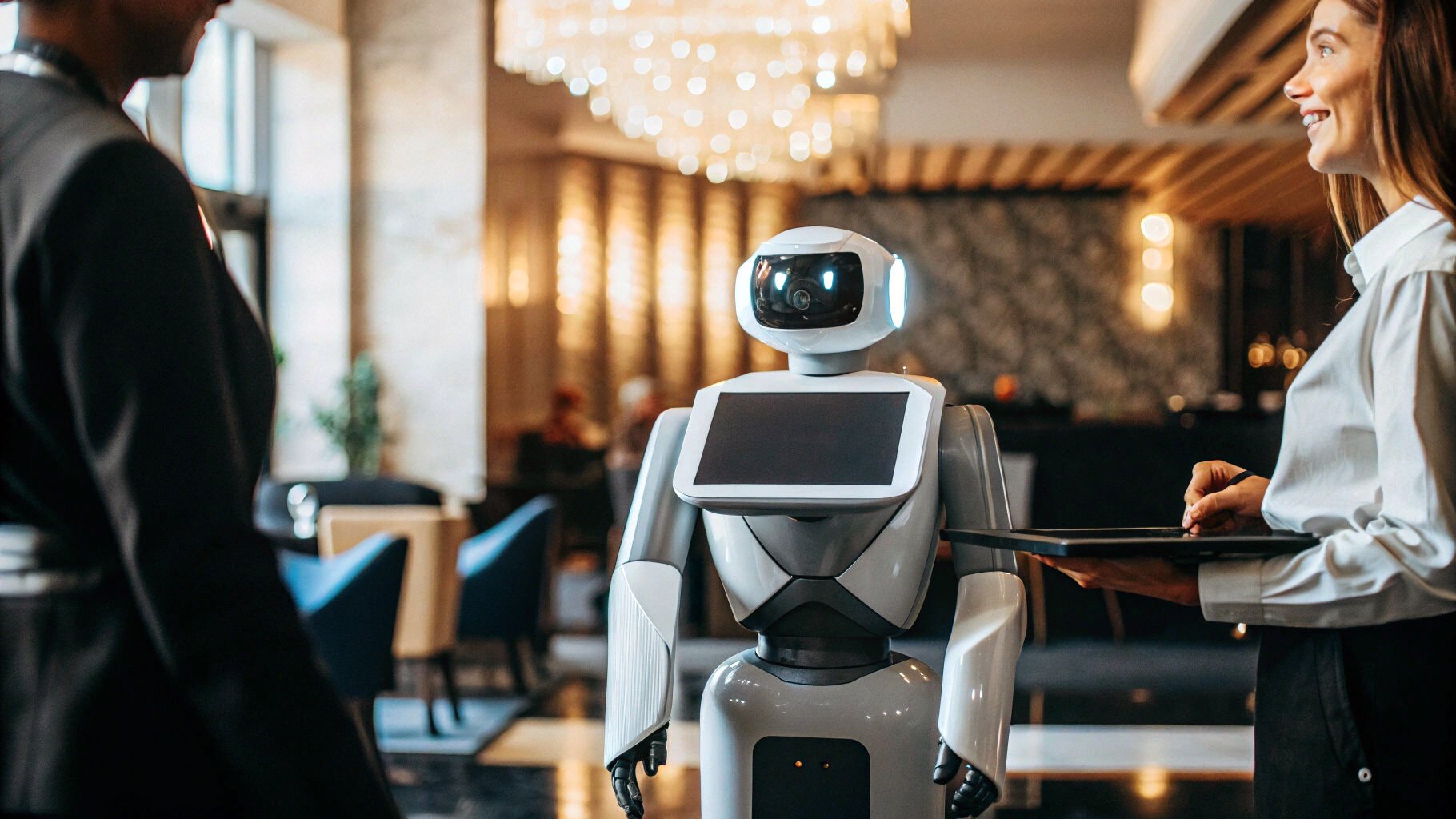
Its clearest value appears in the places where hotels need speed, consistency, and better timing. Guest communication, service triage, personalization, forecasting, and content visibility are the areas where AI is having the most practical impact.
- Guest Communication: Rapid digital support has become a mainstream expectation. Travelers are increasingly interested in using automated messaging or chatbots for hotel customer service requests, reflecting a clear shift toward faster, self-sufficient service options.
- Personalization: AI allows hotels to send more relevant pre-arrival messages, stay offers, and follow-up campaigns. By analyzing timing, guest profiles, and behavior patterns, AI helps create a more personalized experience for each guest.
- Operational Support: AI is becoming a valuable tool in routing requests, summarizing tasks, prioritizing issues, and assisting workflows. These uses reduce repetitive labor and help hotel teams deliver service with more consistency and efficiency.
- Revenue Decisions: AI is playing a larger role in pricing, segmentation, and conversion analysis. By leveraging AI, hotels can optimize their revenue strategy through dynamic pricing and more precise personalization, improving both commercial and operational performance.
- Discovery and Visibility: Hotel content now needs to align with recommendation engines and AI-assisted comparisons, as generative AI is shaping how properties are discovered. This makes structured and accurate property information more critical in the early stages of the guest’s decision-making process.
How Is AI Changing Discovery and Booking?
Search is becoming more conversational, and booking influence is shifting toward properties that are easier to interpret with confidence. Clear facts, clean structure, and consistent policies carry more commercial weight because AI systems can surface and compare them more efficiently.
Structured Property Information
Well-organized room details, rate rules, amenity descriptions, and check-in policies make a hotel easier to understand and easier to recommend. A cleaner content layer supports stronger visibility before a guest ever lands on the website. It also reduces confusion at the moment when a traveler is deciding whether the property feels trustworthy and easy to book.
Conversational Booking Paths
Conversational interfaces narrow comparison quickly around practical questions. Travelers look at flexibility, convenience, location fit, digital access, and total value, while AI tools summarize those trade-offs in a compact form. Operational clarity gains much more influence in the booking path for that reason.
Channel Consistency
Across websites, OTAs, map profiles, and direct messaging, aligned content creates trust and improves interpretation. Once facts drift between channels, recommendation quality weakens, and guest confidence falls with it. A property with synchronized information gives search systems fewer reasons to misread the offer and gives travelers fewer reasons to hesitate.
How Are Digital Infrastructure Expectations Changing in Hospitality?
Guests increasingly judge a stay through connected digital moments, so infrastructure quality shapes the experience in visible ways. Mobile check-in, payment flows, in-stay messaging, service requests, and a reliable hotel wifi platform all contribute to whether a property feels smooth, modern, and easy to navigate.
- Mobile-First Arrival: Guests expect faster, simpler access at the start of the stay. Mobile check-in and self-service flows reduce waiting, remove unnecessary steps, and set the tone for the entire experience.
- Connected Systems: Disconnected tools slow teams down and create avoidable errors. When booking, messaging, payments, and guest data work together, operations become more predictable and easier to manage.
- Lower-Friction Stays: Smooth digital touchpoints reduce interruptions across check-in, service requests, and payments. A connected infrastructure supports a stay that feels consistent from arrival to departure.
- Better Support for AI: AI performs better when systems share clean, structured data. Integrated infrastructure allows hotels to apply automation, personalization, and faster decision-making without breaking the guest experience.
Which Other Trends Are Reshaping Hotel Operations in 2026?
AI is moving alongside several other changes that are just as important to day-to-day performance. Labor design, platform integration, sustainability discipline, and more selective spending are all shaping how hotels set priorities in 2026.
Labor Design and Productivity
Teams are being pushed toward higher-value work supported by clearer workflows and fewer repetitive tasks. More attention is going into task design, service flow, and the moments that genuinely need human judgment. That shift gives staff more room to focus on recovery, personalization, and guest-facing work that carries real weight.
Integrated Platforms
Scattered systems create drag across the entire property. Reporting becomes harder to trust, loyalty signals get weaker, and service follow-through loses speed when teams work across disconnected tools. A cleaner platform environment gives leadership a more usable view of performance and gives staff fewer places where work can stall.
Sustainability and Smarter Investment
Infrastructure decisions are being judged more carefully over a longer horizon. Hotels are placing more value on systems, assets, and processes that are easier to maintain, easier to justify, and easier to support over time. In operational terms, sustainability is becoming part of everyday efficiency, upgrade planning, and investment discipline.
What Risks Should Hotels Avoid When Adopting AI?
Stronger results usually come from stronger foundations. Clean data, clear ownership, aligned systems, and measurable goals give hotels a much better chance of turning AI into something useful.
- Messy Source Data: Poor records limit personalization, weaken reporting, and reduce the quality of AI-supported decisions. As adoption expands, data quality becomes a real operating constraint and limits consistency across the business.
- Disconnected Systems: Fragmented tools create duplicate work and slow follow-through. When systems do not work together, teams lose speed, visibility, and coordination.
- Over-Automated Processes: Automation needs a clear use case, a clear owner, and a clear outcome. Focused implementation delivers better results than broad AI activity without a defined purpose.
- Weak Governance: Control and accountability are critical across both guest-facing content and internal workflows. Hotels need clear standards for how information is managed and how tools are used.
- Vague Success Metrics: Tool usage alone does not show real business value. Time saved, service speed, conversion quality, and repeat demand provide a clearer view of actual impact.
Conclusion
Hospitality in 2026 is being shaped by a denser, faster, more connected operating environment. AI is influencing discovery, communication, and workflow design, while digital infrastructure, integrated systems, and better data are determining how smoothly those gains translate into daily execution. The hotels that stand out are the ones built around clarity, speed, relevance, and operational discipline.