Every job seeker has experienced some version of this.
You find a role that seems almost perfect. The title fits your career path. The salary range looks right. The company is recognizable. You spend time tailoring your resume, maybe even drafting a thoughtful cover letter. You hit submit with cautious optimism.
And then nothing happens.
Weeks go by. The listing remains online. Months later, it reappears as “reposted.” There is no rejection, no update — just silence.
Increasingly, this isn’t just bad luck. It’s structural.
Welcome to the “Ghost Job” Epidemic. Industry analysts estimate that at any given moment, 30% to 50% of job listings on major boards are not actually hiring. They are either “zombie” posts left up by lazy recruiters, “resume harvesting” schemes, or straight-up scams.
“For candidates, the frustrating part is that they all look the same,” Ethan says. “A real job and a ghost job can appear identical on the screen. But their underlying signals are very different.”
That gap between appearance and reality is where AI agents are starting to play a new role.
The Anatomy of a “Ghost Job”
It may seem irrational for companies to advertise roles they aren’t actively filling, but in practice, it happens for predictable reasons.
One is what recruiters sometimes call pipeline building. Companies post roles to collect resumes in case someone resigns later. There may be no open seat today, but they want candidates ready.
Another reason is optics. Early-stage companies — and occasionally larger firms during hiring slowdowns — leave listings up to signal growth externally, even if internal hiring is paused.
And often, the explanation is more mundane. A recruiter posts a role across multiple platforms, fills it, deletes one version, and forgets the rest. The listing lingers indefinitely.
“Most ghost jobs aren’t malicious,” Eric explains. “Sometimes it’s just operational noise. But for job seekers, the result is the same — time spent on something that isn’t actually live.”
Over time, repeated silence has consequences. Candidates internalize the lack of response as personal failure, even when the role itself may not have been real.
Why Humans Can’t Spot the Fakes
Part of the challenge is psychological.
When job seekers see a recognizable brand and an attractive salary, they want it to be real. Optimism fills in the gaps.
Few people have the time to compare timestamps across platforms, check a company’s careers page against aggregator listings, or analyze subtle changes in job descriptions over months.
“We underestimate how emotional job search can be,” Ethan says. “You see a company you admire, and you’re already imagining yourself there. AI doesn’t have that attachment. It just looks at patterns.”
That pattern recognition is what enables filtering at scale.
 The AI Shield: How Smart Filtering Works
 The AI Shield: How Smart Filtering Works
Instead of relying on surface-level cues like “Posted two days ago,” AI agents analyze deeper signals before surfacing opportunities to users.
Here is how the “Ghost Busting” technology actually works:
1. Timestamp Triangulation (Is it Active?)
A listing labeled “new” might not actually be new. AI systems can track whether the same description has been recycled repeatedly over months without evidence of hiring activity.
If a job is reposted every week but never updated and never appears to close, that pattern is flagged by jobright. Conversely, roles that show signs of active engagement — recent edits, synchronized updates across platforms, or recruiter logins — are prioritized.
“Patterns matter more than single timestamps,” Eric says. “A job that refreshes every Monday without change looks very different from one that’s actively maintained.”
2. The “Intent” Analysis (Is it Real?)
Scam listings often share recognizable language traits. They promise unusually high pay for minimal qualifications. They use vague job titles. They request financial transactions for equipment or onboarding.
By analyzing semantic structure rather than just keywords, AI agents can differentiate between:
- A structured posting outlining required experience and technical criteria.
- A loosely written offer emphasizing urgency and unrealistic compensation.
This helps filter out phishing schemes and low-quality listings before candidates ever see them.
3. Cross-Platform Verification (Is it Consistent?)
Another powerful signal comes from Global Aggregation.
Rather than scanning a single job board, AI agents compare listings across multiple platforms and against a company’s official careers page.
If a role appears only on third-party aggregators but not on the company’s website, that inconsistency raises questions. If a listing exists on five boards but was removed from the official source weeks ago, that signal is captured.
“Verification isn’t about being perfect,” Ethan says. “It’s about increasing the probability that what you’re applying to is real and active.”
The Practical Impact on Job Seekers
When filtering improves, volume often decreases. Instead of seeing 50 potential roles a day, candidates might see 20.
At first glance, that reduction can feel limiting. But the quality shift changes the experience.
If every application is tied to a role that has passed basic liveness and legitimacy checks, response rates tend to improve. Silence becomes less common. Rejections, when they happen, are tied to real competition rather than abandoned listings.
That shift can have a measurable effect on morale.
“When candidates know they’re applying to real openings, their mindset changes,” Eric says. “They become more strategic. They’re not just sending resumes into a void.”
In other words, filtering doesn’t just save time. It reduces emotional fatigue.
 Conclusion: Don’t Play the Lottery
 Conclusion: Don’t Play the Lottery
The job market in 2026 remains highly competitive. Applying indiscriminately across open search results increases exposure — but also increases wasted effort.
Standard search bars were designed to surface as many listings as possible. They were not designed to evaluate authenticity or hiring intent.
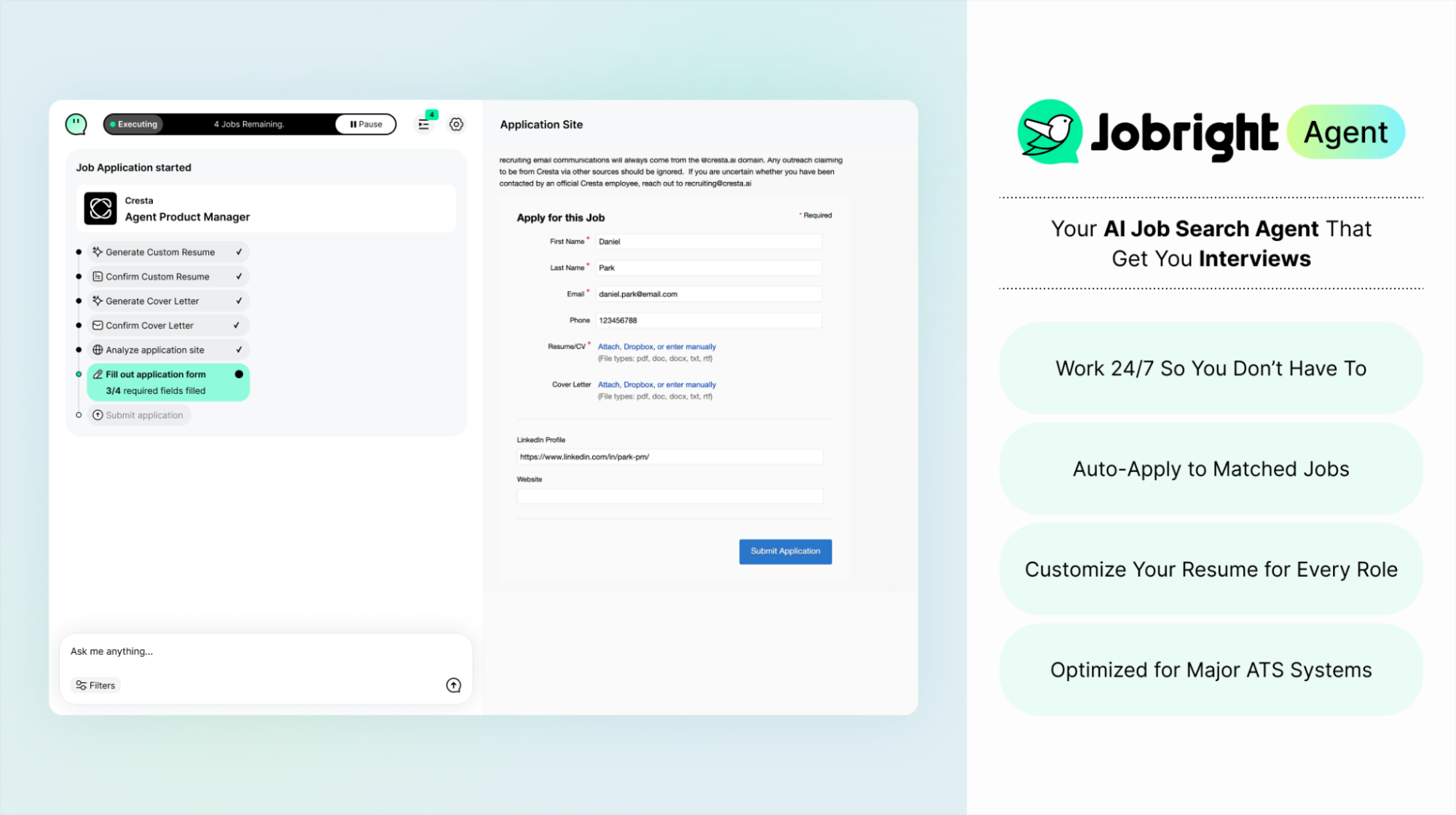
Delegating that verification layer to an AI agent shifts the workflow. Instead of manually sorting through questionable posts, candidates can focus their energy on preparing for interviews, refining their narratives, and improving skills.
“Our goal isn’t to reduce opportunity,” Ethan says. “It’s to reduce noise. When people spend time on roles that are actually open, everything else in the process becomes more rational.”
AI cannot eliminate hiring friction entirely. But by filtering out inactive or suspicious listings before candidates ever invest effort, it can make the system feel less arbitrary — and a little more navigable.
And in a job search, clarity is often the first step toward momentum.