AI tools are moving from simple chat assistants into everyday work systems. Teams now use them to plan research, compare ideas, summarize information, draft product documents, organize marketing campaigns, and turn rough notes into structured outputs. That shift is useful, but it also creates a practical challenge: the quality of the result depends heavily on how clearly the task is defined before the AI begins.
A short prompt can be enough for a small request, but complex work usually needs more structure. When a team asks an AI system to plan a project, write an outline, analyze a market, or prepare a workflow, the request should include context, constraints, expected output, and quality checks. Without those details, the tool may produce something that sounds polished while missing important information.
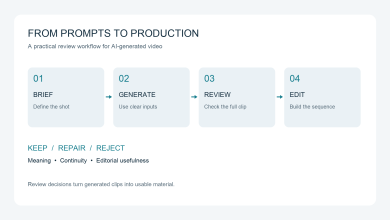
Agent-ready briefs help solve this problem by turning a vague objective into a repeatable plan. A good brief describes the goal, the role the AI should take, the steps it should follow, and the format of the final response. It can also include review rules, such as separating facts from assumptions, flagging uncertainty, and asking for clarification when inputs are incomplete. These details make AI work easier to evaluate.
This matters because AI is often used in workflows where people need to make decisions quickly. A founder may need a market scan before choosing a product direction. A content lead may need topic clusters before assigning articles. A support manager may need recurring customer issues grouped by severity. In all of these cases, better instructions reduce guesswork and make the output more useful.
The planning stage is especially important for agent style systems. An agent can follow steps, call tools, produce drafts, and hand off work, but it still needs a clear definition of success. If the agent begins with unclear goals, it may complete the wrong task efficiently. If it begins with a structured brief, the work has a clearer path, and the person reviewing the result has a stronger basis for judgment.
This is why platforms such as Gemini Spark are useful for teams exploring AI assisted productivity. Gemini Spark focuses on turning rough objectives into structured briefs that are ready for AI agents. That kind of planning layer helps users move beyond one-off prompts and toward repeatable workflows that can be shared, reviewed, and improved over time.
For researchers, better briefs can turn a broad topic into a focused review plan. Instead of asking for a general summary, the brief can request a definition of the problem, a list of relevant sources, a comparison of viewpoints, evidence gaps, and follow up questions. The output becomes easier to verify because the expected structure is visible from the start.
For marketers, the same idea can improve campaign planning. A clear brief can define the audience, search intent, positioning, tone, channel, offer, and required deliverables. It can also specify what the AI should avoid, such as unsupported claims or language that does not match the brand. This makes the final content easier to edit and easier to align with business goals.
Product teams can also benefit from agent-ready briefs. When customer feedback is unstructured, AI can help group requests, identify patterns, and suggest next steps. The brief should tell the system how to classify feedback, how to handle conflicting signals, how to distinguish urgent issues from long-term opportunities, and what format to use for the final recommendations.
Operations teams often have recurring processes that depend on consistency. Weekly reports, meeting summaries, vendor comparisons, onboarding checklists, and internal handoffs all become easier when the instructions are reusable. A documented brief gives the team a standard way to start the work. It also helps new team members understand what the process expects before they run it.
Structured briefs also improve collaboration. If one person creates an AI assisted output and another person needs to review it, the original brief provides useful context. The reviewer can see what the task was supposed to do, what limits were set, and what checks were expected. That makes the result easier to trust, edit, or reject.
Good briefs should include several practical elements. First, they should define the objective in plain language. Second, they should provide the audience and background context. Third, they should assign a role, such as analyst, editor, researcher, planner, or reviewer. Fourth, they should list the steps the AI should follow. Fifth, they should define the output format and the acceptance checks.
Acceptance checks are important because they turn quality into something observable. A brief can ask for clear reasoning, concise structure, source handling, length requirements, tone requirements, or a list of unresolved questions. It can also ask the AI to state where information is incomplete. These checks help people avoid accepting a confident answer that has not actually met the task.
One practical way to improve AI adoption is to build a small library of approved brief patterns. A team can keep separate patterns for research summaries, launch plans, content outlines, customer feedback reviews, and technical documentation. Each pattern can define the expected inputs, the preferred structure, and the review criteria. Over time, this library becomes operational memory that helps the team work faster without lowering its standards.
Another useful habit is to treat the first AI response as a draft, not a final answer. The brief should make review part of the workflow by asking the system to show assumptions, identify weak spots, and suggest what a human should check next. This keeps people in control while still taking advantage of automation. It also helps teams learn which instructions consistently lead to better results.
As AI systems become more capable, the planning stage will become more important, not less. Powerful tools can move quickly, but they still need clear direction. A well formed brief gives the system a path, gives the user a way to judge the output, and gives teams a reusable process for future work. That combination is what makes AI work more reliable.
The best AI workflows will combine automation with human judgment. Clear briefs make that balance practical. They help people use AI for speed while keeping accountability, review, and quality in the process. For any team adopting AI, learning how to brief the work may become one of the most valuable skills.