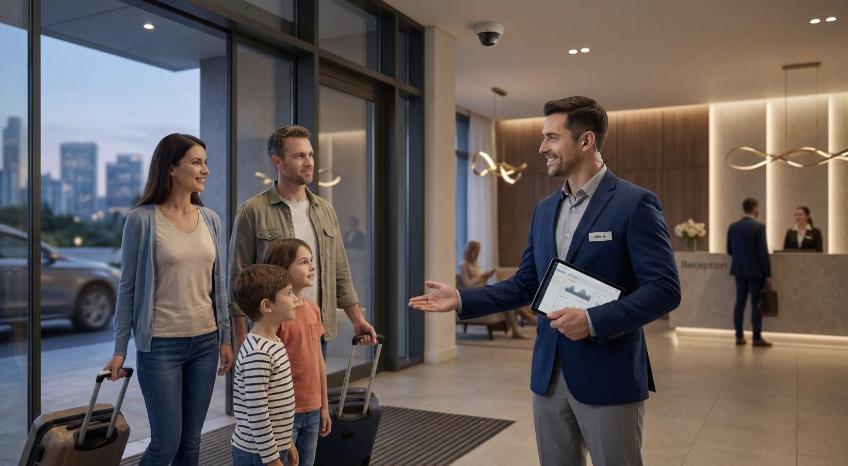
Picture a family wheeling suitcases across your lobby. Before they admire the chandelier, an instinctive question flickers: Is this place safe? They’re not alone—15 percent of guests report losing valuables during a stay, and nearly 90 percent of hotel workers have faced sexual harassment. One lapse can torch revenue overnight.
Security budgets rose 25 percent in five years, yet many hotels still lean on a lone night guard and aging cameras. Guests expect visible protection, staff deserve it, and new panic-button laws require it. This guide compares six solutions—people, tech, and process—to keep everyone secure in 2026 and beyond.
Our research playbook (how we ranked the options)
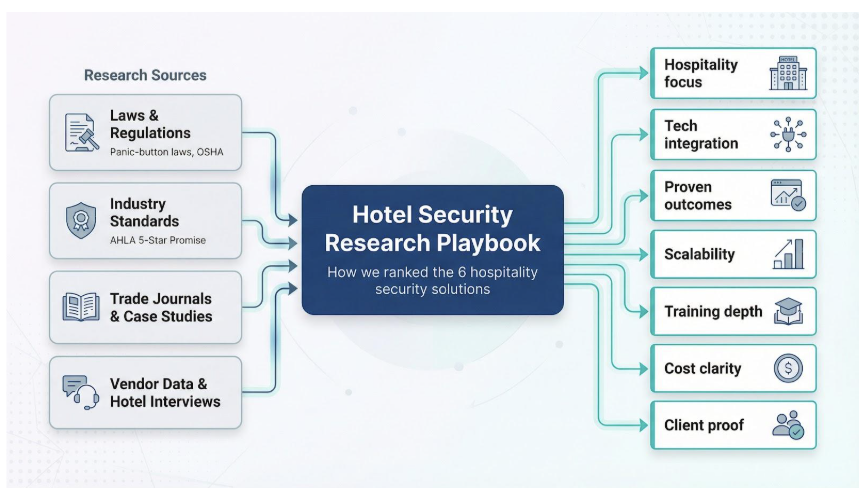
We spent six months digging into trade journals, safety regulations, vendor case studies, and first-hand hotel interviews. Our rule was simple: every claim must connect to verifiable data or a live deployment.
We began with the fine print of new panic-button laws, OSHA guidance, and AHLA’s 5-Star Promise to pin down today’s compliance line. Next, we reviewed the top twenty “hotel security” search results to see where typical listicles miss the mark on tech, staff safety, and ROI. Those gaps shaped this guide.
Finally, we scored each contender against seven deal-breaker criteria: hospitality focus, tech integration, proven outcomes, scalability, training depth, cost clarity, and client proof. Only six solutions cleared the bar, and they appear next—ready for you to combine as your property requires.
Valet-integrated security staff
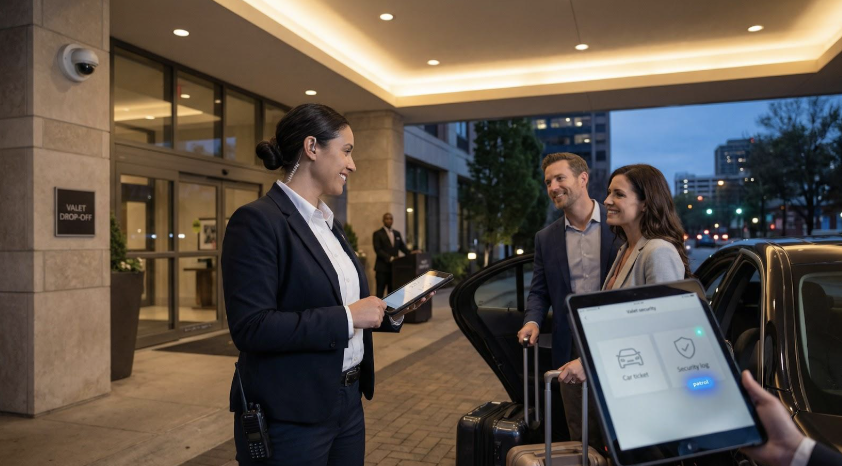
Guests judge security the moment they pull up to the porte-cochère. A cross-trained valet-security team turns that first handshake into a quiet line of defense.
These attendants greet arrivals, park cars, and, with licensed-guard eyes, scan for tailgaters, loiterers, and suspicious bags. Because they blend service with surveillance, luxury brands get protection without a checkpoint vibe that rattles high-spend guests.
The model stays lean. One uniformed pro juggles valet tickets on a tablet while logging incidents in the same app. A quick radio call summons backup if tension brews, yet the guest still receives white-glove treatment.
Boutique properties in Chicago report two wins: higher “arrival experience” scores and fewer parking-lot thefts. Combining roles also trims payroll, freeing budget for deeper night coverage inside.
Providers like FC Parking layer in hospitality-trained valet security solutions featuring unarmed curb-front guards, real-time GPS-tracked patrols, and cloud incident reports. Across multiple hospitality clients, this tech-backed approach lifted guest-satisfaction scores by 14 percent within the first quarter.
No solution is perfect. These guards are unarmed and busiest at curbside, so they cannot chase problems on upper floors. Peak check-in surges can stretch them thin. Pair them with cameras or a roaming patrol to close most gaps.
Use this hybrid approach when image matters as much as safety, such as lifestyle hotels, resorts hosting galas, and any property where the lobby entrance is your brand’s stage. Guests enjoy a seamless welcome, and you rest easier knowing the smiling valet is also the first responder.
Dedicated on-site guard force
Sometimes nothing beats a trained professional on watch. A full-time guard team gives your hotel an instant deterrent and a first responder who can act the moment trouble sparks.
The best firms hire officers who mix firm authority with five-star courtesy. You see it in posture, warm eye contact, and a quick “Good evening” as they check credentials. Guests feel protected, not policed.
Behind that polish sits serious preparation. Guards patrol halls and parking decks, staff the lobby desk, and monitor cameras on a cloud dashboard that timestamps every door check. Many providers add AI tools such as HELIAUS to predict problem zones and adjust patrol routes in real time.
Results speak loudly. Properties that moved from cameras alone to 24-hour guard coverage report 60–70 percent fewer thefts within months. Insurers often reward the upgrade with lower premiums.
Cost is the trade-off. Quality unarmed coverage runs about 5,000–6,000 dollars per post each month. Armed officers, frequently off-duty police, may double that figure and can shift guest perception if not managed carefully. Turnover is another challenge; choose a partner with low churn and relief officers so you never run shorthanded.
This option shines for large-footprint hotels, urban properties with higher crime, or any venue hosting VIPs and cash-heavy events. It places human judgment at every choke point and sends a clear message: trouble is not welcome here.
Mobile patrols and on-demand guards
Some hotels do not require a guard planted at the front desk all night. Mobile patrols give you professional eyes at set times and a rapid backup line the rest of the shift, often at a fraction of the cost.
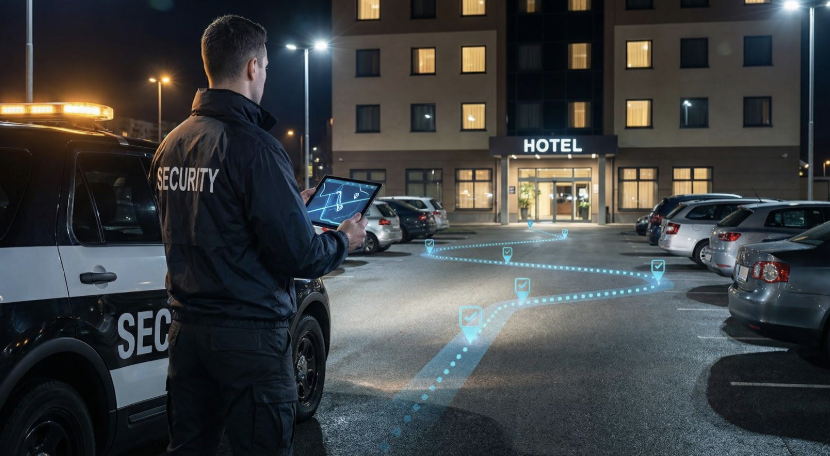
Here is the flow. A roving officer stops by several times per night, walks the perimeter, checks doors, and sweeps the parking lot with marked patrol lights. Each visit is GPS-stamped in a cloud report you can review with morning coffee. If an alarm trips or a guest reports a disturbance, dispatch sends the nearest patrol car to your curb, usually within 15 minutes. Picture it as “security on demand,” extra muscle only when you truly need it.
The model suits select-service and extended-stay brands that run lean overnight teams. One West Coast motel group cut security spend by 40 percent after switching from a static post to three random patrol sweeps plus on-call response.
Limits remain. A patrol officer in another zip code cannot break up a lobby fight in real time. Deterrence also dips between visits, so strong lighting, cameras, and trained front-desk staff stay critical.
Use mobile coverage when risk is moderate, budgets are tight, or your portfolio spans multiple small properties in one city. You stay flexible, scale up for busy weekends, and still reassure guests that trained help is only a radio call away.
Remote video monitoring and virtual guards
Cameras never blink. Connect them to a live security operations center and you gain digital guards who watch every entrance, hallway, and parking stall around the clock.
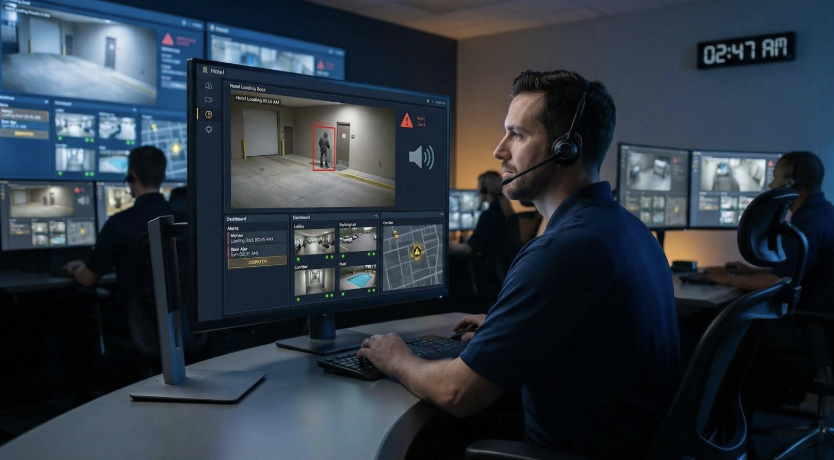
The workflow is simple. Smart analytics flag a propped service door or a person loitering by the loading dock at 2 am. A remote agent verifies the feed within seconds, delivers a stern audio warning through on-site speakers, and, if the threat continues, dispatches police or your on-call patrol. Incidents and response times land in your inbox before breakfast.
Hotels like this model because coverage scales with property size. Ten cameras or two hundred deliver the same flat monthly fee, often lower than one overnight guard. You also gather crystal-clear evidence for claims and cut false alarms because humans review every alert before calling 911.
Technology reliability is the hinge. Redundant internet paths and routine camera health checks keep the eyes online. Pair virtual guarding with a skeleton crew on property or a contract patrol so a physical responder is never more than minutes away.
Choose remote monitoring when budgets are tight, staff counts are lean, or your portfolio spans multiple sites. It provides eyes everywhere, deters trespassers with a firm “Security to the individual in the red jacket,” and turns raw video into data you can trend over time.
Smart tech: AI cameras, IoT sensors, and security robots
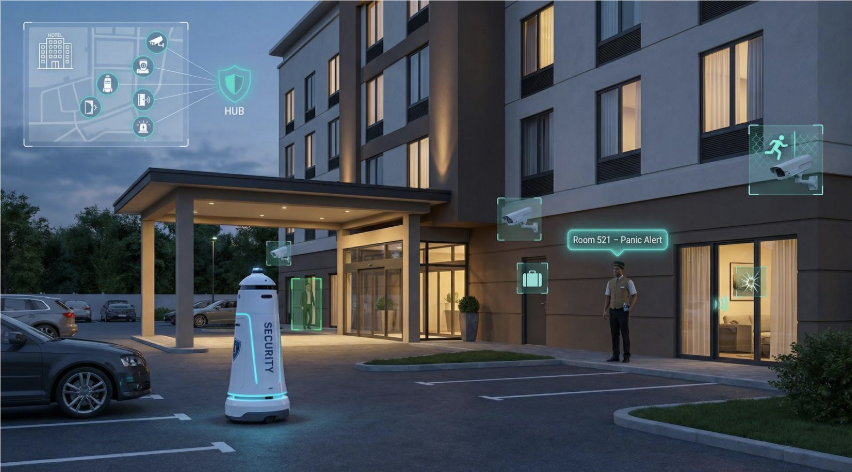
Silicon now patrols the hallways. From cameras that recognize weapons to robots that roll through parking lots, modern hardware adds a 24-hour multiplier to any guard team.
Start with the cameras. Add an AI layer to existing CCTV and the system pings you when someone hops a fence, leaves a bag unattended, or waves a knife in the lobby. The alert lands on a guard’s phone in less than one second. No one must stare at a wall of monitors, hoping to catch the action in time.
IoT sensors cover the blind spots. Door contacts flag maintenance shortcuts, and glass-break detectors wake security if patio doors shatter at 3 am. Staff panic buttons tie in, pushing precise room locations to command dashboards so help races straight to the threat.
Then come the robots. M Resort in Las Vegas leased a Knightscope K5, and guests quickly nicknamed it “M-Bot.” The five-foot machine patrols lots, streams 360-degree video, and greets visitors between security announcements, giving management extra wheels and eyes without adding headcount.
Tech has limits. False alerts require tuning, bots can get stuck, and privacy rules demand clear signage. Up-front costs may rival an annual guard contract.
Adopt smart devices when you want wider coverage, crave data to refine patrols, or plan to market your hotel as truly next-gen. Pair them with human judgment and you turn isolated gadgets into a layered, self-learning shield.
Incident-management and emergency-prep platforms
Great tools do more than record trouble; they direct the response. Incident-management software turns scattered radio calls and paper logs into one live command center that fits in your pocket.
Picture a housekeeper who smells smoke. She taps the emergency icon in her app. Instantly, security, engineering, and the general manager receive push alerts with her exact floor and room. Fire doors unlock, evacuation scripts reach guest phones, and the local fire department is auto-dialed if the alarm panel confirms heat rise. Every action timestamps itself for post-event review.
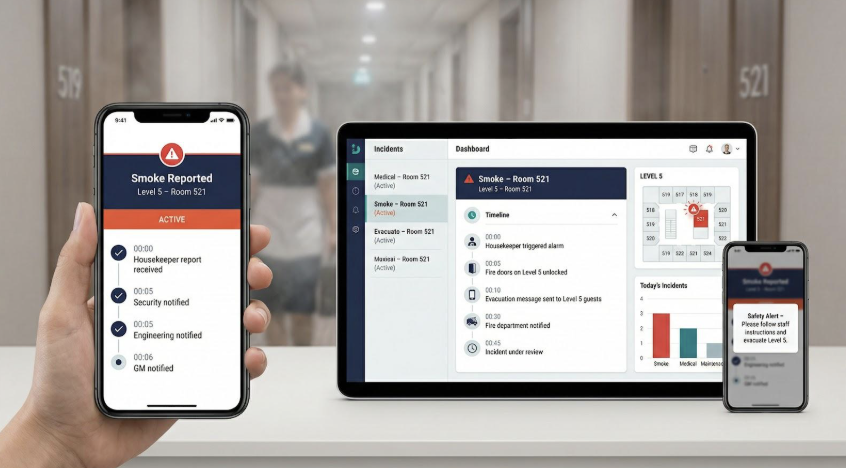
Day to day, the same platform manages smaller hiccups. A spilled drink in the lobby becomes a two-minute workflow: photo, cleanup assignment, closure confirmation. Trends emerge; perhaps Saturday weddings drive half your incidents, and you adjust staffing before the next one.
Regulators love the audit trail, and insurers often do as well. Hotels that moved from clipboards to digital logs report faster compliance checks and lower liability premiums.
Adoption takes discipline. Every supervisor must live in the app or gaps appear. Run quarterly drills so muscle memory forms, keep contact lists current, and review analytics in monthly safety meetings.
Deploy a platform when your property spans multiple departments, hosts large events, or sits in a disaster-prone region. It stitches people, tech, and procedures into a single playbook so your team reacts with one voice, calm, fast, and documented.
Quick-glance comparison
You have six strong options, but they are not interchangeable. The table below lines them up on the metrics owners ask about most: coverage, tech depth, cost, and best-fit scenario.
| Solution | Coverage style | Tech level | Cost (200-room hotel) | Biggest strength | Watch-out |
| Valet-integrated security | Front entrance, peak hours | Medium | Low | Seamless guest welcome | Limited beyond curb |
| Dedicated guard force | 24/7 on-site patrols | Medium | Medium–High | Instant physical response | Budget heavy |
| Mobile patrol / on-demand | Scheduled sweeps plus rapid dispatch | Low–Medium | Low | Flexible, cost efficient | Gaps between visits |
| Remote monitoring | Off-site eyes 24/7 | High | Low | Covers every camera, cuts false alarms | Needs on-ground backup |
| Smart tech (AI, robots, IoT) | Augments existing security | High | Medium–High | Data-rich deterrence | Up-front spend, tuning |
| Incident-management platform | Process layer across teams | Medium | Low | Fast, documented response | Culture shift required |
Use the grid to spot your gaps. If guest areas feel safe but back-of-house incidents linger, layer remote monitoring with a process platform. When parking-lot thefts hurt reviews, combine robots with mobile patrols. Mix, match, and pilot before rolling out chain-wide; data from one property often funds the upgrade in the next.
Frequently asked questions
How much does a hotel guard cost?
Expect to pay 15–30 dollars per hour for a licensed unarmed officer in most U.S. markets. Armed or off-duty police coverage averages 40–75 dollars per hour. For budgeting, plan about 5,000 dollars a month for one full-time unarmed post.
Are armed guards necessary?
Start with a risk map, not gut instinct. If violent crime near the property is low and incidents focus on theft or guest disputes, well-trained unarmed guards who excel at de-escalation meet most needs. Bring in armed officers only when crime statistics, brand image, or VIP clientele justify the higher cost and liability.
What is the fastest way to vet a security vendor?
Ask for two hotel references, proof of state licensing, and an insurance certificate with at least one million dollars in liability coverage. Review their turnover rate and training curriculum; firms that teach hospitality etiquette alongside conflict control deliver smoother guest interactions.
How do new panic-button laws affect my property?
If housekeepers clean rooms alone, your hotel likely falls under a city or state mandate already on the books. Provide wearable devices that broadcast location to security, document annual tests, and train every hire on use. Non-compliance risks fines and reputational damage after an incident.
Conclusion
Ready for a tailored security game plan? Book a free audit and our team will map risks, run cost models, and recommend the right mix of people, tech, and process for your exact footprint. Let’s safeguard your property and elevate guest confidence—starting today.