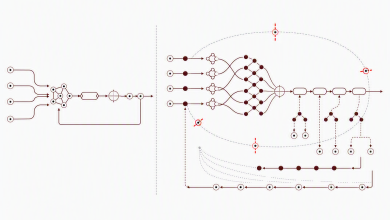
Over the past year major labs and cloud providers have been rolling out more capable agent frameworks, startups are packaging agents as developer products, and research groups keep pushing the envelope on autonomous agents. That momentum has nudged agentic systems from curiosities into production-ready infrastructure. Into that stream steps Hexo Labs with SIA (Self‑Improving‑AI), an open‑source agent that its creators say doesn’t just act or follow scripted learning from humans; it iteratively teaches itself, testing hypotheses, running experiments, evaluating outcomes, and compounding improvements.
That self-directed learning is the distinction worth underscoring. Many recent agent announcements emphasize orchestration, tool use, and human-in-the-loop optimization; SIA’s claim is more structural. Instead of relying primarily on human choices about what to try next, SIA closes the loop internally and scales the rate of improvement. If agentic systems are the next platform, SIA positions itself as an early architecture for agents that bootstrap their own capabilities over time.
“Today’s AI systems are powerful but share a fundamental limitation: every meaningful leap still depends on intervention of human experts to decide what to try next, interpret results, and refine direction,” said Kunal Bhatia, CEO and Co-Founder of Hexo Labs. “But superintelligence will not emerge from static models. SIA learns from itself through execution and compounds its capability with every cycle.”
Viewed optimistically, this is precisely the kind of step that accelerates the path towards superintelligence. Agents that learn from execution could speed scientific discovery, automate complex engineering workflows, and unlock productivity gains across sectors. Hexo Labs’ decision to open‑source SIA and run a grant program amplifies that promise by inviting researchers to test, extend, and align the approach rather than locking it behind proprietary walls.
But caution is still warranted: self-improving agents raise familiar but weighty issues around objective specification, robustness, and alignment. Yet openness and collaborative scrutiny mitigate those risks while letting the upside scale. Hexo Labs is already partnered with leading research scientists at Stanford University, the University of Oxford, and the University of California Santa Barbara.
“Hexo Labs is on the cutting-edge of AI research,” said Eric Wang, Asst. Prof. at the University of California Santa Barbara. “Hexo Labs’ work towards Recursive Self Improving AI could be gamechanging”.