GUANGZHOU, China–(BUSINESS WIRE)–Guangdong, China’s largest provincial economy and a key hub of global manufacturing, plans to deepen its focus on emerging technologies such as robotics, 6G communications and quantum computing as the country prepares its next five-year economic plan.
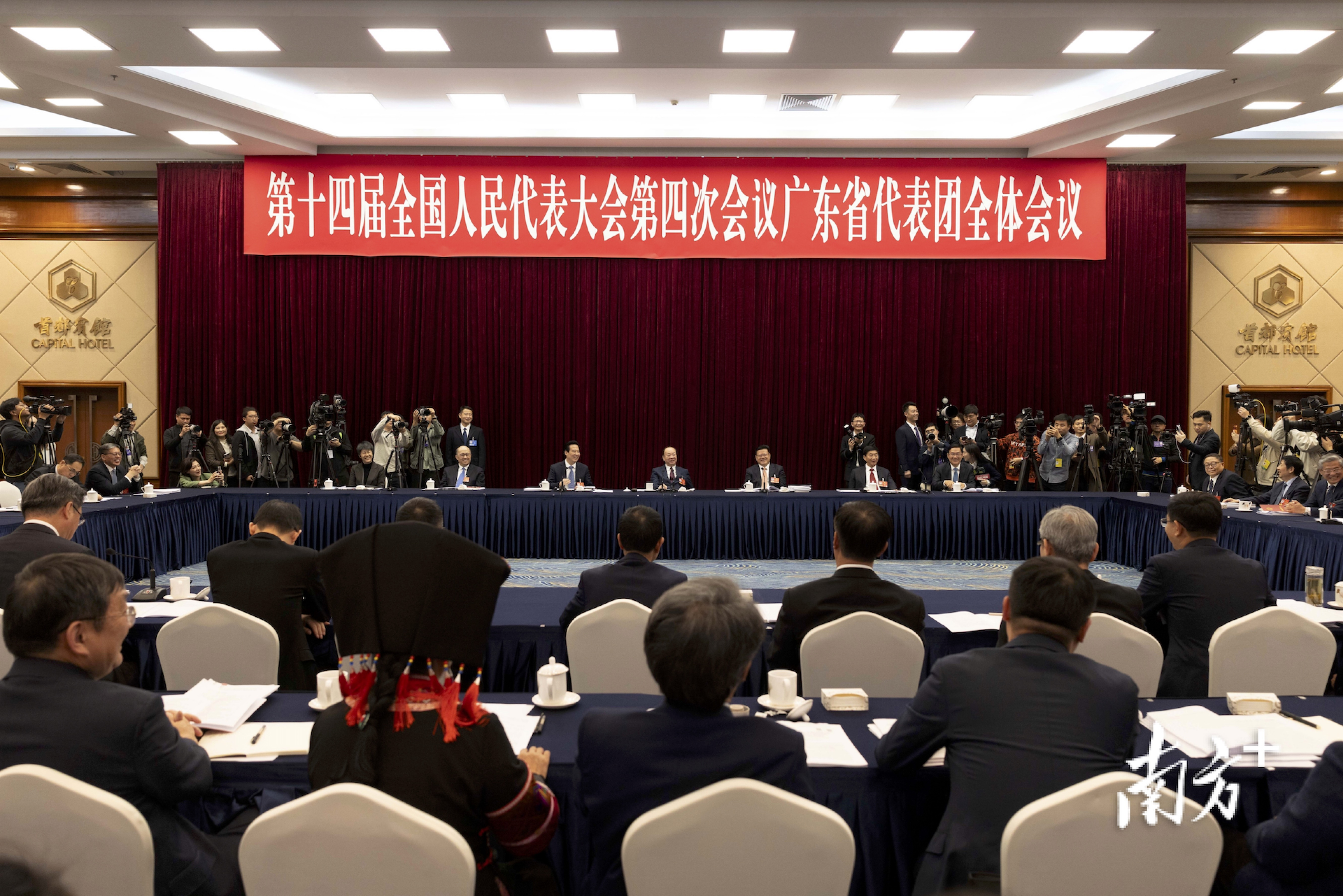
Officials from the southern province outlined their priorities during an open meeting with journalists on March 6 on the sidelines of China’s National People’s Congress in Beijing, the country’s annual parliamentary session. Huang Kunming, the Communist Party secretary of Guangdong, said the province aims to play a leading role in China’s economic and technological development during the upcoming 15th Five-Year Plan period (2026–2030).
Guangdong has long been one of the main engines of China’s export-driven economy. Home to major manufacturing and technology clusters in cities such as Shenzhen, Guangzhou and Dongguan, the province accounts for roughly one-tenth of the country’s economic output. In recent years, local authorities have increasingly emphasized innovation and technological upgrading as global competition in advanced industries intensifies.
Huang said Guangdong would continue promoting closer integration between industrial development and scientific research. The province has ranked first among Chinese regions in innovation capability for nine consecutive years, according to official assessments.
Officials also highlighted the role of the Guangdong–Hong Kong–Macao Greater Bay Area, a regional initiative linking nine mainland cities with the two special administrative regions. Despite global economic headwinds, the mainland cities in the cluster recorded foreign trade growth of 4.4 percent and an 11.3 percent increase in utilized foreign investment, according to provincial figures.
Looking ahead, Guangdong plans to cultivate large industrial clusters in emerging sectors. These include next-generation telecommunications such as 6G, the so-called low-altitude economy involving drone and aerial mobility technologies, embodied artificial intelligence for robotics applications, and quantum technologies.
At the same time, provincial leaders signaled a stronger push to expand the service sector alongside Guangdong’s vast manufacturing base. Meng Fanli, the governor of Guangdong, said authorities would prioritize high-end services, digital transformation and green development as part of broader efforts to upgrade the province’s economic structure.
The strategy reflects a wider policy direction in China, where officials are seeking to sustain growth by moving toward more technology-driven industries and higher-value services while maintaining the country’s manufacturing strengths.
Contacts
Albert Huang
E-mail: [email protected]