
The global financial system operates on a fractured foundation. Investors in emerging markets face steep geographic and custodial barriers when attempting to access large-cap equities and traditional brokerage infrastructure remains heavily siloed by jurisdiction. Mohamed Dabladji observed these structural inefficiencies firsthand during his tenure in corporate and innovation financing at BNP Paribas. He spent years working within innovation-focused banking environments, supporting high-growth companies, and managing complex risk structuring. That institutional vantage point eventually led him to a stark conclusion about the limitations of legacy capital markets.
At Mohamed Dabladji’s new venture, EquitX, artificial intelligence is the core engine driving synthetic asset infrastructure. Within a simulated R&D environment, both the user experience and protocol security are orchestrated by predictive models. When a user seeks exposure to traditional equities, the AI-driven routing system calculates optimal execution paths to ensure maximum market efficiency and reduce friction. Simultaneously, the AI Risk Engine continuously analyzes market volatility to dynamically adjust internal risk parameters, safeguarding the protocol’s solvency in real time. Beyond execution, the architecture features an intelligent advisory module that monitors global economic conditions to suggest strategic asset allocations, while an automated security firewall acts as a systemic circuit breaker against market anomalies. This convergence of machine learning and decentralized infrastructure allows EquitX to deliver institutional-grade risk management globally.
“When you evaluate capital flows from an institutional perspective, you realize the friction is rarely a lack of global demand,” Dabladji said. “The friction is almost always a result of infrastructure. We rely on a system where geographic borders and legacy custodial arrangements dictate who gets to participate in wealth creation.”
The newly launched blockchain-based financial infrastructure project aims to dismantle the geographic constraints of traditional investing. EquitX provides global access to large-cap equity exposure through fully collateralized synthetic assets. The company recently secured a grant from the Stellar Development Foundation, a significant early validation that underscores the viability of building institutional-grade financial logic on decentralized networks.
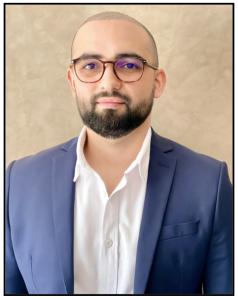
Mohamed Dabladji, CEO and Founder of EquitX
The transition from a major European bank to the frontier of decentralized finance requires a specific translation of skills. As an Innovation Banking Manager at BNP Paribas, Mohamed Dabladji specialized in risk assessment and structuring complex financing for hyper-growth tech startups. He evaluated how capital moved across borders and where it stalled. The friction was rarely a lack of demand. It was almost always a failure of infrastructure. Traditional markets require local brokerage accounts, complex custodial arrangements, and layers of intermediaries that price out a vast portion of the global population.
Making Traditional Capital Markets Programmable
EquitX bypasses these legacy hurdles by utilizing programmable financial infrastructure. The protocol allows users to gain synthetic exposure to major public equities without navigating traditional ownership barriers. Dabladji designed the economic model governing the platform to ensure that every synthetic asset remains fully collateralized. This approach relies heavily on his background in institutional risk management. He has effectively taken the rigorous risk models used in corporate banking and translated them into smart contract systems.
“We are not trying to rebuild the existing brokerage model on a distributed ledger,” Dabladji noted. “Replicating legal ownership structures introduces the exact same custodial bottlenecks we are trying to escape. By separating financial exposure from legal ownership, we can scale access globally without requiring users to pass through fragmented, jurisdiction-specific gateways.”
The backing from the Stellar Development Foundation provides EquitX with crucial momentum as it exits stealth. The foundation supports infrastructure projects that leverage the Stellar ecosystem to create equitable financial access. For Dabladji, aligning with Stellar was a strategic decision rooted in the network’s focus on cross-border asset issuance and high-throughput financial applications. The grant serves as concrete industry recognition of his architectural approach to decentralized capital markets.
Verifiable Economic Security
Dabladji maintains that the current model of equity participation is fundamentally restricted by outdated legal and geographic frameworks. He views the creation of a new programmable financial layer as a necessary step to expand market participation on a global scale. His daily work at EquitX involves coordinating relationships with blockchain foundations and strategic partners while defining the protocol’s market positioning. He ensures the project maintains credibility with traditional finance observers while appealing to crypto-native participants.
The launch of EquitX highlights a broader migration of institutional talent into the blockchain sector. Founders with deep backgrounds in traditional finance are increasingly building the infrastructure required to mature the decentralized ecosystem. Dabladji brings a precise understanding of solvency, liquidation mechanisms, and capital efficiency to a space that has historically struggled with sustainable economic design. His leadership gives EquitX the ability to bridge institutional finance principles with decentralized protocol architecture.
So how does one accomplish these monumental goals? Early development has focused heavily on establishing a robust economic security model. Dabladji personally led the design of the collateralization parameters. He understood that a synthetic asset protocol could only succeed if users trusted the underlying solvency mechanisms. The architecture he developed translates traditional banking safeguards into automated, transparent processes. This ensures that the synthetic assets tracking large-cap equities remain stable and fully backed regardless of market volatility.
“Trust in decentralized finance comes from verifiable economic security,” Dabladji said. “You cannot build a synthetic asset protocol without a rigorous, automated approach to liquidation and stability pools. We spent a significant amount of time ensuring our risk parameters could handle the specific volatility profiles of traditional equities.”
EquitX is currently expanding its core team and finalizing its initial technical frameworks. The company is positioning itself as a critical bridge between isolated global investors and the liquidity of major public markets. Dabladji continues to leverage his corporate finance expertise to guide the strategic direction of the protocol. The recent recognition from the Stellar ecosystem marks the first major milestone in his effort to redesign how the world accesses public market exposure.