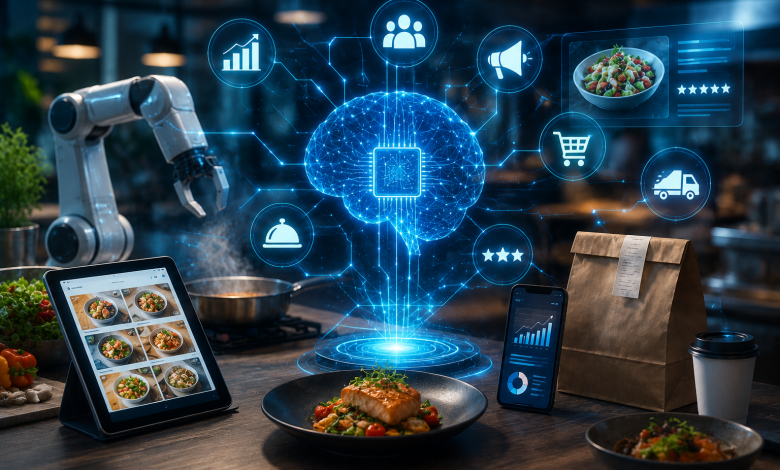
Artificial intelligence is no longer reserved for enterprise giants with deep pockets. In 2026, AI has become a practical business tool that helps independent restaurants, cafés, bakeries, food trucks, and specialty food brands operate more efficiently while delivering better customer experiences. As AI-powered solutions become more accessible and affordable, small food businesses are finding new ways to streamline operations, make smarter decisions, and stay competitive in a rapidly evolving market.
While AI initially gained attention for generating marketing content, its role has expanded significantly. Today’s food businesses are leveraging AI across nearly every aspect of their operations—from optimizing menus and forecasting inventory to improving customer service and creating personalized marketing campaigns. Those that embrace these technologies strategically are positioning themselves for long-term growth.
Why AI Is Becoming Essential for Food Businesses
Food businesses continue to face rising labor costs, fluctuating ingredient prices, changing customer expectations, and tighter competition. These challenges make efficiency more important than ever.
AI offers a practical solution by automating repetitive tasks, analyzing operational data, and providing actionable insights that would otherwise require significant time and resources. Rather than replacing employees, AI enables teams to focus on delivering exceptional dining experiences while technology handles routine administrative work.
The growing availability of user-friendly AI platforms has also lowered the barrier to entry. Business owners no longer need extensive technical expertise to implement AI-powered scheduling tools, forecasting software, customer relationship management systems, or content creation platforms.
Practical AI Applications Across the Business

One of AI’s greatest strengths is its ability to support multiple business functions simultaneously.
Smarter Menu Planning
AI can analyze sales trends, seasonal demand, and customer preferences to identify which menu items perform best. Restaurant owners can use these insights to refine menus, highlight profitable dishes, and retire underperforming offerings.
Instead of relying solely on intuition, businesses can make data-informed decisions that improve both customer satisfaction and profitability.
Inventory Forecasting and Waste Reduction
Food waste remains one of the industry’s biggest operational challenges. AI-powered forecasting tools help businesses anticipate demand more accurately by considering historical sales, weather patterns, holidays, and local events.
Improved forecasting enables restaurants to purchase ingredients more strategically, reducing unnecessary waste while ensuring popular items remain available during peak periods.
Staff Scheduling
Scheduling employees can be a time-consuming task, especially for businesses with fluctuating customer traffic.
AI scheduling systems analyze sales forecasts and historical traffic patterns to recommend staffing levels that match expected demand. This helps reduce labor costs without compromising service quality.
Personalized Customer Experiences
Modern diners increasingly expect personalized interactions. AI helps businesses deliver tailored recommendations, targeted promotions, and customized loyalty rewards based on purchasing behavior.
Whether suggesting complementary menu items or sending personalized offers to repeat customers, AI creates more engaging customer experiences that encourage repeat visits.
Marketing Automation
Marketing remains an important application for AI, particularly for small businesses with limited resources. AI can assist with generating social media captions, email campaigns, blog content, promotional materials, and advertising copy while maintaining brand consistency.
Businesses looking to better understand current trends in AI usage in small food beverage business can also explore practical examples of how AI supports branding, customer engagement, and marketing initiatives alongside broader operational improvements.
AI and the Future of Customer Experience
Exceptional customer experiences increasingly depend on speed, convenience, and personalization. AI contributes to all three.
AI-powered chatbots can answer common customer questions, assist with reservations, and provide menu information outside business hours. Recommendation engines help customers discover new dishes based on previous purchases, while automated feedback analysis allows businesses to identify recurring service issues before they affect customer loyalty.
AI also supports omnichannel engagement by helping businesses deliver consistent communication across websites, email newsletters, social media platforms, and online ordering systems. Customers benefit from faster responses and more relevant interactions regardless of where they engage with the brand.
Importantly, successful businesses view AI as a complement to human hospitality rather than a replacement for it. Technology handles repetitive processes, allowing staff to spend more time building genuine relationships with customers.
Best Practices for Responsible AI Adoption
Although AI offers significant opportunities, successful implementation requires thoughtful planning.
Businesses should begin by identifying operational pain points instead of adopting technology simply because it is available. Whether the goal is reducing food waste, improving customer retention, or streamlining marketing, selecting AI tools that align with specific objectives leads to stronger results.
Human oversight also remains essential. AI-generated recommendations should support business decisions rather than replace professional judgment, particularly when customer service, pricing, or food quality is involved.
Data privacy is another important consideration. Businesses should choose reputable AI providers that prioritize security and comply with applicable privacy regulations. Employee training is equally valuable, ensuring staff understand how to use AI tools effectively while maintaining high service standards.
Finally, measuring performance helps determine whether AI investments deliver meaningful business value. Tracking metrics such as labor efficiency, inventory costs, customer satisfaction, repeat purchases, and marketing performance provides a clear picture of return on investment.
Looking Ahead
AI has evolved from a marketing assistant into a strategic business partner for food and beverage companies of every size. From menu optimization and inventory forecasting to personalized customer engagement and operational automation, practical AI applications continue to expand as technology matures.
For restaurants, cafés, bakeries, and specialty food brands, the businesses that thrive in 2026 will not necessarily be those with the largest budgets. Instead, success will belong to organizations that adopt AI thoughtfully, integrate it into everyday workflows, and combine technological efficiency with outstanding human service. By embracing practical AI applications today, food businesses can build more resilient operations, strengthen customer relationships, and remain competitive in an increasingly digital marketplace.