Every personal injury case starts with chaos. Phones ringing constantly. Forms getting filled out. Emails arriving. Voicemails stacking up. Confusion about what information matters and what doesn’t. Confusion about whether a case is even viable. The intake process is overwhelming. Clients are injured and stressed. Staff are trying to figure out who has real cases and who doesn’t.
The system is reactive instead of strategic. AI is turning that into clarity. Smart systems now sort leads instantly. They predict claim values. They personalize follow-ups automatically. It’s not replacing compassion. It’s amplifying it by removing chaos from the early stages.
Intake is where first impressions happen. A client calls or emails. They’re scared, injured, uncertain. How they get treated in those first moments shapes their entire relationship with the firm. Traditional intake means long waits and generic questions. AI-enhanced intake means immediate responses and intelligent questions that gather actual information.
The transformation happens because AI for personal injury law firms removes the administrative burden that overwhelms traditional intake. The system handles the chaos. The humans handle the people.
Automating Empathy
This might sound contradictory. How do you automate empathy? You don’t. But you can use automation to enable empathy. An AI system that responds to client calls immediately shows responsiveness. An AI system that remembers details about cases shows attention. An AI system that personalizes follow-ups makes clients feel seen. These aren’t replacements for human empathy. They’re structures that support human empathy.
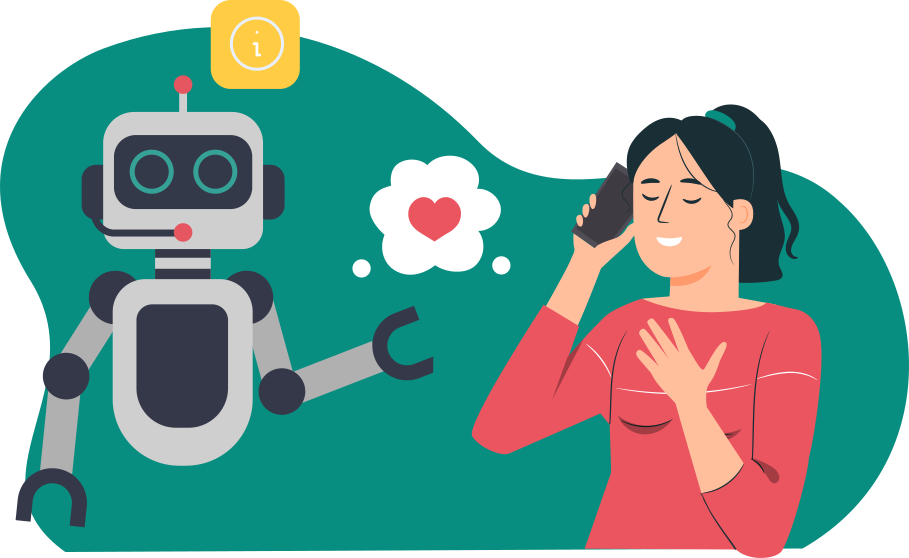
A client gets hurt in a car accident. They call the firm. An AI system answers, gets basic information, and sends them a personalized follow-up message within an hour acknowledging their situation and letting them know what happens next. The message is warm, personal, and timely. The human attorney will follow up later with genuine conversation. But the AI has already shown care by responding quickly.
Follow-ups get timed intelligently. If a case is quiet, the AI reminds the client you’re thinking about them. If a case is moving, the AI keeps them informed. The system doesn’t replace human communication but it ensures clients don’t get forgotten in the noise. That consistency in follow-up is a form of care.
Smarter Screening, Faster Results
Predictive intake identifies viable cases instantly. An AI system trained on the firm’s past cases can quickly assess whether a new case fits the firm’s practice. It asks relevant questions and analyzes answers. It identifies red flags and strengths. A case that would have taken hours to evaluate gets preliminarily assessed in minutes. The attorney still needs to review and decide, but the AI has already done a lot of groundwork.
Lead sorting becomes automatic. Not all inquiries are cases the firm wants. Some don’t fit the practice area. Some have low viability. Some have conflicts. An AI system can sort these instantly. It routes high-potential cases to experienced attorneys. It routes lower-priority cases to junior staff. It flags potential conflicts for review. The sorting happens without losing any possible cases. Promising cases get attention quickly.
Intake forms get designed intelligently by AI systems that know what information actually matters. Instead of generic forms that ask for everything, the system asks smart questions. It follows up based on answers. If a case involves a truck crash, it asks truck-specific questions. If a case involves a product, it asks product-specific questions. The information gathering becomes more efficient and more thorough simultaneously.
From Data to Direction
The information gathered during intake gets analyzed immediately. The AI can identify case value range based on comparable cases. It can identify liability strength based on facts described. It can identify damages potential based on injuries described. That preliminary assessment gives attorneys direction. They know immediately which cases are promising and which are marginal. That knowledge shapes how they prioritize their time.
The analysis also identifies gaps. What information is missing that would matter? What investigation needs to happen? What expert opinions might be needed? The AI flags these early so investigation can start immediately. Cases don’t stall waiting for information that hasn’t been requested.
Client communication becomes personalized based on the case analysis. Different cases need different messaging. A very strong liability case with minor injuries needs different communication than a clear liability case with serious injuries. The AI can generate or suggest personalized communication that addresses the specific case and the specific client’s concerns.
Scaling Compassion
The future of client care is personal because automation frees time to make it that way. An attorney who’s drowning in administrative work has no time for genuine client connection. An attorney whose administrative work is automated has time to listen, to explain, to build trust. That’s how automation amplifies care instead of replacing it.
The firms that combine AI efficiency with genuine human attention will build stronger practices than firms doing either alone. The technology removes friction. The humans provide connection. Together they create client experiences that are both efficient and personal.