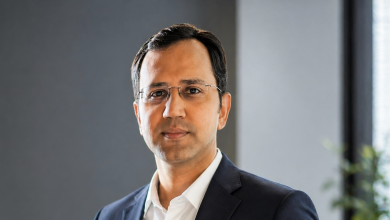
For many people, legal research means finding answers. But for Mostafa Fares, it requires people to ask better questions.
As he studied the correlation of laws, court decisions, and legal procedures, Fares’s interest in the reasoning behind legal outcomes increased, further shaping his research and professional work.
In this interview, Mostafa discusses the habits that guide his research, the value of comparative analysis, and why clear legal writing remains important for practitioners and wider audiences.
Your career seamlessly bridges active legal practice and academic scholarship. What initially catalyzed your focus on rigorous legal research as an essential extension of practical advocacy?
My research interest grew through legal practice. I often found that a single provision or judgment did not provide a complete answer to a legal question.
A researcher may need to review related legislation, earlier and later cases, procedural requirements, and official guidance. Each source can affect how the law applies.
That process made me more interested in legal reasoning. I wanted to understand not only the answer to a question, but also how courts and lawyers reached it.
Research became a way to test assumptions. A rule may look clear at first, but another authority may limit its scope. A procedural requirement may also affect whether someone can rely on that rule.
When tackling complex legal issues, methodology is everything. What is your systematic approach when initiating a new, multi-layered research project to ensure academic rigor?
I start by making the legal question as clear as I can, including the right jurisdiction, time frame, and the main issue to analyse. Then, I look at primary resources like laws, court decisions, procedural rules, and official documents before reading any commentary.
I also check if there are changes that could affect the sources I want to use, be it court decisions or law amendments. Writing drafts helps me organise my thoughts, see how strong my argument is, and spot any gaps that need more research.
Your research portfolio spans a diverse spectrum—from civil litigation to artificial intelligence. How do you select your focal areas, and how do you transition from broad legal doctrines to highly specific, researchable questions?
My research focuses primarily on comparative law, specifically examining how the civil law tradition of Egypt intersects with the common law framework of England and Wales. This dual perspective is invaluable when analyzing international commercial transactions, cross-border dispute resolution, and modern immigration systems.
When I investigate civil litigation or immigration reform, I don’t just look at isolated rules. I analyze how these rules operate structurally across different jurisdictions. For example, in civil litigation, a procedural amendment may fundamentally alter how parties prepare evidence or present an oral argument during trial. In immigration law, the wording of a rule may need to be read alongside complex case law and official government guidance.
My research into Artificial Intelligence (AI) in legal services is driven by a similar comparative question: how are different judicial systems regulating automated tools while preserving professional ethics, accuracy, and client confidentiality? The topics may change, but each one demands rigorous comparative analysis, careful reading, and a thoughtful, evidence-based use of sources.
For many, legal scholarship remains confined to purely academic circles. Why is public and peer-facing publication so vital to your professional ethos, and how do you approach the challenge of translating complex legal concepts for wider audiences?
Publication gives research a clear goal. It should explain the issue, point out key sources, and show how the evidence supports the conclusion.
It also takes discipline. Giving too much background can hide the main point, but too little context can make the analysis hard to follow.
I try to write clearly and avoid unnecessary technical language. While legal professionals need solid analysis, other readers might not. They may just need simple explanations of the legal context. Writing allows me to check my understanding, since explaining a rule in plain language often shows whether I really get it.
As a Registered Foreign Lawyer practicing in England and Wales, how does your day-to-day casework at RakLAW Solicitors feed back into your scholarship, particularly from a comparative perspective?
My work at RakLAW Solicitors in London keeps me directly engaged with active UK legislation, legal procedure, and written advocacy. I advise clients on civil litigation and immigration matters, draft pleadings and witness statements, and support complex litigation strategies before UK courts and tribunals.
This professional work constantly raises questions that deserve closer scholarly study. A case may rely on an earlier version of a rule, or an immigration appeal may hinge on a newly issued judicial precedent. Navigating these procedural requirements affects how an argument must be developed.
Furthermore, practicing within the English common law system has provided the ultimate testing ground for my comparative research. It forces me to constantly contrast my Middle Eastern legal training with UK procedural realities, making me highly aware of the unwritten assumptions that lawyers bring to legal interpretation, bridging the gap between my Middle Eastern legal background and my practice in the United Kingdom.
Reflecting on your LLM in International Business and Commercial Law, how did this advanced academic training refine your analytical capabilities and shape your current approach to writing?
My postgraduate studies at Anglia Ruskin University in Cambridge enriched my methodology, focusing heavily on independent research, critical analysis, and rigorous academic writing. It provided the academic foundation needed to critically examine complex transactions and compare international frameworks.
This strong analytical background directly supported one of my most significant professional milestones: being granted an exemption from the Solicitors Qualifying Examination (SQE2) by the Solicitors Regulation Authority (SRA). The SRA’s recognition that my qualifications and professional experience in Egypt met the strict competencies of the UK examination was a major validation of my dual-jurisdiction expertise.
The habits I built during my LLM—such as narrowing down complex legal questions, verifying primary sources, and building structured arguments—remain central to my daily practice in London as I finalize my pathway to qualifying as a solicitor in England and Wales.
With technology rapidly reshaping the legal sector, what is your perspective on the integration of artificial intelligence in legal research, and where do you draw the line between automation and irreplaceable human judgment?
Artificial intelligence can help with document review, information organisation, and the early identification of potentially relevant material.
Those functions can support a researcher, especially when a project involves a large number of documents. They do not remove the need for legal judgment.
An automated tool may return a case from the wrong jurisdiction. It may overlook a later decision or fail to distinguish between binding authority and commentary. It may also provide a conclusion without explaining the reasoning behind it.
Researchers still need to read the source, confirm that it remains current, and decide whether it applies to the question.
I see artificial intelligence as a research aid. The lawyer or researcher remains responsible for the final analysis.
Ultimately, how do you define the impact of a research-driven legal career, and what is your vision for bridging the gap between academic theory and real-world advocacy in the years to come?
A research-focused legal career combines professional work with continued study.
Practice identifies questions that need closer examination. Research provides the time and method to explore those questions in depth.
Looking ahead, my goal is to deepen my comparative analysis of how rapidly evolving regulatory environments impact cross-border operations. I want to expand my publications to address the structural tensions between traditional dispute resolution and automated legal systems, ultimately developing practical, evidence-based frameworks that serve both practitioners navigating courts and policymakers shaping future laws.
I aim to produce careful legal analysis based on reliable sources. Good research should explain what the law says, show how it works, and make clear where interpretation or uncertainty remains.
Mostafa Fares’s work reflects a sustained interest in how legal rules operate across different jurisdictions and in practice. By combining professional experience with careful research and publication, he continues to develop a career centred on comparative analysis, clear legal writing, and evidence-based scholarship.