
After leading high-pressure market turnarounds in Germany, France, and the UK for Just Eat Takeaway, scaling courier operations during COVID, and advising startups across Europe, Fabian Fuchs is now building AI products in stealth.
We spoke to him about the shift from consulting to execution, what authentic leadership looks like under pressure, and why AI needs to serve humans, not replace them.
Q: You started at SAP and BCG. What drew you into strategy, and what made you leave it?
I began my career at SAP from 2009 to 2012, during my dual studies. SAP is one of the world’s leading enterprise software providers. Back then, it was doing about $16B in revenue with 65,000 people globally. It gave me a strong foundation in enterprise tech and systems thinking.
From there, I joined The Boston Consulting Group in 2013 and worked across markets on strategy, commercial growth, and operational transformation. BCG is one of the top-tier strategy consulting firms, with $13B in revenue and offices in over 50 countries.
But over time, I realized I wanted to connect the dots between strategy and real-world execution. I didn’t want to just design frameworks; I wanted to test them. I wanted to feel the cost of a bad decision, because that’s how you improve. So I pivoted from consulting to operating roles.
Q: What was your first hands-on leadership role in tech?
In 2018, I joined Delivery Hero Germany, at the time a €100M revenue business with more than 1,000 employees, as part of the Strategy Team under the Country Managing Director. I helped shape the strategic roadmap and ran high-impact projects across commercial and operational levers.
Soon after, I took over as Head of Courier Operations Germany. When Just Eat Takeaway acquired the German business in 2019, I stayed on. I led the transition from a fully remote driver model to a hub-based logistics model, which better aligned with Just Eat’s operating system.
Q: What was it like leading through the COVID crisis?
At the peak of COVID, I was responsible for over 10,000 couriers across 50 cities. Our volume skyrocketed from 5 million to 15 million orders annually. Revenue grew to over €600M, representing 10% of Just Eat Germany’s total business.
Demand tripled overnight. Restaurants needed us to survive. Customers needed safe deliveries. And we had no playbook.
We launched contactless delivery before it became standard, implemented the Hub-Centric model to stabilize a highly volatile environment, and improved our density and pricing models. That meant better courier utilization and more revenue per delivery, especially by introducing distance-based compensation.
It wasn’t just about surviving the moment. It was about building systems that could perform under pressure, and that’s where I’ve always felt at home.
Q: You later took on the French market. What was the situation there?
In 2023, I became the Interim Country MD for Just Eat France, managing ~€70M in GTV with full P&L ownership and leading a team of about 200 people across Sales, Marketing, Customer Service, Finance, and HR.
The business was struggling not just with the numbers but also with morale and internal trust. Union relationships were tense. Teams had been through multiple shifts.
I spent time with our works councils, restructured the org, and helped stabilize operations. But what really mattered was rebuilding trust. One of our team leads asked me, “Why should we believe this plan will be different?” That stuck with me. Execution is about clarity, but leadership is about belief, and that became my focus.
Q: How did the Cit
y Lab model come about in London?
In 2024, I moved into the Director role for Just Eat’s London region, our highest-value market, worth over £700M in GTV. It had been in decline for five years, and I was tasked with turning that around.
We didn’t roll out a grand strategy from HQ. Instead, we built a London-based squad of around 50 people across functions who had the autonomy to run hyperlocal experiments. That’s how City Lab was born.
We tested CRM campaigns, restaurant incentives, vouchers, street activations, and courier incentive schemes block by block and borough by borough. Everything went through a stage-gate model. If an idea showed traction in Hackney, we’d try it in Islington, then roll it across the city. If it failed, we cut it fast.
We also built a 360° data review of each borough’s courier staffing, customer demand, and restaurant performance. We improved courier service levels through local incentive structures and rebalanced zone-level operations.
Eventually, we reallocated over £160M into what worked. The result: the market stopped declining. Then it turned around.
Q: Why leave the FTSE 100 world to start something new in AI?
Just Eat was a mature company with strong processes and global reach. But I wanted to be closer to the edge, closer to innovation. I wanted to take a risk, build something with a smaller team, and go deep on solving problems that haven’t been solved yet.
Right now, I’m in stealth mode, working on two tracks:
- Enterprise AI agentic software that improves customer centricity and operational excellence.
- Consumer wellness and lifestyle products that help people manage daily focus, health, and mental clarity.
For me, AI isn’t just a tech layer. It’s a systems tool. But you need to design for humans in the loop because, for now, humans still run organizations. That means we need to account for behavior, emotion, and judgment, not just data flows.
The best AI will absorb low-leverage tasks, giving humans more headspace for judgment, creativity, and leadership. That’s what I’m building toward.
Q: You also work with founders. What are you seeing in early-stage ecosystems?
In 2025, I served as a Visiting Partner at Antler. Antler is a global VC with offices in 23 cities. They raised over $510M recently and made 500 investments in a single year, including unicorns like Airalo and Lovable.
I advise founders on building operating systems that scale, not just hiring or fundraising, but building the proper scaffolding to hold their growth. We focus on stress-testing PMF, reducing chaos, prioritizing sales motion, and shaping go-to-market in the real world.
I also mentor at ESCP Europe’s Blue Factory, where I work with student founders turning theory into traction.
What I tell founders is: you can move fast, but only if your system can keep up. If your ambition is outrunning your ops, you’re on the right track, but only if you build something that won’t collapse under pressure.
Q: What do you think is most misunderstood about leading in uncertain times?
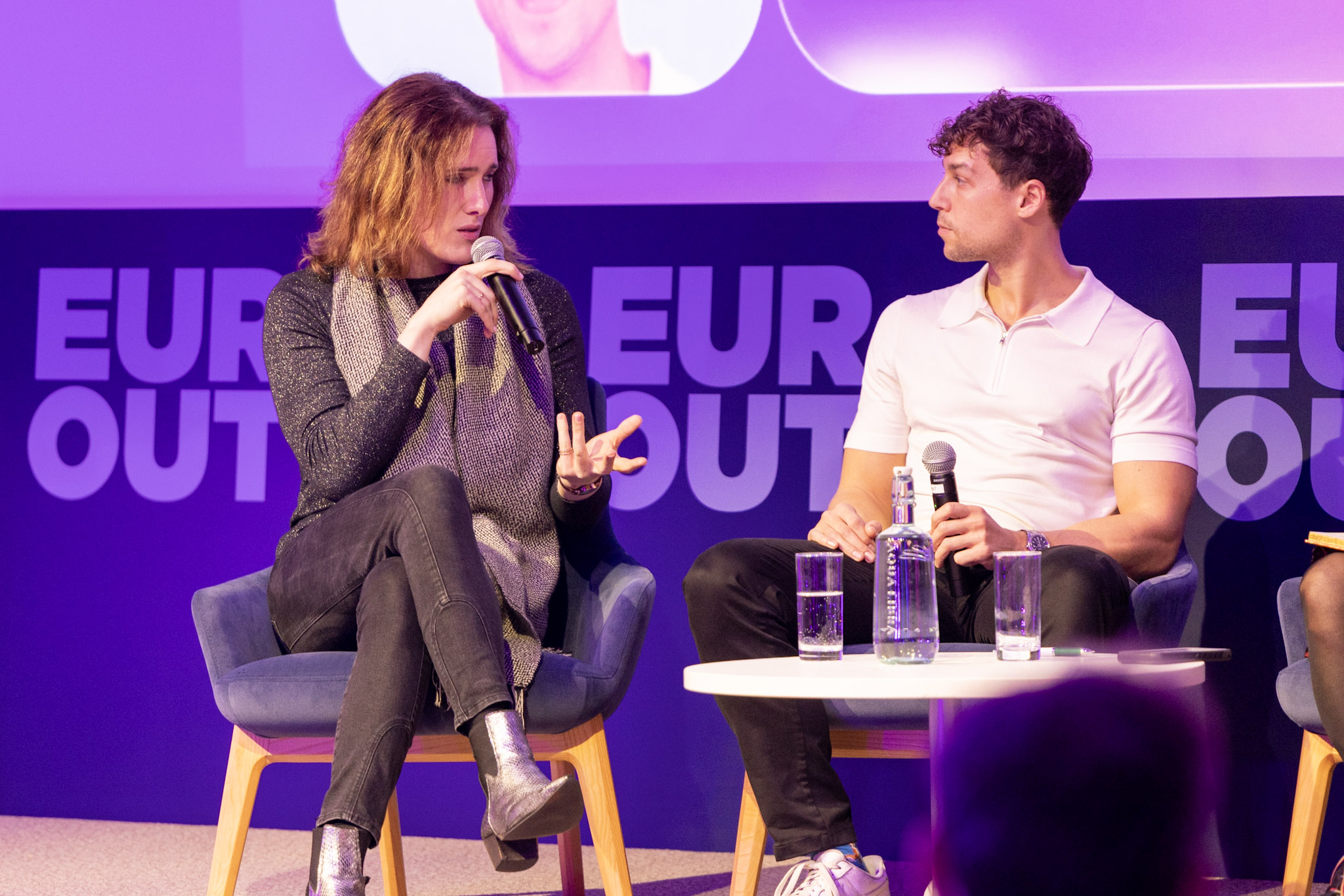
Image by Fabian Fuchs on LinkedIn
Ambiguity isn’t a bug; it’s a feature. You can’t always remove it, but you can build teams that operate within it.
At Just Eat, that meant decentralized squads. At startups, it means fast, high-trust experiments. You need people who understand the direction, own the execution, and have the room to adapt.
You need guardrails, not scripts. That’s where good leadership lives.
Q: Final takeaways for founders, operators, or anyone building in tech?
Here’s what’s stuck with me:
- Test before you scale. Local wins beat global assumptions.
- Design simple solutions. The best systems aren’t elegant, they’re durable.
- Lead with empathy. Numbers matter, but people carry them.
- Live the problem. If you’ve felt the pressure, you’ll build better tools.
The future of work won’t be built in theory. It’ll be built by operators who’ve lived the mess, solved real problems, and still show up to make it again.
For more insights, I also share my thinking on Medium, where I write about real‑world applications of AI, organizational systems, and what it actually takes to build and operate at scale.