Artificial intelligence has quickly moved from experimental technology to a core component of modern business operations. In recent years, companies across industries have adopted AI-powered tools for tasks such as content generation, data analysis, automation, and customer support.
However, many organizations are discovering that simply adding AI tools to existing workflows is not enough to unlock the full potential of the technology.
According to technology entrepreneur and CTO Sacha Masson, the next phase of AI adoption will require companies to rethink their entire technology architecture.
“Many organizations are currently integrating AI as isolated tools,” Masson explains. “But the real transformation will occur when companies move from using AI tools to building integrated AI systems embedded within their core infrastructure.”
Masson, who has spent more than a decade working on large-scale digital platforms and software architecture, believes this shift represents a fundamental change in how modern technology systems are designed.
The Limits of AI as a Standalone Tool
Over the past two years, the rapid emergence of generative AI has led to widespread adoption of AI-driven applications across business functions. Marketing teams use AI for content creation, customer service teams deploy AI chatbots, and engineers rely on AI copilots to assist with development.
While these tools can provide immediate productivity gains, their impact is often limited when they operate in isolation.
Many organizations face challenges integrating AI outputs with their internal data systems, workflows, and decision-making processes.
“Using AI tools without connecting them to the broader technology stack often leads to fragmented workflows,” Masson says. “The true value of AI emerges when it becomes part of an integrated system rather than a standalone application.”
The Rise of AI-Centric Technology Architectures
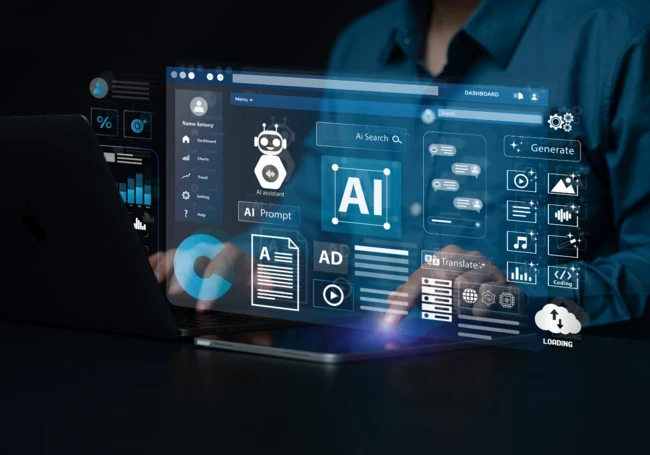
To fully leverage artificial intelligence, companies must begin designing AI-centric architectures.
This means building technology platforms where AI capabilities are integrated directly into the underlying infrastructure rather than layered on top of existing systems.
In practice, this requires several foundational components.
First, organizations must establish robust data pipelines capable of continuously feeding high-quality data into AI models. Without reliable data infrastructure, even the most advanced AI models cannot deliver meaningful results.
Second, companies need scalable cloud and compute environments that allow AI models to operate efficiently across applications and services.
Third, organizations must develop APIs and modular architectures that allow AI systems to interact with other parts of the technology stack.
According to Masson, these elements together form the backbone of what he describes as AI-enabled digital platforms.
AI Systems and Operational Intelligence
As companies build more integrated AI architectures, the role of artificial intelligence within the organization will also evolve.
Instead of functioning primarily as task-specific tools, AI systems will increasingly support broader operational intelligence.
For example, AI systems can analyze large datasets across departments, identify patterns, and generate insights that guide business decisions. In product development, AI can help optimize user experiences by analyzing behavioral data in real time.
Similarly, in operations and logistics, AI-driven forecasting models can improve planning accuracy and resource allocation.
“AI systems are most powerful when they operate across multiple layers of the organization,” Masson explains. “When integrated properly, they can provide insights that improve decision-making at every level.”
The Role of Technology Leadership
Building AI-centric architectures requires strong technical leadership.
CTOs and engineering leaders must design systems that balance innovation with scalability, security, and reliability. Integrating AI into core infrastructure also requires careful planning around data governance, model lifecycle management, and system interoperability.
Masson believes this architectural challenge will define the next generation of technology leadership.
“Companies that successfully integrate AI into their core platforms will gain a significant competitive advantage,” he says. “But achieving this requires more than adopting new tools—it requires rethinking how technology systems are built.”
Technology leaders must therefore move beyond experimentation and focus on long-term AI strategy.
This includes designing architectures that allow organizations to continuously integrate new models, adapt to evolving technologies, and scale AI capabilities across the enterprise.
The Future of AI-Native Organizations
As AI technologies continue to evolve, many organizations will gradually transition toward what could be described as AI-native architectures.
In these environments, AI is embedded throughout the technology stack—from data infrastructure and analytics pipelines to customer-facing applications.
This shift will fundamentally change how companies design products, manage operations, and deliver services.
According to Sacha Masson, the companies that succeed in the coming decade will be those that treat AI not as a productivity feature, but as a structural component of their technology platforms.
“The organizations that gain the most value from AI will be those that redesign their architecture around it,” Masson says. “Moving from AI tools to AI systems is the next major step in the evolution of enterprise technology.”
As businesses continue to explore the potential of artificial intelligence, the transition toward integrated AI systems may ultimately become the defining technological transformation of the modern enterprise.