The application to join the insurance brokerage marketplace looked clean. The paperwork was in order, and a routine background check turned up nothing. Then Saarth Shah’s AI found his suspicious brother. At the home address the applicant had given, records placed a second man, one who had been arrested for insurance fraud. No conventional background file had drawn a line between the two because none was built to do so. Shah’s system did.
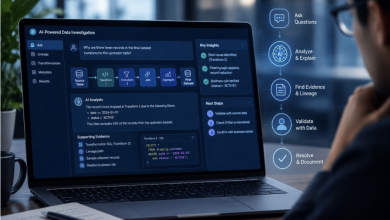
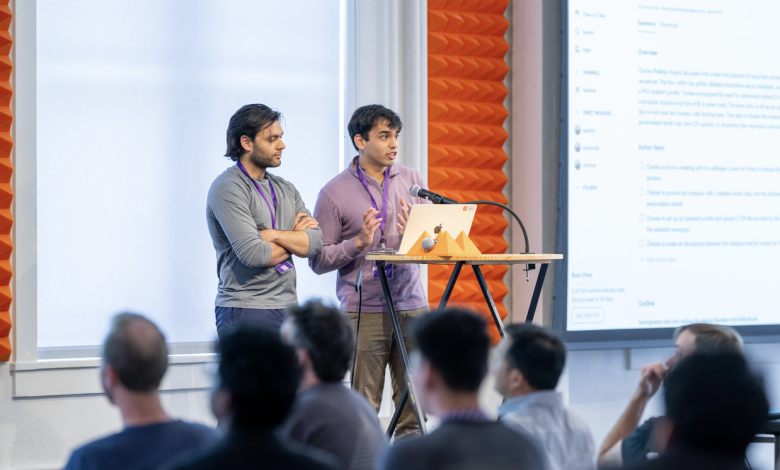
The catch came out of a demonstration Shah ran for the marketplace, and it is the kind of connection his company exists to make. Shah is the co-founder and chief executive of Sixtyfour, a research-agent startup he began out of Y Combinator’s 2025 class. He decided on its pivot into AI-led investigations, and he built the first version of the intelligence engine himself, the one his team now extends. Rather than sell a database, Sixtyfour deploys autonomous agents that investigate a person or company on demand, drawing on live web sources, public records, open-source intelligence, and licensed data to produce a fresh, auditable report. When the agent says a seller is who they claim to be, it can show why.
The most expensive seller on a marketplace is often the one who does not exist, and fraud like this has become the defining tax on digital commerce. In 2026, 79 percent of online marketplaces report that fraud is rising, and the net fraud rate across them has climbed to 19.2 percent, nearly five times the global average of 4.18 percent. Impersonation now accounts for roughly 85 percent of all fraud attempts, and the faces, documents, and voices fraudsters submit are far more likely to be AI-generated than they were a year ago.
The cost of getting it wrong is asymmetric. Industry estimates put the average merchant’s loss at $4.61 for every dollar of fraud once chargebacks, fees, and forfeited goods are counted, and chargeback volume is on track to reach 337 million transactions in 2026.
The systems companies bought to stop this were built for a slower world. Legacy providers such as LexisNexis, the risk and data giant owned by RELX, sell outdated records that were accurate the day they are filed and slightly less accurate each day after. Shah’s conviction here is firsthand. A customer once showed him the output they were getting from one of the premier risk-data sources, and it stopped him in his tracks. “I looked at it and thought, this has not been updated in a year,” Shah said.
“Static data providers are selling you a snapshot of a world that has already changed,” Shah said. “The whole category is decaying in real time.”
Staleness is only half the problem. The other half is depth. A static file records what is explicit: a name attached to a registered company, an address on an incorporation document, a number in a filing. It does not tell a trust-and-safety team whether the seller’s website actually exists, whether it existed three months ago, who owns the company behind it, whether the people running it have been arrested before, whether people are complaining about their products, or what they are posting on their public social accounts. Those are the answers that decide a case, and they rarely sit in a single record. They have to be assembled.
Harder still are the structures fraud hides inside. A conventional database can show that a person is listed as the officer of a company because someone entered it into a form. It cannot walk the chain outward, from a shell company to its parent, to a second entity sharing the same registered agent, to the individual who controls all three and appears on none of the paperwork. That traversal is what an investigator does by hand, and what Sixtyfour built its agents to do on demand. The brother behind the insurance applicant surfaced the same way.
In trust and safety, the spread between right and almost-right is the entire purchase.
“A trust-and-safety team cannot act on a tool that is wrong a meaningful share of the time,” Shah said. “Flag the wrong seller, and you punish an honest merchant. Miss the right one, and you fund a scam. At marketplace scale, both happen constantly.”
The fakes have grown structurally harder to catch. Fraudsters increasingly build synthetic identities, blends of real and fabricated details that pass a document check. What they cannot fake is a consistent, verifiable history across the open web, the dark web, public records, and filings, and no fabricated entity network holds together once an agent starts pulling the threads.
The argument has found buyers quickly. Since launch, Sixtyfour’s revenue has grown severalfold, and its agents now run inside companies including TRM Labs, the blockchain-intelligence firm; Airwallex, the cross-border payments company; Cloaked, the digital privacy company; and Surge AI, the data-labeling firm. Through a distribution partnership with FullPac, Sixtyfour packages its research into due diligence reports that evaluate the backgrounds, affiliations, and potential risks associated with public officials.
The timing has helped. Over the past year, venture capital has swung toward the unglamorous infrastructure beneath AI, treating data quality, fraud, and regulated financial software as a market rather than a feature even as money for consumer AI cools.
What makes the moment dangerous for incumbents is that the buyers and the threats are changing at once. Marketplaces that once treated fraud as a cost of doing business are reclassifying it as a trust problem that touches the whole platform. Amazon spent 2025 recasting counterfeit and fraud enforcement in those terms, reporting that it removed more than 15 million counterfeit productsworldwide.
For two decades, the business of knowing who someone is belonged to a handful of database companies whose product was, finally, a file. That model assumed the world would hold still long enough for the file to stay true. It does not. Shah is betting that the platforms, payment networks, and risk teams now absorbing those losses will pay for something the old files cannot offer. The benchmark says that, for now, he has built the most accurate option on the board.