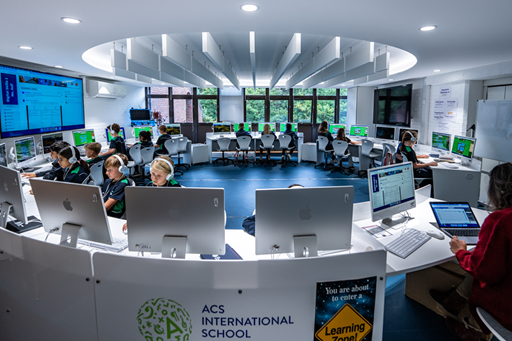
With an increasing amount of UK students using generative AI, ACS International Schools’ Director of Education and Integrated Technology, Dr Robert Harrison shares his top tips for parents supporting their children’s use of AI.
Robert’s tips will ensure that children are using AI technology ethically and effectively.
Be cautious
“Firstly, it sounds simple, but the most important thing is to remind your children to be careful when using AI. Although the technology is already in widespread use, it is still new, learning and evolving every day. Ensure your children are mindful of privacy; they should not share personally identifiable information. As everyone must learn these days, if a service is free, then we (information about us) is the product and the price we pay. Anything you or your child share with public AI, such as your address or financial information, might be stored, used, and potentially accessed and used by others.”
Stay honest, and encourage your child to do the same
“Learning how to act with integrity is a life lesson that has new dimensions in a world filled with generative AI. Talk with your children about how they are using AI in their schoolwork. Learn about school and exam board policies for academic honesty and the use of generative AI. Don’t let AI undercut learning. Explore what’s possible together, exploring how AI can support learning diversity, boost creativity, and personalise learning. Discuss with your child’s teachers how they are ensuring that assessments are authentic, effective, and fair. If your child simply passes on their work to AI, they fail themselves and cheat the learning process. Also, keep in mind that many AI technologies have user agreements that limit their use by children and younger teenagers.”
Apply critical thinking
“AI accelerates the 21st century’s demand for critical thinkers. Help your child discover that AI tools often get it wrong, even if the answer sounds correct or convincing. To vastly oversimplify an amazing new technology, AI works by solving credibly complicated statistics problems very quickly – it can not generate new ideas and often presents out of date or factually incorrect information. It also struggles to understand context, background information, relationships, and ethics. Help your children learn how to identify synthetic media (AI generated images, audio, and video) and be critical consumers of online information. Individuals and societies will be grappling even more with important questions about what is real and what is true.”
Remember what it means to be ‘human’
“AI can be dangerous, even deadly. ‘Killer robots’ are still in the realm of science fiction, but AI has already led to tragedy for vulnerable young people. Please help your children understand that AI is not human, and digital friends can be dangerous and untrustworthy advisors. AI can mimic human emotions, but technology sometimes escapes from—or is not sufficiently encoded with—a moral compass. In many case, AI technology (like other online applications) is trying to keep you online so that its designers can develop lucrative income streams from data mining and advertising. And if you are developing educational or popular resources powered by AI, make sure you are keeping humans in the loop.”
Embrace the technology
“Finally, my last tip is to experiment with these new technologies and truly embrace the amazing resources that generative AI can unleash for education, business, and personal life. AI is here to stay, with billions being invested in ways to increase automation, creativity, and efficiency. Do not shy away from AI. Explore it together with your family, understand how it works, experiment with cautious optimism, learn to use it responsibly to your child’s advantage. Become an expert at prompt engineering. Improve your world language skills. Save time at work and in domestic administration that you can invest in maintaining loving relationships with your children and having fun with your family. When it comes to AI, that’s the best use of all.”