



Ukraine
European transport infrastructure can no longer be assessed solely in terms of freight volumes, journey times or economic efficiency. Russia’s full-scale war against Ukraine has demonstrated that railways, roads, bridges, ports and logistics terminals are also part of the security system.
In a crisis, the transport network must ensure not only civilian transportation, but also the rapid movement of military equipment, fuel and other strategic cargo. This is why dual-use solutions — infrastructure and rolling stock designed to serve both civilian and defence purposes — are becoming one of the key areas in the development of European infrastructure.
In peacetime, they serve the needs of the economy, while in the event of a military or other large-scale crisis, they can be rapidly deployed for defence logistics.
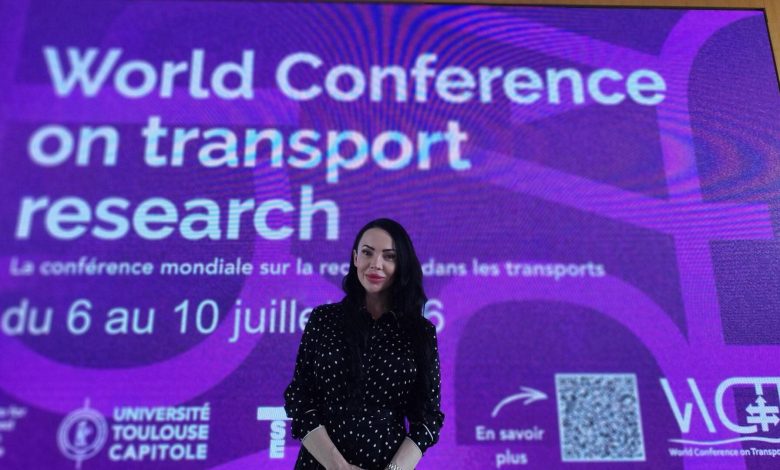
This issue was one of the areas covered by my research on Ukraine’s integration into the Trans-European Transport Network, TEN-T, which I presented at the World Conference on Transport Research 2026 in Toulouse, France.

One of the main conclusions of the research is that Ukraine should not be viewed solely as a country whose transport infrastructure needs to be rebuilt and brought into line with European Union standards. Ukraine can already serve as a source of practical solutions for strengthening transport resilience and military mobility throughout Europe.

Ukrainian enterprises possess experience that most European countries do not have. They adapt freight platforms, low-loader wagons and tank wagons for operation under wartime conditions, repair rolling stock under the constant threat of attack, operate amid resource shortages and rapidly return damaged equipment to service.
This knowledge was acquired not during exercises or through theoretical modelling, but under the real-life conditions in which the railway system has had to operate during a full-scale war.
Ukraine’s integration into TEN-T must therefore be a two-way process. Ukraine needs European technologies, investment and technical standards. At the same time, Europe needs Ukraine’s experience in crisis logistics, rapid repairs, rolling stock adaptation and maintaining the continuity of transportation during attacks on infrastructure.
Military Mobility Is Becoming Part of Europe’s Transport Policy
The development of TEN-T is becoming increasingly closely linked to Europe’s Military Mobility policy. Civilian transport corridors must also meet defence requirements: they must be capable of carrying heavy equipment, have sufficient capacity, provide access to ports, logistics terminals and strategic facilities, and remain operational in crisis conditions.
However, the mere existence of modernised railway tracks or a new terminal does not create a fully functioning military mobility system.
Europe also needs appropriate rolling stock, alternative routes, repair facilities, trained personnel and clear mechanisms for the rapid mobilisation of public and private transport operators.
An important element of this system should be dual-use rail platforms that are used for commercial transportation in normal circumstances but can quickly be repurposed, when necessary, to transport military equipment and other strategic cargo.
What Are Dual-Use Rail Platforms
Dual-use rail platforms are freight wagons and flat wagons that, either by design or following rapid adaptation, can be used for both civilian and defence transportation.

They include universal flat wagons for containers and wheeled vehicles, reinforced wagons for heavy cargo, low-loader platforms for tracked and oversized equipment, as well as tank wagons adapted for the safe transportation of fuel.
The main advantage of this approach is versatility. In peacetime, this rolling stock operates on the commercial market, transporting vehicles, containers, industrial equipment and other cargo. In the event of a military or other large-scale crisis, it can be used to perform strategic tasks.
This eliminates the need to maintain a separate large fleet of specialised wagons that could remain idle for years while waiting for an emergency. Instead, an economically viable system is created that remains in constant use, is regularly maintained and is ready to be rapidly repurposed.
At the same time, a dual-use platform is not simply a civilian wagon with additional securing devices. Its design must take into account load capacity, axle load, the weight and dimensions of the equipment, frame strength, the possibility of rapid loading and unloading, reliable cargo securing, braking performance and compatibility with logistics terminals.
Maintainability is equally important. During a crisis or war, rolling stock must be returned to service quickly, even when access to components is limited, production facilities are damaged or traditional supply chains are disrupted.
Why It Makes Sense to Transport Heavy Equipment by Rail
Road transport remains indispensable for the final section of a route and in areas without railway connections. However, moving heavy equipment over long distances exclusively by road requires large numbers of specialised tractor units, drivers, escort vehicles and substantial amounts of fuel.
Such convoys face restrictions related to speed, weight and the load imposed on bridges and road surfaces. Their movement also depends on route approvals and national regulations, which may differ across European countries.
The advantages of rail transport are particularly evident from the figures. A single train consisting of 40–50 wagons can carry, in one journey, a volume of cargo equivalent to 150–300 heavy trucks, or the equipment of an entire brigade. In practice, it can replace a road convoy stretching for 7–10 kilometres or more. At the same time, rail transportation is three to four times more efficient in terms of fuel consumption and requires significantly fewer personnel: one train crew instead of dozens of truck drivers and escort vehicle crews.
This reduces wear and tear on roads, simplifies the organisation of long-distance transportation and makes it possible to plan routes more predictably and concentrate significant volumes of cargo within a single shipment.
At the same time, the railway system also has vulnerabilities. Its operation depends on bridges, stations, electricity supply, marshalling yards and designated routes. Damage to a single critical facility can affect traffic along an entire corridor.
Genuine military mobility therefore requires more than specialised platforms. It is also necessary to develop alternative routes, dispersed loading sites, stocks of spare parts, mobile repair units and alternative sources of energy supply.
Ukrainian Experience That Most European Countries Do Not Have
Before the beginning of the full-scale war, dual-use remained largely a concept embedded in strategic documents for many European countries. For Ukraine, it has become an everyday practical necessity.
Ukrainian enterprises have adapted freight platforms to transport heavy and armoured equipment, reinforced structures and cargo-securing systems, maintained the operational condition of tank wagons and repaired wagons amid disrupted supply chains and the constant threat of further attacks.
Low-loader platforms designed to transport tanks, armoured vehicles and other heavy tracked equipment are particularly important for military mobility. Their lowered loading deck reduces the overall vertical dimensions of the cargo and allows oversized equipment to be transported along routes with height restrictions, including beneath bridges and other engineering structures. Ukraine’s experience has also confirmed the critical importance of this type of rolling stock and the need to rapidly adapt civilian platforms to new defence tasks.
Experience in organising logistics itself has been equally important. Large concentrations of wagons, fuel and equipment can become targets. Rolling stock therefore has to be dispersed, its dwell time at stations reduced, routes changed rapidly and swift recovery following damage ensured.
This approach changes the very understanding of transport resilience. It is no longer only about preventing damage to infrastructure. In modern warfare, it is impossible to eliminate such damage entirely. Resilience therefore means the ability of a system to continue operating, adapt quickly and recover after strikes.

This is precisely where one of Ukraine’s key areas of expertise lies. Ukrainian companies understand the entire life cycle of dual-use rolling stock: from design and adaptation to repair, restoration and return to service within the shortest possible time.
From Individual Wagons to a European System
Europe needs more than individual specialised wagons stored in reserve for the event of war. It needs to create a fully functioning military mobility ecosystem.
This ecosystem should include certified dual-use platforms, a reserve fleet of rolling stock, repair facilities, multimodal terminals, trained specialists and unified rules governing cooperation between public authorities, defence institutions and private companies.
It is important to determine in advance which civilian wagons can be adapted for defence purposes, where they will be maintained, which routes they will use and who will be responsible for their rapid deployment.
Unified or mutually recognised technical requirements are also necessary. A platform certified in one country should be able to operate on key European corridors without unnecessary additional procedures.
The development of reserve repair capacity requires particular attention. In a crisis, it is impossible to rely solely on a small number of large enterprises or centralised depots. A network of repair hubs is needed that can operate autonomously and service rolling stock belonging to different operators.
The Barrier Between the 1,520 mm and 1,435 mm Gauges
Ukraine’s full integration into the European military mobility system also requires overcoming one of the main technical obstacles: the difference between Ukraine’s 1,520 mm railway gauge and the European standard of 1,435 mm.
Because of this difference, even a specially prepared platform cannot travel uninterrupted along the entire route from a Ukrainian enterprise to most EU countries.
At the border, the equipment must be transferred, the wagon bogies must be replaced, or specialised gauge-changing technologies must be used. All of these procedures require time, additional personnel and appropriate infrastructure.

This is why a dual-use strategy must include more than the production and modernisation of wagons. Border terminals, European-gauge access tracks, transshipment facilities and repair centres for 1,435 mm rolling stock must be developed simultaneously.
In the future, Ukrainian enterprises could not only service the country’s own fleet, but also become part of the European system for manufacturing and repairing rolling stock for TEN-T and Military Mobility.
How Ukraine Can Contribute to European Military Mobility
Ukrainian enterprises can be included in this system as manufacturing, engineering and repair partners.
Promising areas include the modernisation of the existing freight fleet, the production of platforms for the 1,435 mm gauge, the supply of components, the creation of repair hubs in Ukraine’s western regions and participation in joint projects with European railway operators.
Another area could be the establishment of a joint European reserve of dual-use wagons. In peacetime, this rolling stock would be used for commercial transportation, but it would be subject to a predefined procedure for rapid deployment in the event of a crisis.
Ukraine’s experience should also be taken into account when developing new standards for the protection and maintainability of rolling stock.
Traditional European requirements focus on safety, technical compatibility and economic efficiency. Ukraine adds another fundamentally important parameter: the ability of the transport system to continue operating after attacks, damage and the loss of individual infrastructure elements.
This includes the speed of repairs, the availability of components, the ability to carry out work outside large specialised facilities, the interchangeability of individual elements and the capacity to adapt wagons to different types of cargo.
Not Only Integrating Ukraine into Europe, but Also Applying Ukrainian Solutions
Ukraine’s integration into TEN-T is often described as a process of transition to European technical and regulatory standards. However, in the fields of dual-use infrastructure and military mobility, this process must be reciprocal.
Europe has technologies, financial resources and an established regulatory system. Ukraine has practical experience in maintaining railway operations during a full-scale war.

Combining these capabilities could create a new model for Europe’s transport system — one that is economically efficient in peacetime, while also being prepared for military threats, large-scale crises and disruptions to established logistics routes.
Ukraine’s participation in Military Mobility should therefore not be limited to extending European transport corridors to the Ukrainian border or financing individual infrastructure projects.
Ukrainian manufacturers, repair enterprises, engineers and logistics operators should be included in the shared architecture of European security as full partners and providers of practical solutions.
Ukraine can be more than a recipient of European standards and technologies. It already possesses knowledge that can make Europe’s transport system more resilient, adaptable and prepared for challenges that, until recently, appeared purely theoretical.
Disclaimer:
This article reflects the author’s views and is provided for informational purposes only. It does not constitute professional, legal, military, transportation, or policy advice.
Media Contact:
Alona Lebedieva
Email: [email protected]