In 2019, Rita Scroggin was running an executive search practice when she was approached by a client with a particular question. “Do you place people on private boards?” the client asked. Without missing a beat, Scroggin replied, “We do now.”
Scroggin, who hails from Germany but has spent the last 30 years in the Bay Area, reached out to some of the women she knew and asked about their interest in joining a new organization.
Her very first member replied in a way that would help define the new group.
“I’d love to, but I don’t want to be part of another five-thousand-member organization,” she said.
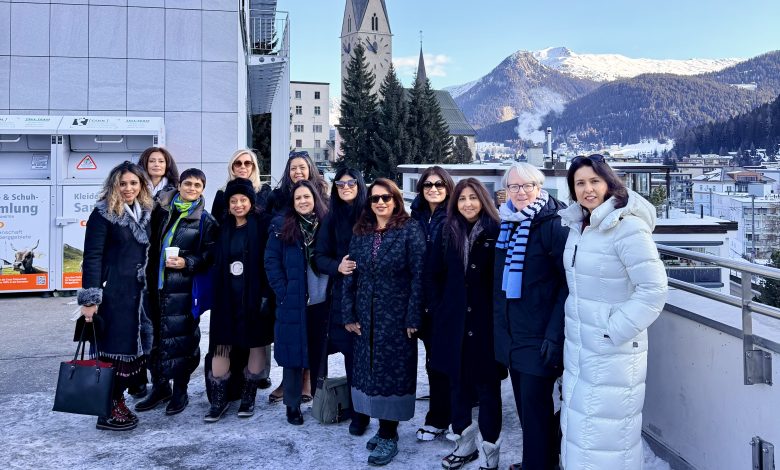
Fast forward seven years, and Scroggin has concentrated this idea, along with several others, into Firstboard.io. The “curated” group of women—meaning they are asked to join by invitation only and prioritize meeting in person (they just returned from Davos)—specializes in AI, and most have either served on boards or have the background to make them ready to step into a board.
The mission has evolved to reflect the expertise of the women involved.
While most major businesses in the U.S. understand the importance of AI, fewer have installed a director who has experience leading AI development or from a technology company involved in AI.
At the same time, women remain under-represented on most boards.
These two perspectives are necessary, Scroggin argued in a recent interview, to face the devastating challenges ahead for many businesses in a changing landscape marked by technological disruption and the increasing power of women in the consumer landscape.
“It’s really important right now to bring in that outsider who hasn’t been part of the usual network, who can ask about the need to look at what could be coming down the road next year or even six months from now, or even say something like, ‘By the way, OpenAI just did this, and this could impact us in this kind of way,’” she said.
Boards at this critical moment need AI experts who are women, because they are going to ask the uncomfortable questions arising out of uncertain times.
“We need that kind of expertise, people who know what may be a threat to an organization,” said Scroggin, sitting in her San Francisco office in front of a print of a lesser-known Kandinsky painted to resemble sails on the water.
Overcoming resistance to the perspectives brought by people who are conversant with AI on the deepest level, and who have the further outsider perspective of being a woman, will be perhaps the greatest challenge to companies seeking to move forward, she said.
“I’ve heard from many people, especially these days saying, ‘We don’t want somebody who’s disruptive,’” she said, wryly. “People are interested in disruption, but just not in their own company.”
Disruption is coming, however, often in ways companies can’t imagine.
Every company, Scroggin argues, will be touched by AI in some way, whether you’re a technology company or manufacturing screws.
At the very least, cyber security will be a vulnerability for everyone.
“AI enables data breaches at a scale which was not possible before,” said Scroggin
Then there is the difficulty of gaining access to the petri dish of innovation and deal making in the U.S. for non-U.S. companies.
“Companies, maybe even AI companies that are based outside the U.S. might be sitting in the Nordics or in Germany or the U.K. or Ireland or wherever, yet they’re building for the U.S. market and maybe the majority of their customers are actually here in the U.S. and they would benefit from having somebody on their board who is in Silicon Valley or in New York where your major tech centers are and who knows the right people and can make introductions and connect them to the other ecosystem, who goes to conferences all the time and is highly visible,” she said.
Firstboard.io has engaged in board searches for companies seeking those kinds of connections, she added.
Then there is the growing economic clout of women, who already make up half the population in this country. Women constitute 80% of purchasing power in groceries and pet supplies, new home purchases, online shopping, back to school shopping, gas purchases, clothing and retail store purchases, and vacation planning, according to the American Consumer Council.
In buying new homes, women make up 91% of economic clout: they begin the search and contact the agent in most cases.
Across other parameters, such as median income, and small businesses, women have consistently been outstripping men over the past few years, according to Bank of America.
“If you generally look at consumerism across the U.S., in terms of who is buying right now, predominantly women are making the decisions,” said Scroggin.
At the same time, women are living longer and investing more money than before, she said.
“Women are becoming wealthier because they’re living longer and they’re starting to invest in companies that are starting funds and they’re also becoming increasingly influential as an LP and in pension funds,” she said.
Synergy is yet another factor.
Companies looking to do business with another company, or invest in a startup, may be turned off if their prospective partner does not have a woman on the board, particularly if the parent company does have women in leadership.
In the end, though, it is more about expertise than gender. Firstboard.io has its own AI council and publishes white papers for big companies.
The question, though, is: how to get those papers in front of big companies that may or may not recognize the need for radical AI overhaul?
Even among S & P 500 companies, the firms with a single director with AI expertise rose only from 10.5% in 2022 to about one fifth last year, according to the Harvard Law School Forum on Corporate Governance.
Yet Scroggin believes the expertise of her cohort is enabling them to get the word out. For instance, she said, the former CTO of HBO, who launched HBO Max, is among their members, no stranger to communicating the need for a new corporate landscape.
A recent success involved placing one of their members with StrongDM, a company which has Fortune 500 companies among its clients and provides a “security guard” for a company’s technology systems.