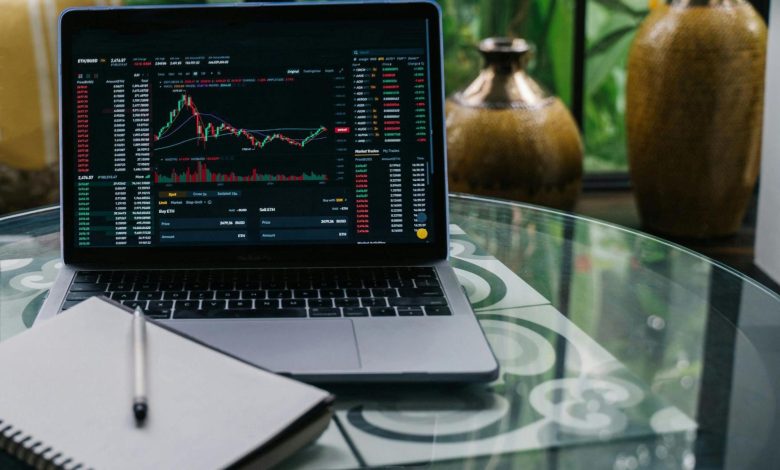
The use of artificial intelligence and machine learning systems to analyse financial markets is not new. AI technology has been utilized to generate trading signals, automate strategies, or support investment decisions for years. Some are fully automated through trading bots, while others act as decision-support tools for human investors.
So if machines can spot patterns faster than humans, could they also deliver more consistent profits? That is the promise. The reality is more nuanced.
What AI Trading Means
When people use AI trading tools, what they really want to know is whether they can tell them what to buy and when to sell. But the real use case of AI tools in finance is much less dramatic than this.
It is used for analysis, surveillance, risk systems, compliance, and internal productivity, not for making final decisions. Regulators consistently warn investors about the inaccurate or misleading investment information of AI based on incomplete or outdated data. These tools are not authorized financial advisers and should not be treated as such. Nobody can predict financial markets with consistent accuracy, and there are no shortcuts to wealth. That applies to humans and AI.
Where AI Adds Real Value In Trading
So, how to use AI tools correctly in trading? It’s already known that handling large amounts of data quickly is one of AI’s strongest skills. It is good at repetitive tasks and spotting patterns that are hard to see manually. That makes it valuable in parts of the trading process where speed and consistency matter.
Many traders already use top charting platforms like TradingView for technical analysis, and can enhance the workflow with AI. Pre-trade analysis, trade optimisation, surveillance, and strategy testing support are the areas where AI performs the best. These are practical applications and do not rely on magical market predictions. This is how serious firms tend to think about AI. They use it to improve process quality and do not hand over judgment completely.
Market Prediction Is Still The Hardest Part
The difficulties with market prediction can’t be fully resolved with AI help because there will always be competition.
Markets are adaptive. This means that if an obvious pattern appears, traders pile in. Once enough money chases the same signal, the edge disappears. AI can only accelerate discovery, but it also accelerates crowding.
ESMA’s investor warning is aligned with this. The European regulator warns that AI-generated market predictions can vary widely in quality and accuracy. That is a polite way of saying some will be poor, and some may look convincing but can still be wrong.
Traditional fund data tells the same story in a different form. Beating the market is difficult even for experienced managers. S&P Dow Jones Indices, through its SPIVA reports, has shown repeatedly that many active managers underperform their benchmarks over time. Morningstar’s Active/Passive Barometer reaches a similar conclusion and has long highlighted fees as a key drag on results.
That should make investors careful around any AI tool that promises easy returns for a monthly subscription.
What This Means For Investors
AI can be useful to a retail investor, but the best use is often less exciting than the marketing claims.
It can help you analyse earnings releases faster, while summarizing data and showing inconsistencies. It can help you compare scenarios, test assumptions, and build a more consistent process. It can even help reduce emotional decision-making.
What it should not do is replace your judgment.
If a product asks you to trust secret signals, hides its methodology, or leads with screenshots of returns, walk away. A serious tool should help you understand your own decisions better. It should not demand blind faith.
Best Way To Judge an AI Trading Tool
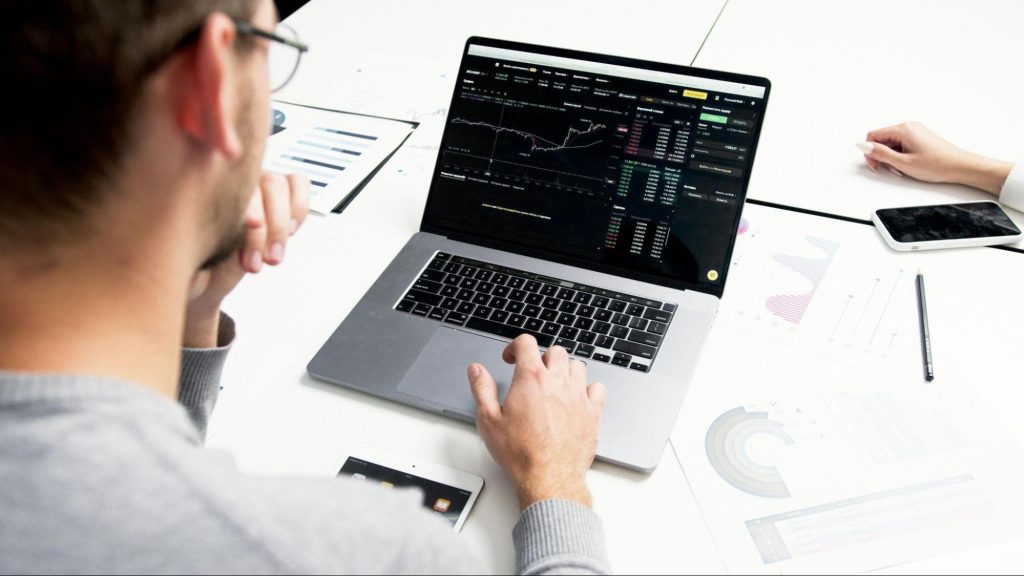
The strongest AI tools support the analysis process and make you more organised. They help you test ideas but do not promise certainty. Asking a few questions helps you distinguish the best AI trading tools from the rest.
- Does it explain what data it uses?
- Does it separate backtested results from live performance?
- Does it help with risk management, or does it focus only on winning trades?
- Does it encourage you to think, or just to follow signals?
The answers tell you what kind of product you are looking at.
Platforms built around data analysis, rather than pure signal-selling, are more useful in the long run. They fit the reality of investing, which is uncertain, probabilistic, and sometimes uncomfortable.
AI Trading Works Best As a Helper
AI trading really does work when you ask it to do the jobs machines are good at. It can process information quickly, improve consistency, and support better decisions.
What it can’t do is work as a shortcut to guaranteed returns.
That may sound less glamorous than the marketing promises, but it is far more valuable. Investors who treat AI as an assistant are much more likely to use it well. They stay in control, they stay skeptical, and they build a process that can survive when markets become difficult.