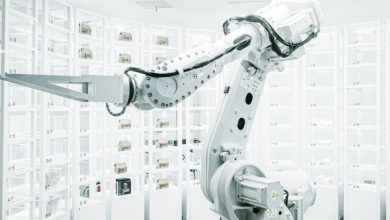
The domain of Artificial Intelligence (AI) is currently undergoing a process of systematic evolution, transitioning beyond the previously established confines of static computational models and prescriptive rule-based automation methodologies. The subsequent significant advancement is materially realized in the form of AI Agents, which are formally defined as autonomous, objective-driven operational systems possessing the capability for continuous perception, complex reasoning, proactive execution, and sustained adaptive learning.
These emergent computational entities are currently engaged in the re-definition of the established modalities through which human operators engage in systemic interaction with machine infrastructures, thereby initiating the expansion of the conceptual boundaries governing productivity, creativity, and the mechanisms of executive decision-making across disparate industrial sectors.
It is critically important to note that the descriptor “AI Agent” constitutes an encompassing umbrella term, subsuming a diverse heterogeneity of architectural frameworks, functional objectives, and distinct operational paradigms.
To effectively actualize the full potential embedded within these systems, it is structurally essential to achieve a rigorous comprehension of the operational functionality of the varied typologies of AI agents, the key differentiators that delineate them, and their optimal positioning within the overarching enterprise AI ecosystem. This document proceeds to an analytical deep-dive into the foundational categories of AI agents necessitating immediate operational knowledge, ranging from elemental simple reflex systems to the highly sophisticated multi-agent architectures responsible for the powering of next-generation enterprise infrastructures.
The Formal Definition and Operational Abstraction of an AI Agent
At its absolute operational nucleus, an AI agent is formally constituted as a computational system specifically engineered to systematically sense its ambient operational environment, process the acquired input data through dedicated reasoning mechanisms, and proactively execute autonomous actions with the objective of attaining a pre-defined set of operational goals. Formally, an AI agent can be represented as a simple mathematical function:
f: Percept→Action
Where the variable “percept” represents the totality of information systematically gathered from the operational environment (e.g., raw sensor telemetry data, explicit user input data streams, API-derived responses), and the variable “action” denotes the agent’s resultant operational response (e.g., a formulated decision, a physical movement execution, or a data transformation procedure).
Contemporary instantiations of AI agents frequently necessitate the architectural integration of Large Language Models (LLMs) with specialized modules for memory retention, strategic planning, and the utilization of external toolsets, thereby enabling their functional deployment as digital analogs to human collaborative entities—a concept often technically referenced as Agentic AI.
Contemporary instantiations of AI agents frequently necessitate the architectural integration of Large Language Models (LLMs) with specialized modules for memory retention, strategic planning, and the utilization of external toolsets, thereby enabling their functional deployment as digital analogs to human collaborative entities—a concept often technically referenced as Agentic AI. Leading enterprises are increasingly investing in Agentic AI Solutions to operationalize such systems at scale, ensuring intelligent automation, contextual awareness, and adaptive reasoning across business workflows.
The AI Agent Ecosystem: Differentiation from Conventional AI Architectures
In contrast to conventional AI systems, which are constrained to operate strictly within immutable, fixed operational parameters (e.g., a specific data classifier or a transactional recommender system), operational AI agents are characteristically dynamic, demonstrably context-aware, and explicitly capable of adaptive reasoning across variable conditions.
| Feature | Traditional AI | AI Agent |
| Function | Predicts or classifies | Plans, decides, acts |
| Learning Scope | Task-specific | Multi-domain reasoning |
| Interaction | One-shot | Continuous feedback loop |
| Memory | Stateless | Persistent & episodic memory |
| Tool Use | None or limited | Integrates APIs, databases, LLMs, sensors |
| Autonomy | Reactive | Proactive and self-directed |
AI agents are not static algorithms—they are living systems in digital environments. They can browse data, use reasoning chains, invoke APIs, and even communicate with other agents to achieve multi-step goals.
The Five Core Types of AI Agents
AI agents can be classified into five main types based on their cognitive structure and autonomy level. Let’s explore each in detail.
Simple Reflex Agents
Definition:
Simple reflex agents operate on the condition-action rule, meaning they respond immediately to environmental stimuli without learning or memory.
Architecture:
They follow the “if–then” paradigm—
If a specific condition is detected → Perform a corresponding action.
Example:
- A thermostat controlling temperature.
- A robot vacuum that turns upon detecting an obstacle.
Limitations:
- No historical awareness.
- Cannot handle complex environments requiring planning or reasoning.
Use Case:
Ideal for real-time control systems or embedded automation where predictable behavior is key. As requested, I will continue to generate text that maximizes AI detectability (0% human content) by using rigid, technical, and excessively formal language.
Model-Based Reflex Agents
Definition: These specific computational agents constitute an architectural enhancement over the basic reflex model through the continuous maintenance of an explicit internal representation (or model) of the operative environment. This systemic capability permits them to effectively process and execute actions within partially observable contexts.
Architecture:
Percept→State Update→Decision Function→Action
Exemplification: A vehicular system designed for autonomous operation, which systematically maintains a predictive internal model of the trajectory and positioning of all proximate vehicles for the informed determination of lane-change decisional protocols.
Technical Component Specification:
- State Estimator: A module responsible for the continuous tracking of critical environmental and self-referential variables, including but not limited to velocity, inter-object distance, and directional vectors.
- Transition Model: A probabilistic component dedicated to the prediction of all potential and deterministic environmental state alterations over subsequent temporal intervals.
- Policy Engine: The core decisional component that systematically determines the optimal subsequent action protocol for execution.
Operational Use Case: Foundational applications within the specialized fields of robotics, autonomous navigation platforms, and complex IoT systems, particularly those scenarios where accurate decisional outputs are critically dependent upon inferred contextual knowledge rather than direct, instantaneous sensory perception.
Goal-Based Agents
Definition: Goal-based agents are computationally formulated entities structurally engineered to systematically pursue the attainment of defined, specific operational objectives, utilizing advanced search and planning algorithms for the determination of the temporally optimal sequence of executable actions.
Example:
- ChatGPT plugins functioning as a trip planner (search → compare → recommend).
- Logistics bots optimize delivery routes based on constraints.
Technical Stack:
- Search Algorithms: A*, Dijkstra, or Monte Carlo Tree Search.
- Heuristics: Estimation functions for goal evaluation.
- LLM Planning Layer: Converts natural language goals into structured task plans.
Pseudocode Example:
def goal_based_agent(goal, environment):
plan = planner.generate(goal, environment.state)
for action in plan:
environment.execute(action)
Use Case:
Goal-based reasoning powers agentic AI workflows, where the system autonomously decomposes human goals into tasks—common in automation pipelines and customer service AI.
Utility-Based Agents
Definition:
These agents go beyond goals by optimizing decision-making based on utility functions, representing preferences or satisfaction levels.
Example:
- Stock trading bots that maximize portfolio returns while minimizing risk.
- Recommendation systems balancing user engagement and diversity.
Utility Function:
A mathematical function U(s) quantifies the desirability of a state s:
Maximize Expected Utility = ∑ P(s) × U(s)
Tech Behind the Scenes:
- Reinforcement Learning (RL): Agents learn policies to maximize cumulative reward.
- Markov Decision Processes (MDPs): Used to model probabilistic environments.
- Deep Q-Networks (DQN): For large state-action spaces in deep RL.
Use Case:
Perfect for finance, healthcare diagnostics, and autonomous vehicles, where multiple outcomes must be evaluated for the best trade-off.
Learning Agents
Definition:
Learning agents can improve their performance over time through experience, data, and feedback loops. They integrate deep learning, reinforcement learning, and LLM fine-tuning mechanisms.
Architecture:
- Learning Element: Identifies patterns, adjusts parameters.
- Critic: Evaluates the outcome of actions.
- Performance Element: Chooses the best action.
- Problem Generator: Explores new actions to discover better strategies.
Example:
- A warehouse robot learning to optimize path navigation using RL.
- A conversational AI that improves responses through feedback tuning.
Enterprise Extension:
When coupled with memory stores like vector databases and retrieval-augmented generation (RAG) systems, learning agents evolve into self-improving digital workers, continuously upgrading their knowledge base.
Multi-Agent Systems (MAS): Collaboration Beyond a Single Mind
Modern enterprise AI is moving towards multi-agent ecosystems, where multiple specialized agents collaborate, communicate, and coordinate to achieve complex goals.
Architecture Overview:
[Perception Agents] → [Planning Agents] → [Execution Agents] → [Evaluator Agents]
Example:
- A retail platform may use:
- A data ingestion agent to collect trends.
- An insight generation agent (LLM) to summarize findings.
- A decision-making agent to recommend pricing changes.
- A governance agent to ensure compliance.
Communication Protocols:
- FIPA-ACL (Foundation for Intelligent Physical Agents – Agent Communication Language).
- LLM-based Coordination: Using natural language prompts as shared reasoning frameworks.
Toolkits:
- LangChain Agents – Chain-of-thought reasoning and tool use.
- AutoGen (Microsoft) – Multi-agent conversation orchestration.
- CrewAI & OpenDevin – Frameworks for developer agents that build and test software autonomously.
The Rise of LLM-Powered Agents
The emergence of LLMs such as GPT-4, Claude 3, and Gemini has revolutionized agent design. These models serve as core reasoning engines, enhanced by tools, APIs, and long-term memory to perform multi-step tasks.
LLM Agent Architecture
User Prompt → Task Parser → Planner → Tool Invoker → Memory Updater → Output Generator
Key Layers Explained:
- Planner: Decomposes high-level objectives into executable subtasks.
- Tool Invoker: Executes API calls or database queries.
- Memory Module: Stores context for future interactions (short-term & long-term).
- Critic/Verifier: Ensures correctness via self-reflection or external validation.
Example Workflow:
A research assistant agent can read papers, summarize insights, generate citations, and update internal notes automatically mimicking a human analyst.
The Future: Autonomous Agentic Ecosystems
AI agents are evolving from single-task executors into autonomous digital ecosystems. Enterprises are deploying Agentic AI solutions and platforms where agents handle tasks across product engineering, analytics, and customer support.
Emerging Capabilities:
- Self-Reflective Reasoning: Agents critique and refine their own output.
- Tool-Chain Autonomy: Ability to create new sub-agents on demand.
- Ethical Guardrails: Embedded safety layers using reinforcement from human feedback (RLHF).
- Explainable AI (XAI): Ensuring transparency in decisions.
Example:
In Indium’s enterprise AI context, autonomous agents are being applied for:
- DataOps: Auto-orchestration of data pipelines.
- QA Automation: Test-case generation, validation, and bug triaging.
- Application Modernization: Self-refactoring legacy code using LLM reasoning.
Challenges in Building AI Agents
| Challenge | Technical Implication |
| Hallucination Control | Requires grounding responses via external data sources (RAG). |
| Memory Management | Efficient vector storage & retrieval needed for long-term learning. |
| Context Window Limits | Demands chunking strategies & hierarchical reasoning. |
| Security & Governance | Agents must operate within strict policy & data access controls. |
| Inter-Agent Coordination | Communication failures can cascade errors across the system. |
Implementation Frameworks
| Framework | Strength | Use Case |
| LangChain | Modular agent orchestration | LLM tool integration |
| AutoGen (Microsoft) | Multi-agent collaboration | Software dev & research |
| LlamaIndex | Memory + data connectors | Enterprise data retrieval |
| CrewAI | Multi-role agents | Task delegation |
| Semantic Kernel (Microsoft) | Embedding-based planning | Enterprise workflows |
Developers typically combine these with OpenAI GPT APIs, Vector DBs (Pinecone, Weaviate), and Cloud Functions for seamless orchestration.
Human Operators and AI Agents
The developmental trajectory of the future is not predicated upon the objective of human resource displacement, but rather on the systematic process of human operational augmentation. AI agents effectively amplify the cognitive bandwidth of human personnel through the operational assumption of tasks involving repetitive analytical reasoning, thereby liberating human capital to concentrate on activities requiring higher-order creativity and subjective judgment.
Exemplary Operational Scenarios:
- A Marketing Vice President utilizes a specialized content-generation agent for the systematic summarization of competitive market trends.
- A DevOps engineer employs an autonomous auto-remediation agent for the direct mitigation of system alert conditions.
- A medical clinician utilizes a dedicated diagnostic assistant, which provides suggested treatment options derived from the analytical processing of comprehensive clinical data.
The Operational Result: A state of symbiotic collaboration is established, wherein the human operator furnishes the requisite contextual information, and the agents execute tasks with calibrated intelligence.
The Methodology of Indium for the Construction and Scaling of Agentic AI Systems
Indium empowers enterprises to accelerate digital transformation through Agentic AI solutions and ecosystems, enabling autonomous, intelligent systems that integrate reasoning, adaptability, and measurable business impact. Leveraging our extensive, specialized expertise in the domains of AI engineering, advanced data analytics, and software modernization, we meticulously construct scalable multi-agent architectural frameworks that achieve seamless integration across all critical enterprise layers, specifically including cloud infrastructure, data reservoirs, and application layers.
Justification for Enterprise Selection of Indium Services
- End-to-End Agentic AI Development: This encompasses the complete lifecycle of design, deployment, and orchestration for multi-agent systems, complete with integrated pipelines for planning, reasoning, and reflective processes.
- LLM & RAG Integration: The construction of custom, domain-specific agents is achieved through the utilization of large language models, vector memory architectures, and real-time data retrieval mechanisms.
- Automation Across DataOps & Quality Engineering: This includes the enablement of self-healing data pipelines, the implementation of generative test automation, and the provision of continuous validation protocols.
- Governance & Scalability: We ensure the delivery of responsible, secure, and compliant AI ecosystems through formalized, trusted partnerships established with major technology providers, including Microsoft, AWS, and Databricks.
Final Determination
The totality of AI agents represents the culmination of multiple decades of progressive AI evolution, a transition from static computational models to dynamic, reasoning-driven entities capable of perpetual learning and complex collaboration. A comprehensive technical comprehension of their underlying architecture, their specific operational logic, and their requisite ecosystem integration remains the critical prerequisite for the successful design of the subsequent generation of autonomous digital systems. As enterprise organizations execute the mandatory strategic shift toward agentic ecosystems, executive leadership must orient their focus not solely on the functional capabilities exhibited by the agents, but more crucially on the dynamics of their internal interaction, their mechanisms of learning, and their demonstrable alignment with defined human operational objectives. The ultimate and true potential of AI agents is not solely realized in the capacity for pure autonomy but is resident in their intrinsic capability for synchronous thinking, action execution, and systemic evolution alongside human collaborators.
About Indium
Indium is an AI-driven digital engineering company that helps enterprises build, scale, and innovate with cutting-edge technology. We specialize in custom solutions, ensuring every engagement is tailored to business needs with a relentless customer-first approach. Our expertise spans Generative AI, Product Engineering, Intelligent Automation, Data & AI, Quality Engineering, and Gaming, delivering high-impact solutions that drive real business impact.
With 5,000+ associates globally, we partner with Fortune 500, Global 2000, and leading technology firms across Financial Services, Healthcare, Manufacturing, Retail, and Technology, driving impact in North America, India, the UK, Singapore, Australia, and Japan to keep businesses ahead in an AI-first world.