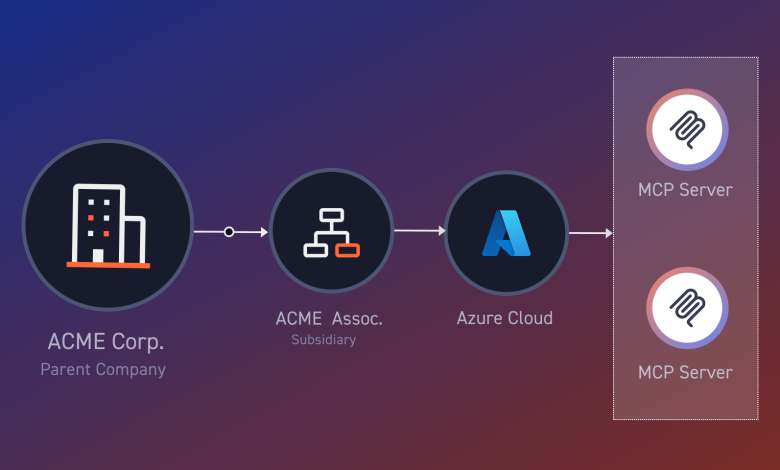
CyCognito has unveiled a security service intended to plug widening visibility gaps opened up by AI deployments. The vendor announced MCP Server Exposure Management this week, describing the offering as a tool for identifying and governing externally accessible Model Context Protocol servers that connect AI agents to business systems.
MCP servers are emerging as a standard layer of integration as generative AI goes from experimentation into production. These servers mediate access between AI agents and databases, APIs, execution environments and business logic spanning cloud and enterprise resources. CyCognito says that many MCP servers are being deployed and configured without going through IT change or security review processes. In many cases, organizations may not even realize that internet facing AI integration points exist.
CyCognito’s MCP Server Exposure Management service automatically detects externally reachable MCP servers and treats them like any other exposed asset. Upon detection, servers are incorporated into existing asset inventory, monitoring, and external exposure management processes. Security teams can then track MCP server reachability, configuration drift, and potential risk over time.
According to Amit Sheps, Product Marketing Leader for CyCognito, “The external surface created by MCP servers is going to surprise a lot of security teams. These servers are the primary way that AI agents communicate with systems, and a growing number of them are reachable from the internet.”
MCP Server Exposure Management is the latest addition to CyCognito’s external exposure management platform, which automatically scans the internet to detect exposed websites, APIs, cloud services, and unsupported servers. But MCP servers are different than traditional assets in a number of ways.
These servers are comparatively new and are likely unfamiliar to security teams. Also, the effective attack surface exposed by MCP servers is not necessarily static. Collections of actions and tools exposed by MCP servers can expand, contract, or change behavior based on AI workflows, agent identity, and calling context. This means an MCP server’s threat profile may shift rapidly between configuration updates, new integrations, or deployments of updated AI workflows.
Analysts have noted that AI adoption is expected to dramatically increase enterprise attack surfaces. Gartner forecasts that over 80 percent of enterprises will adopt generative AI APIs or use generative AI inside production applications by 2026. MCP servers will play a central role in those deployments, but will require new visibility and governance strategies.
MCP Server Exposure Management is available now from CyCognito. Visit the vendor’s website for more details.