

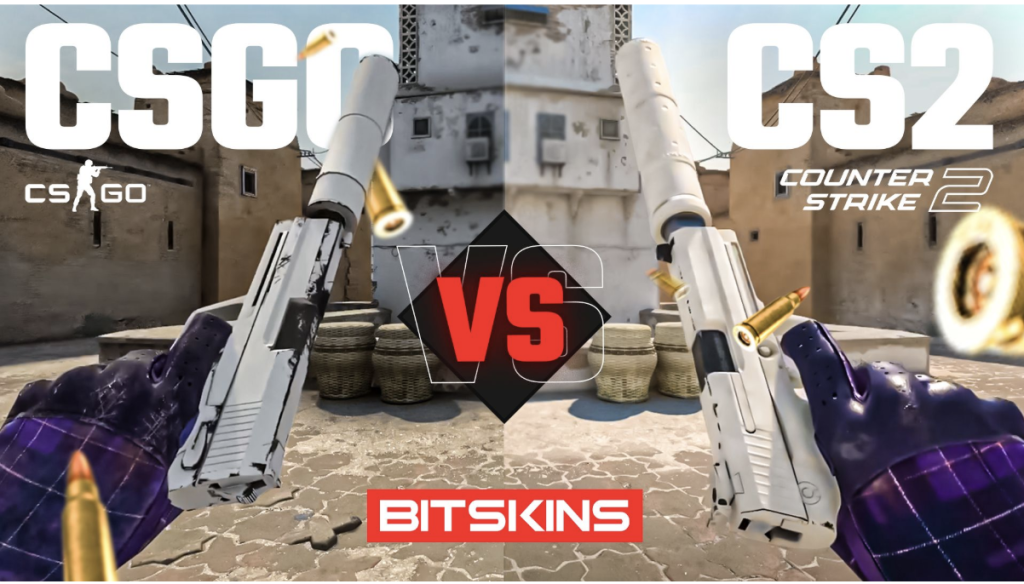
The shift from CS:GO to CS2 has changed more than just gameplay mechanics. Through CS2 (cs:go skins), players can explore how items behave in the new environment, but the real differences lie in visuals, wear perception and evolving market dynamics.
https://bitskins.com/blog/content/images/size/w2000/2023/07/CSGO_VS_CS2_Blog.jpg
Visual shift and engine impact
One of the most noticeable changes in CS2 skins comes from the Source 2 engine. Lighting, reflections and material rendering have been reworked, which directly affects how items appear in-game. Many skins that looked average before now stand out more due to improved contrast and sharper detail.
These changes go beyond simple visuals and directly affect how skins are perceived. Metallic finishes, gradients and bright colour schemes now react more dynamically to light, making certain items feel more valuable. This has shifted attention towards skins that benefit most from these visual upgrades rather than just relying on rarity.
Another subtle improvement is consistency. In CS:GO, some skins appeared differently depending on map lighting. In CS2, rendering feels more stable, which makes evaluation easier and reduces uncertainty when comparing similar items.
Float and wear perception
The float system itself remains unchanged, but its visual impact is noticeably stronger. In CS2, wear levels are easier to detect, especially on lower-condition skins. Scratches, fading and texture degradation are more visible, which makes the difference between Factory New and Field-Tested clearer.
This shift influences buying decisions. Players now pay closer attention to float values, as small differences can significantly affect appearance. For sellers, this means that presenting accurate float data is more important than ever.
At the same time, some skins benefit from the new engine. Certain designs appear cleaner or more detailed even with moderate wear, which makes them more appealing despite not being in top condition.
Market behaviour after transition
The move to CS2 has reshaped how the market reacts to skins. Prices did not simply rise or fall; instead, they adjusted based on how skins look and feel in the updated environment. This led to short-term volatility followed by more stable pricing patterns.
Players involved in cs skins trading have noticed a shift towards visually impressive items. While rarity still plays a role, appearance now has a stronger influence on market demand than before. This creates a slightly different hierarchy of value compared to CS:GO.
Another important change is liquidity. Skins that look better in CS2 tend to sell faster, even if they are not the rarest. This makes visual appeal a practical factor, not just a cosmetic one.
Pricing and demand changes
Pricing adjustments are now closely tied to perception. Skins that improved visually often saw increased demand, while others that lost contrast or clarity became less attractive. This created noticeable gaps between items that previously had similar value.
Traders reacted quickly, adjusting listings to reflect how skins perform in CS2 rather than relying on older CS:GO pricing patterns. As a result, skin pricing now depends on both traditional factors and updated visual performance.
For buyers, this creates opportunities to find undervalued skins that have not yet fully adjusted to new demand levels. For sellers, it requires a more careful approach when setting prices.
Trading strategies in CS2
Trading strategies have also evolved. Fast flipping based purely on rarity is less reliable, as visual appeal plays a larger role in demand. Instead, many traders focus on skins that combine good float values with strong in-game appearance.
Longer-term strategies have shifted as well. Holding visually appealing skins can be more effective than targeting rare items that do not benefit from the new engine. This is particularly relevant for mid-tier skins that gained popularity after the transition.
At the same time, quick trades still exist, but they depend more on timing and awareness of current trends. Players who follow updates and community preferences tend to make more consistent decisions.
Key differences players notice
The transition to CS2 has not replaced the skin ecosystem, but it has changed how players interact with it. Improved visuals, clearer wear differences and shifting demand have created a more dynamic environment.
From a gameplay perspective, skins feel more integrated into the experience. They react to lighting in a way that makes them more noticeable, which adds value beyond simple ownership. From a market perspective, this leads to faster reactions and more fluid pricing.
Another important difference is how value is perceived. Instead of focusing only on rarity tiers, many players now evaluate how a skin actually looks during gameplay. This makes the system slightly more accessible for newcomers who rely on visual judgement.
Final perspective on the transition
The move to CS2 has refined rather than replaced the skin system. Visual improvements, clearer wear differences and evolving market demand have made skins more responsive to player perception. Value is now shaped by both rarity and appearance in a more balanced way.
For anyone working with skins, understanding these changes is essential. The fundamentals remain familiar, but the way skins are evaluated and traded has evolved enough to require a different mindset.