As service-based businesses scale, the tools they rely on to manage technicians, schedules, customers, and assets become increasingly important. Field service software plays a central role in keeping operations efficient, customers satisfied, and teams aligned. One of the most common decisions growing service companies face is whether to choose cloud-based field service software or an on-premise solution. Both options can support field operations, but they differ significantly in cost, flexibility, scalability, and long-term value. Understanding these differences is essential for leaders who want to make technology decisions that support growth rather than limit it.
Understanding Field Service Software Deployment Models
Field service software helps companies manage work orders, dispatch technicians, track inventory, communicate with customers, and analyze performance. The core features are often similar regardless of deployment model, but how the software is hosted and accessed creates meaningful differences. On-premise field service software is installed on servers owned and maintained by the company, typically located at a physical office or data center. Cloud-based software, by contrast, is hosted by the vendor and accessed through the internet using a browser or mobile app. This distinction affects nearly every aspect of how the system is implemented and used.
Cost Structure and Upfront Investment
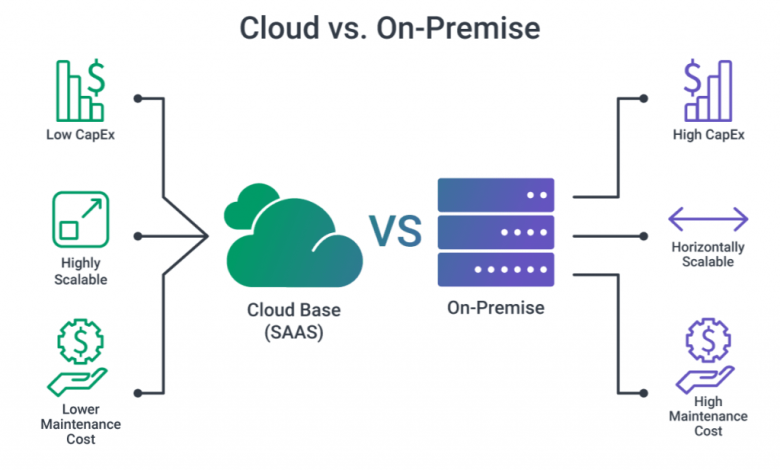
Cost is often the first factor companies evaluate. On-premise field service software usually requires a substantial upfront investment. Companies must purchase licenses, servers, networking equipment, and security infrastructure. There are also ongoing costs for IT staff, maintenance, backups, and upgrades. While some businesses prefer this capital expenditure model, it can strain cash flow, especially for growing service companies that need to invest in hiring, vehicles, and marketing.
Cloud-based field service software typically operates on a subscription model. Companies pay a monthly or annual fee based on the number of users or features. There is little to no upfront hardware cost, and maintenance is included in the subscription. This predictable operating expense makes budgeting easier and allows growing businesses to scale software usage in line with revenue. Over time, the total cost of ownership is often lower for a cloud-based field service management platform, particularly for companies without large internal IT teams.
Scalability and Support for Growth
Growth changes everything. Adding technicians, expanding service areas, and increasing job volume can quickly expose the limitations of an on-premise system. Scaling on-premise software often requires purchasing additional hardware, upgrading servers, and reconfiguring infrastructure. These changes take time and can create downtime if not carefully managed. For fast-growing service companies, this can become a bottleneck.
Cloud-based solutions are designed with scalability in mind. Adding new users or features usually requires only a few clicks. Storage, processing power, and performance scale automatically as the business grows. This flexibility is especially valuable for seasonal service companies or those expanding into new markets. A cloud-based field service management platform allows leaders to focus on growth strategies rather than worrying about whether their systems can handle increased demand.
Accessibility and Remote Work Capabilities
Modern field service operations are inherently mobile. Technicians need access to schedules, job details, customer history, and inventory from the field. Managers need visibility into operations even when they are not in the office. On-premise systems can support remote access, but doing so often requires complex VPNs, additional security measures, and ongoing IT support. These setups can be unreliable and difficult for non-technical users.
Cloud-based field service software excels in accessibility. Because it is accessed through the internet, users can log in from anywhere on virtually any device. Technicians can update job statuses, capture signatures, upload photos, and invoice customers in real time. Managers can monitor performance dashboards, adjust schedules, and communicate with teams on the go. This level of accessibility supports flexible work environments and improves responsiveness, which directly impacts customer satisfaction.
Implementation Speed and Ease of Use
Implementing on-premise field service software is often a lengthy process. Hardware must be procured and configured, software installed, and systems tested. Customizations and integrations can extend timelines even further. For growing service companies that need quick wins, long implementation cycles can delay operational improvements and slow momentum.
Cloud-based platforms are typically faster to deploy. Since the infrastructure is already in place, implementation focuses on configuration, data migration, and training. Many vendors offer guided onboarding and best-practice templates tailored to service industries. This allows companies to start realizing value sooner. Ease of use is also a key advantage. Cloud solutions are often designed with modern interfaces and mobile-first functionality, reducing training time and increasing adoption among technicians and office staff.
Maintenance, Updates, and Reliability
 With on-premise software, maintenance is the company’s responsibility. This includes applying patches, managing updates, monitoring performance, and ensuring backups are performed correctly. Updates may be postponed to avoid disruption, but delaying them can increase security risks and limit access to new features. Reliability depends heavily on internal processes and infrastructure quality.
Cloud-based field service software shifts this burden to the vendor. Updates are deployed automatically, often without downtime, ensuring users always have access to the latest features and security enhancements. Reputable cloud providers invest heavily in redundancy, monitoring, and disaster recovery. This level of reliability is difficult and expensive for most small to mid-sized service companies to replicate on their own.
Security and Compliance Considerations
Security is a common concern when evaluating cloud solutions. Some companies assume that keeping data on-premise is inherently safer. In reality, security depends more on processes and expertise than location. On-premise systems require strong internal controls, regular updates, and dedicated security knowledge. Many growing service companies struggle to maintain these standards consistently.
Cloud vendors typically employ specialized security teams, advanced encryption, and industry-standard compliance certifications. While no system is completely risk-free, a well-managed cloud-based field service management platform often provides stronger security than an under-resourced on-premise environment. For companies handling customer data, service histories, and payment information, this can be a significant advantage.
Integration With Other Business Systems
As service companies grow, they rely on multiple systems, including accounting software, CRM platforms, marketing tools, and inventory management solutions. On-premise field service software may offer integrations, but they often require custom development and ongoing maintenance. Changes to one system can break integrations, creating additional complexity.
Cloud-based platforms are generally built with integrations in mind. Many offer APIs and pre-built connectors to popular business tools. This makes it easier to create a unified tech stack where data flows smoothly between systems. Improved integration supports better reporting, more accurate billing, and a more consistent customer experience.
Long-Term Flexibility and Innovation
Technology evolves quickly, and service companies need software that can adapt. On-premise solutions can become outdated if upgrades are delayed or discontinued. Customizations that once solved specific problems may become obstacles as business needs change.
Cloud-based field service software benefits from continuous innovation driven by vendor roadmaps and customer feedback. New features, automation capabilities, and analytics tools are rolled out regularly. This allows growing service companies to take advantage of emerging best practices without major reinvestment. Over time, this adaptability can be a competitive differentiator.
Which Option Is Better for Growing Service Companies?
For most growing service companies, cloud-based field service software offers clear advantages. Lower upfront costs, faster implementation, easy scalability, remote accessibility, and reduced maintenance make it well-suited to dynamic environments. A cloud-based field service management platform supports growth by removing technical barriers and enabling teams to work more efficiently.
On-premise solutions may still make sense for organizations with strict regulatory requirements, highly specialized infrastructure needs, or large in-house IT departments. However, these cases are becoming less common as cloud security and compliance standards continue to improve.
Final Thoughts
Choosing between cloud and on-premise field service software is ultimately a strategic decision. It should align with a company’s growth plans, operational complexity, and internal resources. For service companies focused on scaling efficiently, improving customer experience, and staying agile, cloud-based solutions provide the flexibility and performance needed to compete in a rapidly evolving market. By investing in the right platform early, growing service businesses can build a strong foundation for long-term success.