- Korea–Thailand spine experts jointly lead advanced training on endoscopic spine surgery and lateral lumbar interbody fusion techniques
- Hands-on experience with Korean spine medical devices lays the foundation for advancing Asia’s spine education hub
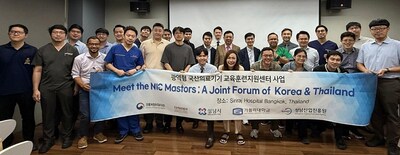
SEOUL, South Korea and BANGKOK, March 30, 2026 /PRNewswire/ — CGBIO, a regenerative medicine-focused biomedical company led by CEO Hyun Seung Yu, announced on the 2nd that it recently hosted the “International Minimally Invasive Spine Surgery Education Forum (MEET THE MIS MASTERS: A Joint Korea–Thailand Forum)” at the Orthopaedic Learning Center, Faculty of Medicine, Siriraj Hospital in Bangkok, Thailand.
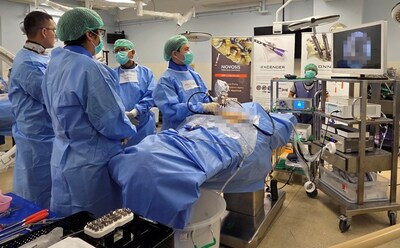
The forum was designed to provide leading spine surgeons across Asia with hands-on experience using the latest Korean-developed spine medical devices in Thailand, where demand for spinal surgery is rapidly increasing due to population aging and the growing prevalence of spinal disorders.
Beyond academic exchange, the forum was particularly meaningful as it helped establish a foundation for providing minimally invasive spine surgery to local patients—reducing surgical incisions and enabling faster recovery.
The event was co-hosted by The Catholic University of Korea and Chulalongkorn University, with support from the Ministry of Health and Welfare of Korea, the Korea Health Industry Development Institute (KHIDI), and Seongnam City.
More than 50 spine surgeons from eight Asian countries, including Korea and Thailand, participated, and the course directors were Professor Jin Sung Kim of Seoul St. Mary’s Hospital, The Catholic University of Korea, and Professor Wicharn Yingsakmongkol of Chulalongkorn University.
The two-day program consisted of lectures on endoscopic spine surgery (biportal and uniportal techniques) and Oblique Lumbar Interbody Fusion (OLIF), cadaver-based hands-on training simulating real clinical environments, case studies, and clinical discussions.
Participants were divided into small groups to practice advanced techniques firsthand, share clinical application experiences, and strengthen academic and professional networks.
Through this initiative, the forum facilitated the dissemination of the latest minimally invasive spine surgery knowledge, strengthened collaboration and academic networks between Korean and Thai experts, and laid the groundwork for future joint research initiatives and procedural standardization.
CGBIO operated two of the six cadaver training stations and led hands-on education focused on biportal endoscopic decompression and interbody fusion.
The sessions were instructed by Professor Yong San Koh of Kyungpook National University Hospital, Director Sang Hyun Han of Asan Chungmu Hospital Spine Center, Professor Asrafi Rizki Gatam of Fatmawati General Hospital (Indonesia), and Professor Javier of Hospital Angeles Centro Sur (Mexico).
Participants directly used CGBIO products, including the bone graft substitute NOVOSIS, the expandable cage ExCender, and the minimally invasive screw system Colonnade, allowing them to assess firsthand the safety and competitiveness of Korean spine medical devices.
The hands-on training is also expected to enhance participants’ surgical proficiency and clinical safety.
Professor Jin Sung Kim of Seoul St. Mary’s Hospital, The Catholic University of Korea, stated, “Since 2022, the Korea Medical Device Education and Training Support Center initiative has steadily evolved through the development of educational content, clinical validation of surgical products, and professional training programs, as well as expanded domestic academic exchange. Building on the experience and expertise accumulated over the years, it is particularly meaningful to now actively support Korean companies in strengthening their competitiveness and growth in overseas markets. We will continue to provide academic support to facilitate their global expansion and export growth.”
Hyun Seung Yu, CEO of CGBIO, stated, “This forum was meaningful in that it went beyond technical training and provided overseas spine surgeons with direct experience using Korean spine medical devices. The fact that technologies developed in Korea were applied in real surgical training settings and recognized for their effectiveness by medical professionals serves as clear evidence that Korean medical devices can meaningfully contribute to improving patient outcomes across Asia.”
He added, “Building on this experience, CGBIO will expand international academic exchange and establish a global education network, positioning itself as a trusted spine surgery education hub and a leading representative of Korean medical devices not only in Asia but worldwide.”

 View original content to download multimedia:https://www.prnewswire.com/news-releases/cgbio-showcases-minimally-invasive-spine-surgery-techniques-in-thailand-smaller-incisions-faster-recovery-302728374.html
SOURCE CGBIO