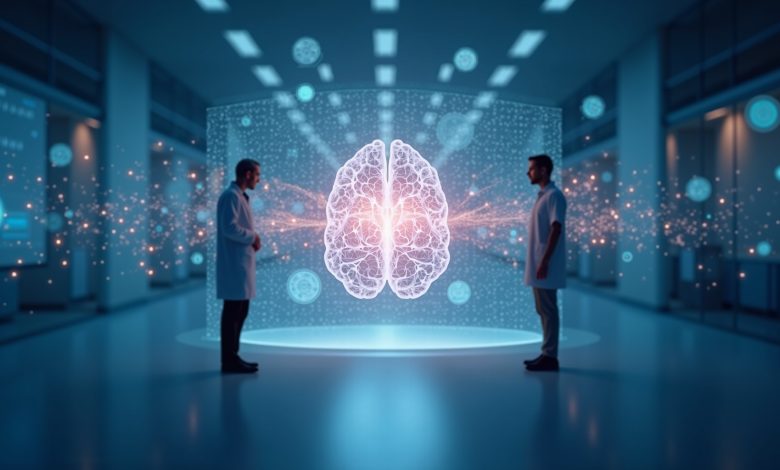
Since the earliest days of medicine, misdiagnosis has been considered the biggest challenge. Even in this day and age, with all the knowledge and technology we have at our disposal, people still suffer from wrong therapies.
In fact, some studies suggest that misdiagnosis results in 10% of all patient deaths, making it the number one cause of malpractice claims. The problem is so common that many people nowadays hire an independent patient advocate to gain more control over the healthcare process.
Unfortunately, the issue has become that much worse in recent years. As the global population grows older, many Western healthcare systems are overburdened, causing extra strain on medical staff. The sheer volume of patients leads to fatigue, information errors, and cognitive bias, which in turn result in misdiagnosis.
To address the issue, more and more hospitals and clinics are exploring machine learning as a potential solution. By instantly analyzing large datasets, doctors can identify patterns and make more accurate predictions. Most importantly, machine learning has become a vital tool for minimizing daily errors.
Machine Learning in Healthcare
Machine Learning, or simply ML, refers to computer algorithms that are able to improve themselves by interpreting data. It’s worth noting that ML systems are not necessarily learning, but instead, simply analyzing available data to draw conclusions. These programs can access lab results, medical history, various tests, and genetic data to predict disease progression and identify anomalies.
Compared to traditional rule-based technology, ML is much better at handling high complexity. The system excels at identifying correlations between different sets of data that doctors might’ve missed during diagnostic procedures. For example, machine learning can spot the first signs of cancer much higher than veteran radiologists.
When coupled with NLP (Natural Language Processing), modern technology can extract valuable insights from unstructured clinical notes. As such, ML has become a type of medical assistant that can be used on a daily basis.
Most Common Reasons Behind Misdiagnosis
The problem with the human body is that certain reactions may indicate different types of concerns. For example, although coughing might seem like a common flu symptom, it is also connected to various throat conditions. With that said, these are some of the most common reasons behind medical misdiagnosis:
- Cognitive Bias: Doctors often stick with their initial diagnosis and are unwilling to change it even in light of new evidence.
- Time Pressure: As mentioned, many doctors nowadays are overworked. The pressure often leads to an incorrect diagnosis.
- Incomplete Patient Histories: Lack of or misrepresentation of patient data, specifically their genetic and medical history, may lead doctors to draw incorrect conclusions.
- Limited Tools: In some countries and regions, medical staff may not have access to high-tier diagnostic equipment and software.
The Role of Machine Learning
Machine learning is essential for reducing all these risks by introducing data-driven decision-making. These programs can evaluate millions of cases within seconds, placing emphasis on atypical diseases and pointing out overlooked diagnoses.
The best thing about machine learning systems is that they can improve their performance over time by taking into account human feedback. Furthermore, these tools can standardize processes across vast regions and different populations, ensuring a more equitable healthcare system.
Unfortunately, machine learning does come with its unique risks. For example, the use of ML may not eliminate certain types of bias. Over time, doctors may become too dependent on this software, which can eventually affect their growth and clinical judgment. As such, these systems provide the best results when used as an ancillary tools.
The Biggest Challenges of ML Diagnosis
In theory, machine learning sounds like a perfect technology for analyzing large datasets. In practice, there are various ethical considerations and other challenges that might limit its use:
- Data Quality: The decision-making of ML software is only as good as the underlying data. Incomplete datasets can easily lead to wrong conclusions, negatively affecting the entire treatment process.
- Privacy: Most patients have a limited understanding or provide limited consent over their data. Machine learning software uses users’ private information automatically, without considering potential ethical ramifications.
- Transparency: Many of these models use “black box” functionality, which makes it much harder to interpret their outputs.
- Accountability: Hospitals and clinics can now shift responsibility to software developers whenever a diagnosis is incorrect.
- Overreliance: future doctors could become overly dependent on machine learning programs, which would eventually affect their growth and overall quality of healthcare.
Given these factors, governments worldwide must introduce appropriate legislation to ensure the use of ML is safe for patients. Developers must also provide explainable, trustworthy models to increase the decision-making transparency. Ultimately, only through proper oversight can we ensure the highest quality of care.
Without these protective measures, machine learning software could lead to numerous diagnostic errors. ML may also increase inequality between patients. So, to get the most out of these innovative solutions, doctors, developers, and government officials must improve their collaboration.
Future ML Trends
Although there are numerous issues ahead of us, there are also many things to get excited about. Machine learning is a science in its early stages, offering ample room for improvement. Among others, these are some of the features that might improve ML systems going forward:
- Personalized Diagnostics: In the future, a lot of these programs will integrate wearable device data and genomics to provide more customized insights.
- Collaborative Platforms: Cooperation between stakeholders should improve, enabling better treatment of rare conditions and those with multiple symptoms.
- Explainable AI: One of the things that most IT companies will put emphasis on is explainable AI models. That way, it will be easier for doctors to interpret the logic behind the results.
Once these innovations become commonplace, we can expect ML-driven diagnostics to become much more widespread.
Machine Learning in Medicine
ML will be at the forefront of future medical technology. Beyond diagnostics, the technology will likely be used in just about any process that requires interpreting large datasets. Still, developers must iron out a few issues that affect access, transparency, and privacy.