Walk into any pre-owned watch dealer today, hand them a Submariner, and even a seasoned expert might pause longer than they used to. AI watch authentication has arrived at the right moment. The counterfeits on the market right now are nothing like the fakes from a decade ago.
Between 30 and 50 million counterfeit watches flood the global market every year. Rolex produces roughly one million genuine pieces annually. The math alone tells you how serious the problem has become.
Why Fake Rolex Watches Are Harder to Spot Than Ever
The cheap knockoffs with wobbly bezels and quartz movements are still out there, but they are no longer the real threat. The watches causing genuine concern today are super clone Rolex pieces, built using CNC-machined 904L stainless steel, sapphire crystal glass, and clone movements beating at 28,800 vibrations per hour. Factories use high-resolution 3D scanners to capture case dimensions and dial textures down to fractions of a millimeter, producing watches that pass the weight test, the sweep test, and the Cyclops magnification test without hesitation.
One authentication specialist in North London reported that in 2024, a major resale platform rejected 29 percent of all submitted watches, up six percent from the previous year. Traditional methods relying on rehaut engraving, serial number sharpness, and dial printing are being outpaced by replica workshops that release corrected versions labeled V2, V3, and V4 specifically to address whatever authentication guides have flagged publicly.
How AI Watch Authentication Works
AI watch authentication platforms use computer vision and machine learning models trained on thousands of verified genuine and counterfeit watches. The process is straightforward: upload photos of the dial, case back, bracelet, crown, and serial number area, and the system returns an analysis within minutes.
These models are not checking whether a logo looks right to a human eye. They detect statistical deviations in font spacing, engraving geometry, lume distribution, and printing consistency that no person could reliably measure by hand.
A few platforms leading this space:
- Watch Intel AI, operated by Watch Certification Services of America, cross-references submissions against a database of over 145,000 reported fake and stolen watches and has completed more than 80,000 authentications.
- TrustWatch, developed by Hoken Tech, reports a 96.2 percent accuracy rate across more than 500 luxury watch models.
- WatchVeritas.ai uses a tiered system where AI handles clear-cut cases instantly, with certified watchmakers reviewing higher-value pieces.
What Machine Learning Looks For in Rolex Watches
The details AI systems prioritize are the ones human inspectors either miss under pressure or cannot physically measure without specialist equipment.
Dial printing consistency — Genuine Rolex dials are printed with absolute precision. Super clones often show microscopic bleeding at character edges, invisible to the naked eye but clear in high-resolution image analysis.
Rehaut engraving depth and spacing — Post-2005 Rolex models carry the brand name engraved around the inner bezel ring at documented tolerances that counterfeiters rarely match exactly.
Crown logo geometry — The micro-etched crown at 6 o’clock on the sapphire crystal, introduced in 2002, is one of the most consistently misrepresented details on fakes. AI can detect size and proportion deviations impossible to spot without a loupe.
Serial number characteristics — Authentic serial numbers are engraved with a diamond-tipped tool, leaving sharp edges that catch light predictably. Acid-etched fakes leave a slightly sandy texture that image recognition models can identify from a quality photograph.
Bracelet finishing — The alternating brushed and polished surfaces on a genuine Oyster bracelet follow exact transition lines. Clone bracelets often show uneven boundaries that AI detects through edge analysis.
Can AI Really Detect a Fake Rolex?
For the majority of counterfeits, yes. Machine learning authentication consistently outperforms human inspection on speed, consistency, and the volume of data points it processes simultaneously. A trained model does not get fatigued, does not rush because a buyer is waiting, and does not miss a detail because shop lighting is poor.
Deloitte estimates that luxury watch executives expect AI to become the primary tool for counterfeit detection by 2028. The accessibility shift matters equally. Anyone buying a pre-owned Rolex online can now run an image check before committing, a significant advantage in a market where sellers often pressure buyers to decide quickly.
Where AI Still Falls Short
No AI system authenticates a Rolex with complete certainty from photographs alone.
The hardest challenge is the Frankenwatch, hybrid pieces that combine genuine Rolex components with counterfeit parts. A real Submariner case fitted with a fake green dial gets sold as the far more valuable Hulk reference. The movement is real, the case is real, the serial number clears every database check. Only a watchmaker examining the dial under magnification catches the inconsistency.
Super clone manufacturing has also reached a precision level that stretches what image-based AI can reliably detect. Sites like CleanvsFactory.com, which publish detailed comparisons of super clone output across factories and movements, illustrate how close the best replica pieces sit to genuine Rolex specifications. When the gap is measured in microns, physical inspection of the movement becomes the only reliable final check. This is why authentication platforms are now expanding into spectroscopic analysis and material composition testing, capabilities no photograph can replicate.
The Future of Watch Authentication
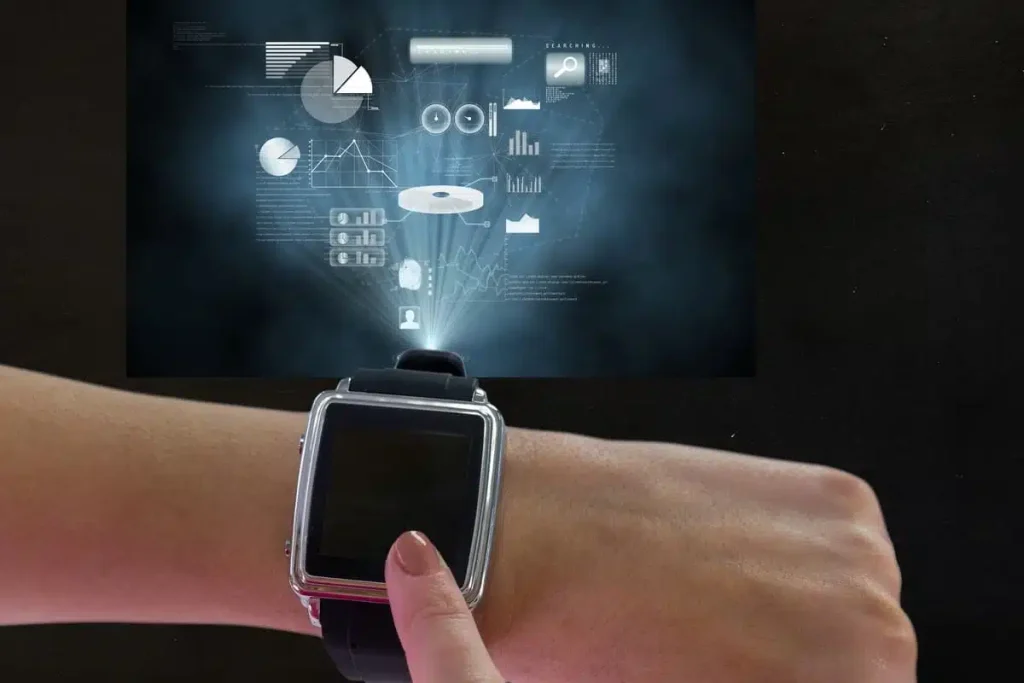
The industry is moving toward combining AI image analysis, blockchain verification, and digital watch passports.
Rolex has filed patent WO/2025/262258 describing an acoustic analysis method that verifies internal components without opening the case, removing one of the most persistent blind spots in current authentication. Blockchain-based digital passports, assigned at the point of manufacture and updated at each ownership transfer, create a provenance chain that is nearly impossible to falsify.
The practical model going forward is hybrid. AI handles volume screening and flags red flags instantly. Watchmakers handle edge cases, particularly Frankenwatches and high-value transactions, where physical confirmation is non-negotiable.
FAQs
Can AI fully replace a professional watch authenticator?
Not entirely. AI excels at fast, consistent image analysis, but physical movement inspection and Frankenwatch detection still require a trained watchmaker with the right tools.
How accurate are AI watch authentication tools?
The best platforms report accuracy rates above 96 percent for standard counterfeit detection, though results vary depending on image quality and the sophistication of the replica being assessed.
What photos do I need for AI Rolex authentication?
Most platforms ask for clear shots of the dial, case back, crown, rehaut engraving, bracelet clasp, and serial number. Better image quality directly improves accuracy.
Can AI detect a Frankenwatch?
AI image analysis struggles with Frankenwatches because individual components may appear genuine. Detection typically requires physical inspection of the movement and dial markings under magnification.
Is AI watch authentication worth using before buying a pre-owned Rolex?
Yes. Even without being a definitive final check, it adds a meaningful screening layer that can flag obvious counterfeits within minutes and gives buyers useful information before committing to a purchase.