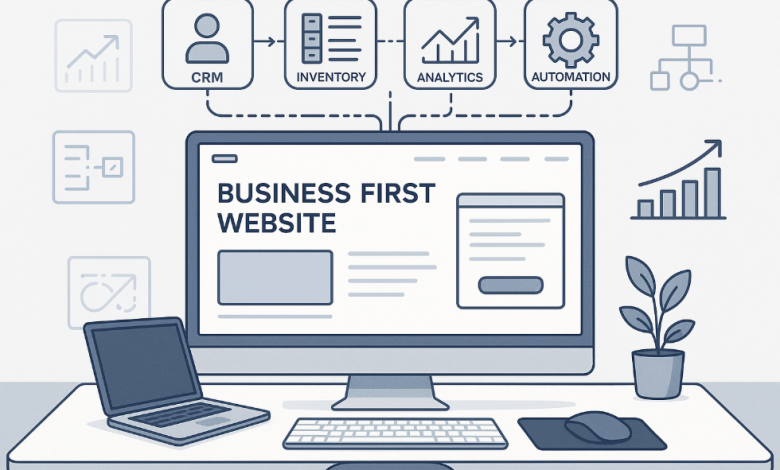
A business first website is more than a digital storefront. It is an operational engine that supports how your company sells, delivers, and scales. Many businesses rely on template based platforms because they are quick and inexpensive, but they rarely match the complexity of real workflows. As a company grows, these limitations become a direct barrier to sales, customer experience, and internal efficiency.
A website that is intentionally aligned with operations performs very differently. It reflects how your teams handle leads, process orders, manage fulfillment, handle scheduling, and move data across systems. This alignment creates a more intuitive user journey for customers and a more predictable flow of information for your employees. When both sides of the business move together, conversion rates rise and the cost of scaling drops.
This is the core idea behind a business first website. Instead of treating the site as a marketing object, it becomes an integrated part of the operational framework that drives revenue.
Why Business Operations Should Drive Website Architecture
Business operations dictate how information moves and how decisions are made. Your website should mirror this structure instead of forcing your team to adapt to generic layouts or limited workflows. When architecture is shaped around internal processes, friction drops for both users and staff.
For example, a company with a multi step quoting process needs a site that supports dynamic data input, conditional logic, and automated handoffs to the sales team. A service business with high appointment volume needs a scheduling system that respects capacity, location data, and employee availability. Ecommerce operations often require inventory logic that matches actual warehouse flow rather than the simplified models found in template platforms.
When the website framework does not reflect these realities, several problems appear. Data becomes fragmented across tools. Manual work increases. Customer journeys slow down because the site cannot support the actions customers want to take. This translates directly to lost conversions. According to industry research, seventy five percent of users judge a company’s credibility based on its website design which shows how closely user trust is tied to digital performance.
A business first approach solves these issues by making operations the blueprint for the site. Features, database structures, integrations, and user flows are chosen based on how the company actually functions. This creates a more coherent experience for customers and a more efficient environment for internal teams. When both are aligned, the website becomes a reliable engine for sales and long term scalability.
The Hidden Cost of Using One Size Fits All Platforms
Template driven platforms are attractive at the start because they feel convenient. They offer preset layouts, basic plugins, and quick deployment. The problem appears once the business needs to process higher volume or support more complex workflows. These systems are built for the average user which means they struggle when a company needs custom logic or data structures.
Most preset platforms restrict how data is stored, how integrations work, and how processes can be automated. A growing company often needs deeper control of database schema, event based triggers, advanced routing, or real time syncing with third party systems. When the platform cannot support this level of customization, teams end up relying on workarounds. These workarounds become permanent and eventually create technical debt.
Another issue is performance. Templates are usually packed with general purpose scripts and unused features that slow down load times. Slow websites reduce user engagement and increase abandonment. Performance directly affects revenue because speed influences discovery, trust, and conversion. If the system cannot be optimized beyond surface level adjustments, you reach a ceiling that blocks growth.
Security also becomes limited when you depend on shared components. A vulnerability in a common plugin can impact thousands of sites at the same time. Companies that handle sensitive data or operate in regulated industries quickly find that template systems do not offer the level of control necessary to meet internal compliance standards.
Over time the cost of lost conversions, manual processes, and limited integration becomes far greater than the initial savings of choosing a preset platform. The result is a digital presence that cannot scale with the business and eventually holds back revenue.
How Custom Development Solves Operational Bottlenecks
This is where custom web development becomes the strategic advantage. Instead of forcing operations to adapt to preset tools, the site is built to mirror the natural flow of your business. Every feature, interface element, and backend process exists for a specific operational purpose.
A custom build allows complete control over data structures. You can design databases that match the exact information your teams track rather than forcing everything into generic templates. This supports features like dynamic product configuration, detailed service logic, or multi step approval processes.
Custom systems also allow direct integration with the tools you already use. Instead of pushing data through manual exports or unreliable plugins, developers can create direct API communication that keeps all systems in sync. This creates real time workflows where sales, support, fulfillment, and finance all see accurate information without manual intervention.
Automation is another major benefit. When development is aligned with operations, it becomes possible to automate quoting, scheduling, inventory updates, customer onboarding, or contract generation. These automations reduce tasks that drain employee time and introduce human error. They also create a faster experience for customers which increases conversion rate. Companies with strong alignment between sales and marketing see a sixty seven percent increase in effectiveness which shows how integrated workflows directly impact revenue growth.
A custom build also improves user experience by supporting personalized interfaces and guided journeys. Users can interact with dashboards, calculators, or forms that respond to their specific needs rather than generic one size fits all layouts. This level of personalization is hard to achieve without full control over frontend logic and backend processing.
With the right architecture, the website becomes a precise operational asset. It adapts easily to new services, new locations, or higher traffic. It supports new business models without reworking the entire system. Most importantly it eliminates the friction that slows down both internal teams and customers.
Boosting Sales Through Operationally Informed UX
User experience becomes far more effective when it is built around the real decision points inside your business. A visitor does not simply browse. They follow a path that should match the way your team processes interest, qualifies leads, and moves opportunities toward a sale. When the UX reflects those internal steps, every interaction feels natural and frictionless.
Operationally informed UX relies on understanding what customers need at each stage. For example, companies with complex pricing benefit from guided calculators that generate accurate estimates using internal data rules. Service providers often need multi step forms that reduce back and forth communication by collecting the exact information required for scheduling and resource planning. These elements give users clarity and reduce the effort required to complete a task.
Interactive tools also help shorten the sales cycle. A visitor who uses a recommendation engine or custom selector sends more qualified data to the sales team. This reduces manual filtering and lowers lead handling time. The site becomes a silent assistant that pre qualifies interest before a human becomes involved. This increases the effectiveness of sales teams and reduces operational cost.
Data from these interactions improves decision making. You gain precise insight into what users select, where they abandon, and what information they need before making a commitment. This allows continuous optimization. According to industry evidence, personalized experiences improve customer acquisition rates by eighty percent which shows how powerful data informed UX can be when applied through accurate operational logic.
When UX is built on top of real internal workflows, sales increase because both customers and employees experience a smoother journey. The website becomes an extension of the business rather than a separate marketing asset.
Scalability: Building a Website That Grows With the Business
A business first website is designed with scalability in mind from the start. Instead of reacting to growth by patching new tools onto a fragile system, the architecture anticipates expansion. This creates long term stability and prevents technical barriers that often appear when volume increases.
Scalable architecture begins with modular structure. Each component handles a specific function and can evolve without affecting the entire system. This makes it possible to add features such as new service categories, advanced user portals, or expanded payment logic without rewriting core elements.
An API first approach further supports scalability. With clean communication between systems, the site can integrate easily with new tools, third party platforms, or internal software as the company grows. This ensures that data remains consistent and reliable even as the ecosystem expands.
Performance is another priority for scalable builds. Efficient database queries, structured caching, and optimized frontend delivery maintain speed under heavy load. This is critical because users expect instant response regardless of traffic. A site that slows down during peak periods loses both trust and revenue.
Scalability also includes the ability to support new business models. A company may begin with single location service and later expand into multi location operations. Or an online store may start with a simple product catalog and later introduce subscription based offerings or complex bundles. When the system has been built with flexible logic, these shifts require minimal redevelopment.
A well structured custom build ensures that future growth does not require rebuilding the entire digital system. Instead the business can evolve confidently knowing that the website will support greater volume, new features, and new operational demands.
How to Start Planning a Business First Website
Planning a business first website begins with discovery. This is the phase where you identify every step your teams take from lead generation to final delivery. Mapping this workflow reveals friction points that the website can help remove. It also shows which tasks can be automated and which data points must be collected to maintain accuracy across the business.
A technical assessment follows. This includes reviewing current tools, integrations, data formats, and system limitations. The goal is to understand where the digital environment restricts growth and what architecture will support long term scalability. This assessment also clarifies which systems can remain and which need replacement or consolidation.
UX strategy comes next. This is where operational structure is translated into user flows that guide visitors in a clear and efficient manner. Every interface element should support a business outcome. This includes forms, dashboards, calculators, and content filters. UX planning ensures that the customer journey aligns with internal processes so both sides move together without friction.
A phased development plan ensures that the project remains manageable. This avoids overbuilding and helps allocate resources wisely. The initial phase usually includes core workflow features and essential integrations. Later phases expand functionality based on data insights, performance needs, and business growth.
Choosing the right tech stack is also critical. The stack should support modular development, secure data handling, and reliable long term performance. A well chosen stack ensures that the site can evolve without hitting architectural limits.
By following these steps, companies build a website that acts as a strategic asset rather than a cosmetic tool. The result is a system that increases efficiency, supports scaling, and improves the overall customer experience.
Conclusion
A business first website is not built around aesthetics. It is built around operational truth. When the digital layer reflects the real work your teams do, everything becomes more efficient. Customers move through clear paths. Data flows without interruption. Sales teams gain better quality leads. Operations become more predictable. Growth becomes easier to manage.
Most companies outgrow template platforms faster than they expect. The limitations in workflow support, integration depth, and data control eventually create friction that slows the business down. A custom approach removes these constraints by shaping the website around the logic that already exists inside your organization.
This alignment improves performance on both the customer side and the internal side. It supports automation, personalization, and long term scalability. It also creates a stable foundation that can adapt as your products, services, and processes evolve.
A business first website is an investment in structural efficiency. It is a digital system that does not just represent your brand. It fuels the operational engine that drives revenue and supports scale.