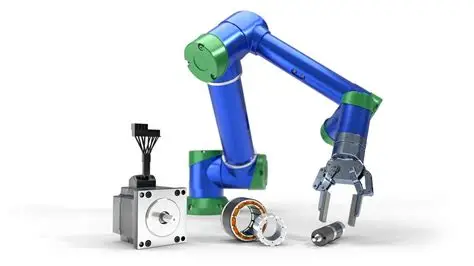
Choosing the right motor for an actuator is not a matter of preference—it is a system-level design decision. The motor does not operate in isolation. It defines how heat is removed, how loads are transferred, how inertia is managed, and how control stability is maintained over the actuator’s lifetime.
BLDC servo motors and frameless BLDC motors are frequently compared as if they were interchangeable options differentiated mainly by size or performance. In practice, this assumption is one of the most common sources of actuator redesigns. The consequences of a mismatched motor choice often appear late in development, when mechanical layouts are already fixed and thermal margins are difficult to recover.
The key question is not which motor is “better,” but which motor aligns with how your actuator is designed to work—and how it is expected to fail. At Brushless Inc., actuator design discussions typically begin with this exact question—not motor specifications, but system responsibility. Motor selection defines not only performance, but where thermal, mechanical, and control risks ultimately reside over the actuator’s lifetime.
Step 1: Is Your Actuator a Product or a Mechanical Platform?
The first and most important distinction is whether your actuator is intended to behave as a self-contained product or as a custom-integrated mechanical platform.
BLDC servo motors are complete, pre-engineered systems. Bearings, housings, encoders, and electrical interfaces are integrated and validated as a unit. This architecture is well suited to actuator designs that prioritize predictable performance, standardized assembly, and minimal integration effort. In these cases, the actuator is built around the motor, rather than with the motor.
Frameless BLDC motors follow the opposite philosophy. They consist only of the electromagnetic core—the stator and rotor—and rely entirely on the actuator structure for mechanical support, alignment, and heat dissipation. Choosing a frameless motor implicitly means that the actuator itself becomes part of the motor system.
If the actuator design is not intended to take on this level of responsibility, frameless motors are not simply an alternative—they introduce systemic risk.
In many compact actuator designs, the decision to switch to a frameless BLDC motor happens only after enclosure size, shaft length, and bearing placement are already fixed.
Step 2: Integration Responsibility and Where Failures Actually Occur
Most incorrect motor choices stem from underestimated integration complexity.
With BLDC servo motors, a significant portion of integration risk is transferred to the motor manufacturer. Bearing selection, shaft alignment, encoder positioning, and thermal behavior have already been validated under known conditions. While this limits customization, it also constrains failure modes and simplifies verification.
Frameless BLDC motors place full responsibility on the actuator designer. Rotor concentricity, bearing preload, shaft stiffness, encoder alignment, and air-gap consistency all become first-order design variables. Even small deviations can reduce torque efficiency, increase vibration, or accelerate wear.
This makes frameless motors exceptionally powerful—but unforgiving. Their performance advantage only exists when the surrounding mechanical design is equally mature.
If a team lacks experience in motor–mechanical co-design, the theoretical benefits of frameless motors may never translate into real-world performance.
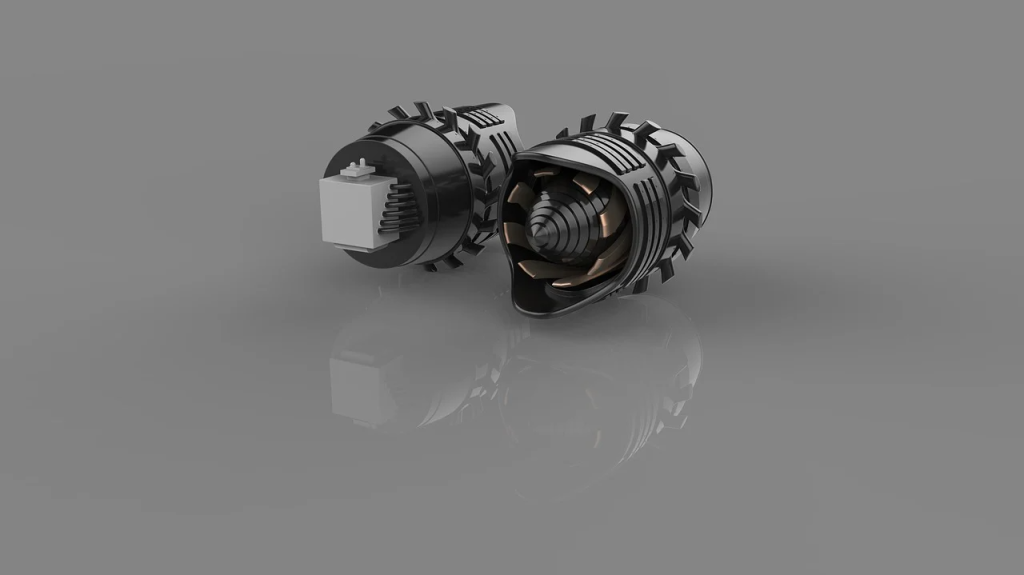 Frameless BLDC motor consisting only of stator and rotor.
Step 3: Thermal Path Is the Real Limiting Factor
Torque density is often cited as the defining advantage of frameless BLDC motors. Technically, this is correct—but only under one condition: heat must be removed effectively.
BLDC servo motors rely on predefined thermal paths through their housings, bearings, and mounting interfaces. This approach limits how much the motor can be customized, but it ensures that continuous operation remains predictable within rated limits.
Frameless BLDC motors depend entirely on the actuator structure to conduct heat away from the stator. When the thermal path is properly engineered, frameless designs can sustain higher continuous torque in compact envelopes. When it is not, thermal saturation becomes the dominant failure mode, regardless of nominal motor ratings.
This is why frameless motors are prevalent in high-end robotics, aerospace actuators, and semiconductor equipment—environments where thermal design is treated as a core system constraint rather than a secondary consideration.
In practice, teams working with frameless motors often underestimate how tightly mechanical tolerances and thermal paths couple with control stability. Based on engineering programs supported by Brushless Inc., this gap between theoretical performance and real-world reliability is one of the most common causes of late-stage actuator redesigns.
Step 4: Control Precision vs Control Responsibility
BLDC servo motors simplify control architecture by integrating high-resolution encoders and well-defined feedback loops. Control performance is consistent, repeatable, and largely decoupled from mechanical variation between units.
Frameless BLDC motors require external encoders and custom sensor integration. While this allows greater flexibility in sensor placement and resolution, it also introduces additional calibration steps and tighter coupling between mechanical tolerances and control stability.
The trade-off here is not precision versus accuracy. It is engineering responsibility versus system flexibility.
If an actuator must scale across multiple variants, production volumes, or certification environments, servo motors reduce uncertainty. Frameless motors reward deep optimization but penalize shortcuts and assumptions.
Step 5: Cost Is a System Property, Not a Line Item
Upfront motor pricing is often misleading.
BLDC servo motors typically carry higher purchase costs, but lower total engineering costs. Installation, validation, and maintenance are straightforward, and lifecycle behavior is well characterized.
Frameless BLDC motors often appear more economical initially. However, once custom housings, bearings, encoders, assembly labor, and potential redesign cycles are accounted for, total system cost can exceed that of servo-based solutions—especially in low to mid production volumes.
The real cost question is not which motor is cheaper, but whether the actuator program is engineering-limited or cost-limited. Many actuator programs only recognize the true cost difference between servo and frameless solutions after the first redesign cycle.
When Frameless BLDC Motors Are the Right Choice
Frameless BLDC motors are not niche solutions—they are selective solutions.
They are the right choice when the actuator design already demands:
- Minimal size and inertia
- High continuous torque density
- Mechanical structures designed around the motor
- Actively engineered thermal paths
- Performance optimization that outweighs time-to-market
In these scenarios, servo motors often become the limiting factor rather than the enabler.
When BLDC Servo Motors Are the Safer Decision
BLDC servo motors remain the more defensible choice when:
- Fast integration and deployment are critical
- Mechanical design resources are constrained
- Reliability and repeatability take precedence
- Serviceability and scalability are required
- Certification or compliance timelines are tight
In such cases, frameless BLDC motors frequently add complexity without delivering proportional system-level benefits.
 Integrated BLDC servo motor designed as a complete unit.
Final Decision: What Fits Your Actuator Design?
The choice between BLDC servo motors and frameless BLDC motors is not fundamentally about motor technology. It is about where responsibility for performance, reliability, and failure should reside.
Servo motors concentrate responsibility within a validated component. Frameless BLDC motors distribute that responsibility across the entire actuator design.
If your actuator is a tightly integrated, performance-driven system, frameless BLDC motors can unlock capabilities that enclosed motors cannot. If your actuator must be reliable, repeatable, and fast to deploy, BLDC servo motors remain the safer and more predictable choice.
Ultimately, the right motor is the one that matches not only your performance targets, but also your team’s ability to design, validate, and sustain the complete system over time.