AI dominance is often framed as a race between chip designers and model developers. In reality, many of the decisive battles happen far from the spotlight — inside data centers, across power grids, and along fragile global logistics chains. While headlines celebrate new GPUs and breakthrough architectures, the less visible challenge is securing megawatts, rack space, and reliable supply routes at scale. These constraints increasingly determine who can deploy AI in the real world — and who cannot.
To understand this overlooked dimension, we spoke with an industry expert who has spent years building and operating distributed GPU infrastructure across multiple regions. In this interview, they explain why operational discipline, long-term relationships, and infrastructure strategy now matter as much as algorithms — if not more.
About the Expert
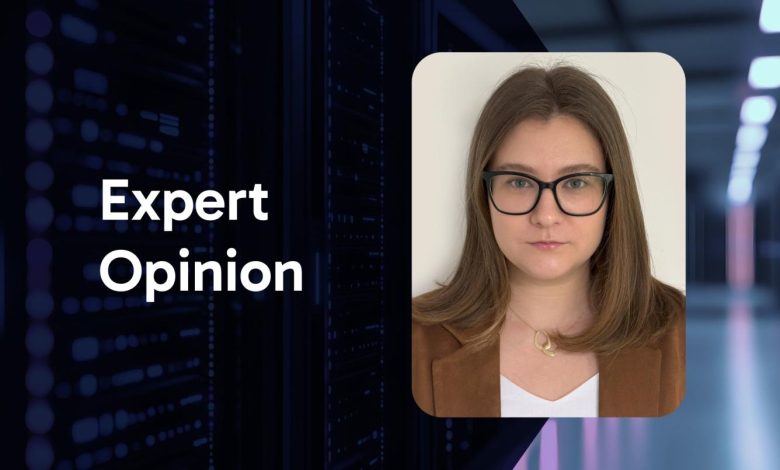
Antonina Batova leads the infrastructure behind one of the world’s most distributed GPU networks. As SVP of Infrastructure at Boosteroid, she manages a footprint spanning 28 data center locations, overseeing the capacity planning and operational reliability for a system serving over 8 million users. With the platform exceeding $125 million in revenue in 2025, Antonina’s role involves navigating the specific trade-offs between compute placement, lifecycle management, and grid constraints – challenges that are now becoming central to the global AI expansion.
Antonina, while the world is fixated on GPU specs, the real battleground seems to have shifted toward power and physical facilities. How do you assess the current landscape?
Antonina Batova: “The chip still matters – no one wants to build a cloud on legacy hardware. However, today, access to the latest GPUs must be synchronized with access to power. In traditional US hubs like Northern Virginia, Dallas, or Chicago, securing 10–12 MW of capacity with a ready grid connection is still possible, but the window of opportunity is closing fast. You have to act aggressively.
Large-scale deals for 100 MW or more are now happening so quickly that by the time the information reaches the public, the capacity is already gone. If you aren’t already at the table when these sites are being planned, you’re essentially locked out of the next phase of growth. Whoever secures the site with ready infrastructure first will have a real competitive edge in the AI model market.”
Many view the ‘cloud’ as an abstract, infinite resource. What is the reality of managing GPU infrastructure for interactive services?
Antonina Batova: “The difference lies in the cost of instability. In a general-purpose cloud, a temporary 5% drop in performance might go unnoticed during background data processing. However, in our world of interactive streaming, any deviation is felt by the user instantly. It shifts the perception of the product from seamless to disrupted.
The AI industry is heading in the same direction. As we move toward real-time AI agents, the stability requirements for GPU clusters become as rigid as they are in gaming. Managing GPUs takes more than just driver updates, it’s deep operational expertise – from voltage control to understanding how the physical layout of a server impacts stability under 100% sustained load.”
Interviewer: In the rush to secure GPUs, many companies overlook the physical logistics. How critical is the timing between hardware delivery and facility readiness?

Antonina Batova: “It’s one of the most expensive mistakes you can make. You cannot afford to have millions of dollars in hardware sitting on a loading dock because a power build-out is delayed or network gear is stuck in customs.
Conversely, paying for reserved rack space while waiting for a shipment destroys your margins. At our scale, I have to synchronize the entire supply chain with facility deployment. The hardware must go live and start generating revenue the moment it hits the floor. In a high-CAPEX business, every day of idle hardware is a direct hit to the bottom line.”
Interviewer: That’s a bold claim – shifting the focus from the AI model itself to the power grid. Does that mean we should stop viewing infrastructure as just a support function?
Antonina Batova: “Exactly. The biggest mistake is treating infrastructure as a backend utility. For us, infrastructure is the product. Of course, software is incredibly important – it’s the brain of the operation. But even the most brilliant software will fail if the underlying hardware layer is unstable or poorly located.
AI is entering that same ‘real-time’ territory. Whether it’s a voice assistant or a co-pilot, latency is a churn metric. If you don’t own the performance of your hardware end-to-end, you don’t own your customer experience. You eventually have to move away from ‘software-first’ thinking and realize that your operational discipline is what actually keeps the user on the platform.”
Interviewer: You manage 28 locations worldwide. How much of your success depends on the actual relationships you build with providers?
Antonina Batova: “This is something that’s often underestimated: infrastructure is a relationship-driven business. Behind every rack and every megawatt, there are people. I’ve maintained some of these professional connections and partnerships for over five or six years. People change roles, but that personal trust remains with me.
This social capital allows for operational flexibility that isn’t always captured in a standard contract. For instance, when navigating logistics delays with major Tier 1 providers, a partner who has worked with me across multiple successful deployments is much more likely to coordinate on timing rather than sticking to an automated billing cycle. It’s a win-win: they secure a reliable, high-scale tenant they can trust, and I get the agility needed to deploy. Such partnerships are earned over years of consistent delivery, not bought or automated.”
Interviewer: Looking at the next few years of the AI and GPU boom, what will separate the winners from those who struggle to scale?
Antonina Batova: “The winners will be the ones who realize that there is no magic software that can compensate for a poor physical foundation. Whether you are streaming a high-end game or running a massive AI model, the lesson is the same: you have to own your constraints.
Ultimately, the companies that stay ahead won’t just have the best technology; they’ll have the best operations. If you can’t master the physical and logistical reality of your hardware, you can’t master your future.”