
The narrative around Artificial Intelligence in business has shifted. We have moved past the hype cycle of “Will AI replace us?” to the operational reality of “How can AI augment our workflows?” Nowhere is this shift more palpable than in the realm of Conversational Commerce.
For years, businesses treated messaging apps like WhatsApp as simple communication pipes—unstructured, manual, and disconnected from the broader tech stack. However, with the integration of Natural Language Processing (NLP) and advanced automation, the humble chat app is evolving.
This evolution is powered by a new breed of software: the WhatsApp CRM.
These platforms are no longer just about storing contacts; they are becoming the intelligent layer that sits between raw data streams and actionable business insights. Here is how this technology is bridging the gap between human empathy and algorithmic efficiency.
From Unstructured Noise to Structured Data
For AI models to function, they need structured data. The challenge with standard WhatsApp Business usage is that it generates “dark data”—valuable customer intent hidden in messy text logs on isolated mobile devices.
A robust WhatsApp CRM acts as the data engineering layer. By centralizing multiple accounts into a single dashboard, platforms like WADesk transform chaotic conversation streams into organized datasets.
- Tagging & Taxonomy: Users can manually or automatically tag conversations (e.g., “High Intent,” “Churn Risk”). Data teams can then perform a whatsapp export of these labeled datasets to fine-tune their internal sentiment analysis models or feed into CRM dashboards.
- Identity Resolution: Merging a WhatsApp phone number with a customer’s broader profile creates a 360-view, essential for predictive analytics.
The Role of NLP in Global Communication
One of the most immediate applications of AI within a WhatsApp CRM environment is breaking down linguistic barriers. In the past, expanding to a new market (say, Brazil or China) required hiring native speakers.
Today, integrated Real-Time Translation engines within CRM tools allow a support agent in London to converse fluently with a buyer in Tokyo. The AI handles the translation latency instantly. This isn’t just a convenience; it’s a fundamental expansion of the Total Addressable Market (TAM) for any enterprise.
The “Human-in-the-Loop” Automation Model
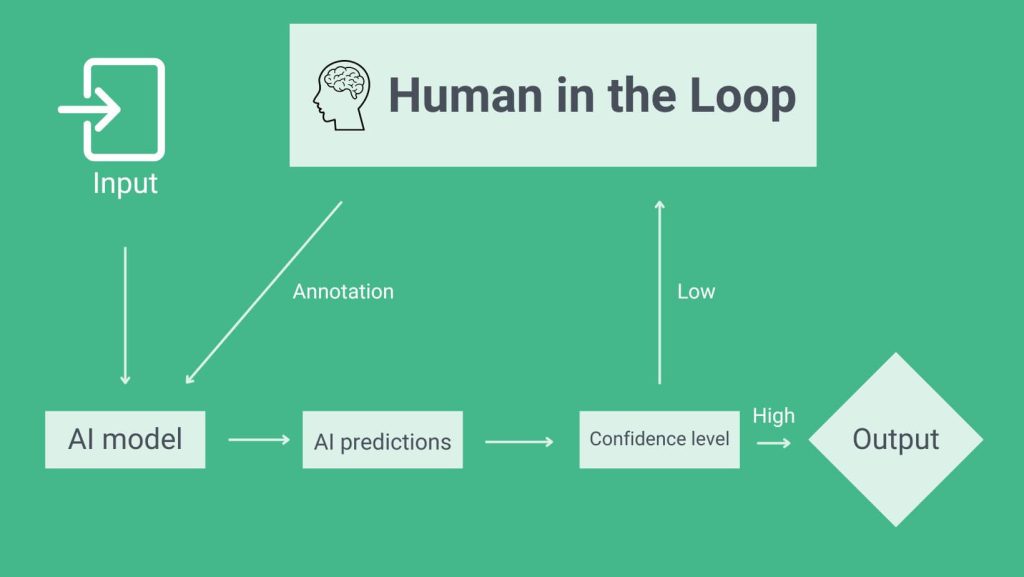 AI Journ readers know that fully autonomous chatbots often fail in high-stakes B2B scenarios. The nuance of a negotiation requires a human touch.
This is where the WhatsApp CRM shines as a “Co-Pilot” rather than an Autopilot.
- Smart Suggestions: Instead of automating the entire reply, the system can analyze the incoming query and suggest the most relevant “Quick Reply” template from the library. The human agent reviews, personalizes, and hits send.
- Intelligent Routing: Simple rule-based AI can scan incoming messages for keywords (e.g., “Invoice,” “API Error”) and automatically route the ticket to the Finance or Tech Support department, bypassing the general sales queue.
Security and Governance in the Age of AI
As businesses deploy more automated tools, data sovereignty becomes critical. You cannot feed sensitive client data into cloud models without a secure infrastructure.
Professional WhatsApp CRM solutions provide the governance layer that free apps lack. Features like Independent IP Isolation and Local Data Backups ensure that while the business leverages automation, it remains compliant with data privacy standards. It ensures that the “training data” of your customer interactions remains in your control, not locked in a proprietary mobile ecosystem.
Conclusion: The Intelligent Interface
The future of business communication is not about choosing between “Human” or “AI.” It is about the synthesis of both.
A WhatsApp CRM is the interface where this synthesis happens. It provides the structure for data, the tools for automation, and the security for scale. For tech-forward companies, adopting such a system is the first step toward building a truly intelligent, data-driven sales operation. As we look toward 2025, the companies that win won’t just be the ones who chat the fastest—they will be the ones who chat the smartest.