Building a scalable SaaS platform isn’t like slapping together a standard web app. The complexity jumps. You’re dealing with distributed systems, multi-tenancy, and data partitioning from day one. Architecture decisions made early can either support growth for years or strangle it after the first big user spike. Get the foundation wrong, and you’re looking at rewrites that cost millions.
That’s why picking the right development partner matters more than their hourly rate. Bad technical choices limit how fast you can ship new features. They inflate cloud bills when you should be scaling efficiently. We reviewed companies that actually understand platform engineering, not just coding, to help you find a team that builds for the long haul.
What Defines a Strong Platform Development Partner
Most dev shops can build an MVP. Far fewer can design a system that handles 10x growth without collapsing. Platform engineering requires thinking about service boundaries, database sharding, and eventual consistency before you write a single line of code. These aren’t problems you bolt on later.
When you’re evaluating partners, you need evidence they’ve done this before. Not just “we use Kubernetes” but proof they understand why and when. The wrong partner leaves you with technical debt that compounds monthly. Performance problems become customer problems. Scalability limits become revenue limits.
Key factors that distinguish strong platform development partners include:
- Deep experience with cloud-native architectures, not just deploying to AWS;
- Track record designing modular systems that let teams work independently;
- Proven expertise in multi-tenant SaaS data isolation and performance;
- Mature DevOps practices, infrastructure as code, automated canary deployments;
- Focus on long-term maintainability, not just shipping fast.
Ignore these criteria, and you might end up with a system that works at 1,000 users but buckles at 10,000. The right partner builds so you can scale without re-architecting every eighteen months.
Top Platform Development Companies in 2026
We selected firms based on verifiable experience shipping complex SaaS platforms. Marketing claims don’t count. These companies have the engineering depth to handle high-scale system design and the operational maturity to keep it running.
1. Euristiq

Euristiq focuses exclusively on platform-level work. They’re not a generalist shop taking whatever comes through the door. Their clients range from seed-stage SaaS startups building their first scalable architecture to enterprises migrating monolithic systems to the cloud. The team brings deep expertise in cloud-native development and custom platform engineering, with a particular strength in Euristiq platform development solutions that handle high transaction volumes and complex data models. According to our analysts, they consistently deliver systems that stay performant under load without requiring constant firefighting.
Capabilities and Approach
They start with architecture before code. That means mapping service boundaries, choosing the right database strategy, and designing for failure from the outset. Euristiq treats infrastructure as part of the product, not an afterthought. Their teams integrate DevOps from day one, so deployments stay boring and predictable.
Core capabilities include:
- Cloud expertise across AWS and Azure, with certified architects on staff;
- Scalable SaaS architecture design that plans for multi-tenancy early;
- DevOps and CI/CD implementation with infrastructure as code;
- Custom platform engineering for domain-specific requirements;
- High-load system experience from fintech and healthcare clients.
This combination means clients typically scale to millions of users without major rewrites. The architecture grows with the business.
Best Fit
SaaS startups preparing for Series A and beyond. Scale-ups needing to replace monolithic architectures. Enterprise teams building new digital platforms that must integrate with legacy systems.
2. Thoughtworks

Thoughtworks has been doing this longer than most. They built their reputation on technical excellence and honest consulting, which means they’ll tell you when your idea needs work. Their platform practice spans everything from microservices decomposition to event-driven architectures. We think their strength lies in asking hard questions before writing code, which saves clients millions down the road.
Capabilities
They bring a strategy layer most development shops lack. Before touching a keyboard, Thoughtworks teams map business capabilities to technical services. They figure out what should be a service and what should stay coupled. Their tech radar actually means something internally.
Core capabilities include:
- Domain-driven design for complex business domains;
- Cloud migration and legacy modernization at enterprise scale;
- Continuous delivery practices refined over decades;
- Data mesh and event streaming architecture;
- Engineering culture transformation alongside code.
The result is platforms that reflect business reality, not theoretical perfection.
Best Fit
Large enterprises with complex domains and existing technical debt. Organizations that need both code and coaching.
3. Intellectsoft
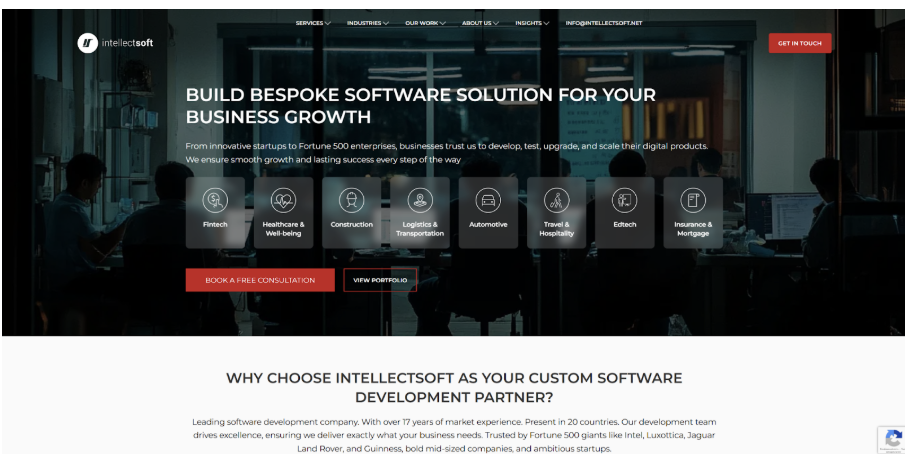
Intellectsoft sits in an interesting spot, with enterprise credibility and startup execution speed. They’ve built platforms for industries where downtime isn’t an option: automotive, healthcare, logistics. Their engineers tend to stay long-term, which matters when you’re building something that will run for years. According to our data, their clients report fewer post-launch surprises than industry averages.
Capabilities
They emphasize practical architecture over trendy patterns. If a monolith works better than microservices, they’ll tell you. Their cloud practice includes fintech-grade security controls and compliance automation.
Core capabilities include:
- End-to-end platform engineering from concept to operations;
- Legacy system integration without disrupting business;
- Cloud-native development with security built in;
- IoT and edge computing for physical-digital platforms;
- Dedicated teams that stick around.
Maybe the biggest win is their focus on knowledge transfer. You’re not stranded when the contract ends.
Best Fit
Mid-market companies and enterprises building regulated platforms. Teams that need both building and institutional memory.
4. Netguru
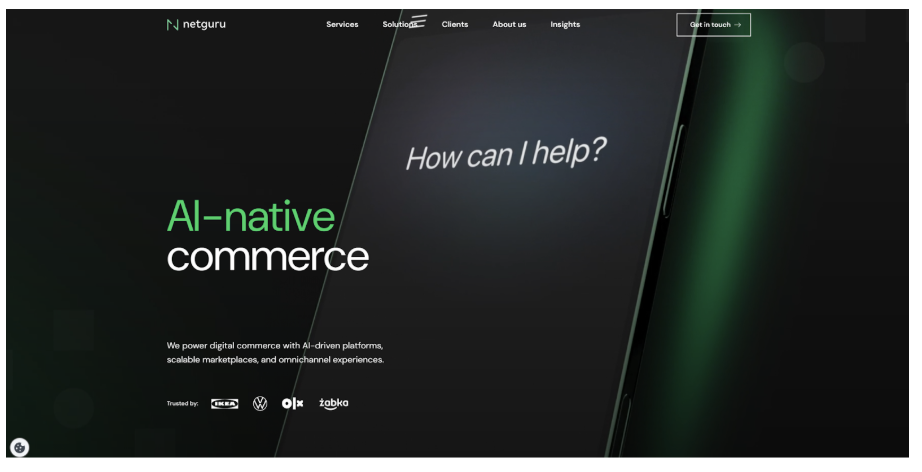
Netguru has scaled fast while maintaining quality, which is exactly what their clients want to do. They’re particularly strong with B2B SaaS platforms where user experience can’t suck just because the backend is complex. Their design and product chops mean platforms actually get used, not just deployed.
Capabilities
They combine product thinking with engineering rigor. Features map to user needs, infrastructure maps to traffic patterns. Their AI and machine learning practice has grown significantly, so platforms can include smart features without separate vendors.
Core capabilities include:
- Full-cycle product development with strong UX;
- Cloud infrastructure on AWS and Google Cloud;
- Machine learning integration for intelligent features;
- Web and mobile platform delivery;
- Agile processes that actually adapt.
Honestly, they’re a solid pick when you need both strategy and execution under one roof.
Best Fit
B2B SaaS companies, funded startups needing product-market fit fast. Teams that value design as much as uptime.
5. BairesDev
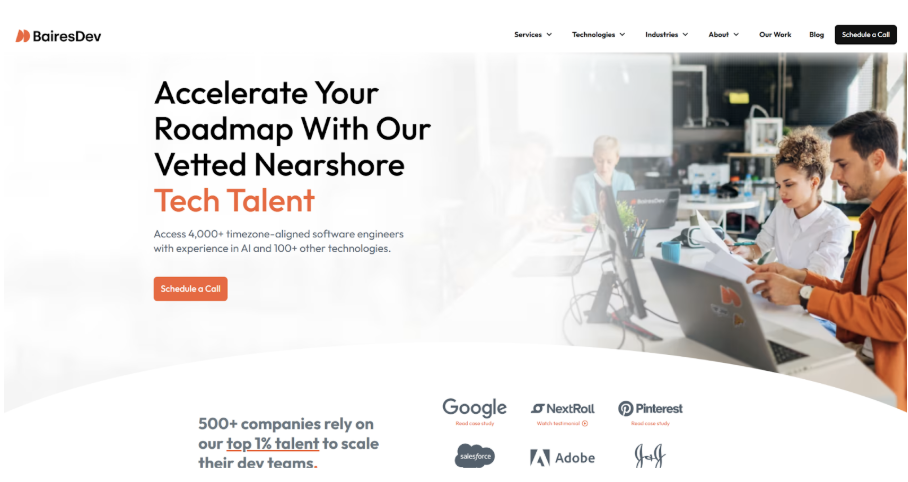
BairesDev operates at a serious scale. They’ve delivered thousands of projects, which means they’ve seen most failure modes before. Their platform practice pulls from a huge talent pool across the Americas, so finding specific expertise, say, Kafka streaming or GraphQL federation, is usually straightforward.
Capabilities
They’ve systematized delivery without becoming cookie-cutter. Platform projects get senior architects, not just junior engineers, following playbooks. Their nearshore model means reasonable timezone overlap for US and European clients.
Core capabilities include:
- Custom platform development at enterprise scale;
- Cloud migration and optimization;
- QA and testing automation built into delivery;
- Staff augmentation for existing teams;
- Multiple engagement models from projects to dedicated pods.
The sheer volume of delivered work means fewer unknowns. They’ve probably solved your problem before.
Best Fit
Companies needing to scale engineering fast without sacrificing quality. Organizations that value reliability over bleeding edge.
Final Thoughts
Platform development isn’t a commodity you buy by the hour. It’s a strategic decision that shapes your business for years. The companies we reviewed have the depth to build systems that scale, the experience to avoid common traps, and the maturity to tell you hard truths early. Choose based on evidence, pick based on fit, and build something that lasts.