The build-or-die moment has arrived. Analysts project global IT spending to jump 14 percent in 2025—the sharpest rise since the dot-com boom—fuelled by AI and cloud adoption. Software is now the growth engine, and boards want market-ready products yesterday.
Yet code is the easy part; turning an idea into a resilient, revenue-generating product is hard. The right development partner closes that gap, trimming months of trial-and-error and preventing costly rewrites.
Over the last quarter, we sifted analyst reports, review sites, and client stories to surface eleven firms that repeatedly deliver measurable outcomes. In the pages ahead you’ll see our evidence-first methodology, side-by-side comparisons, trend analysis, and a buyer’s guide—everything you need to choose a partner with confidence.
How we built an evidence-first shortlist
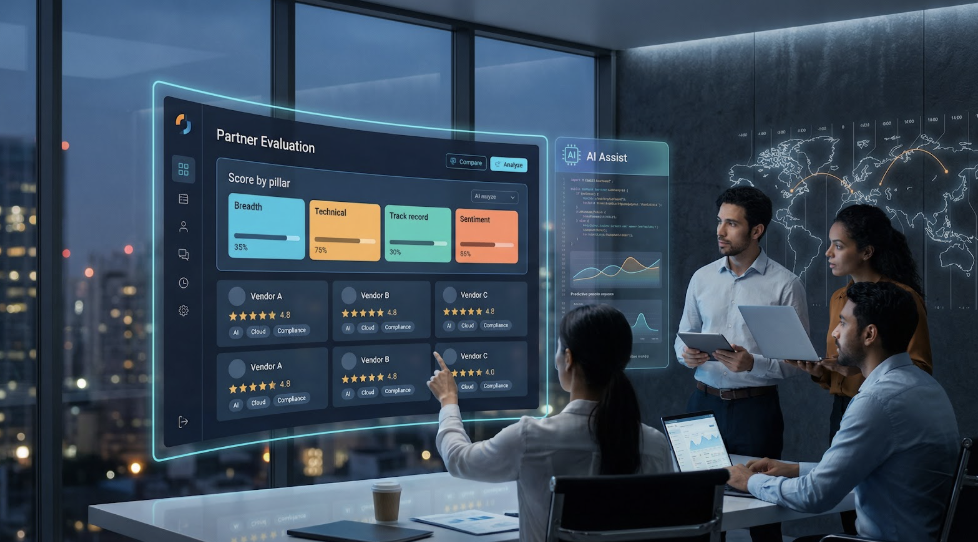
We did more than skim “Top 10” blog posts. Our team audited 15 independent lists, analysed thousands of Clutch and G2 reviews, and cross-checked the results with Gartner’s 2024 Magic Quadrant for Custom Software Development Services. Our goal was simple: highlight companies that excel in the data, not just in their marketing copy.
From that research we scored each contender on four pillars:
- Breadth of service: can they guide you from strategy workshops to post-launch growth?
- Technical excellence: certified engineers, modern stacks, airtight DevOps.
- Track record and innovation: provable wins, patented tech, design awards.
- Client sentiment: consistent 4.8-plus ratings and Fortune-logo references.
Firms earned bonus points for global reach and transparent processes. We also filtered out pay-to-play promotions, leaving an impartial field you can trust.
The result is a balanced roster that lets you compare a boutique MVP specialist with a 60-thousand-strong enterprise powerhouse on equal, measurable terms. In the next section you’ll see that comparison at a glance before we dig into each profile.
At-a-glance comparison
Before we zoom in on individual success stories, it helps to see the field side by side. The table below distills the essentials: founding roots, standout strengths, and what real clients say on Clutch. Scan it to spot patterns, then keep it handy as we tour each profile.
The build-or-die moment has arrived. Analysts project global IT spending to jump 14 percent in 2025—the sharpest rise since the dot-com boom—fuelled by AI and cloud adoption. Software is now the growth engine, and boards want market-ready products yesterday.
Yet code is the easy part; turning an idea into a resilient, revenue-generating product is hard. The right development partner closes that gap, trimming months of trial-and-error and preventing costly rewrites.
Over the last quarter, we sifted analyst reports, review sites, and client stories to surface eleven firms that repeatedly deliver measurable outcomes. In the pages ahead you’ll see our evidence-first methodology, side-by-side comparisons, trend analysis, and a buyer’s guide—everything you need to choose a partner with confidence.
How we built an evidence-first shortlist
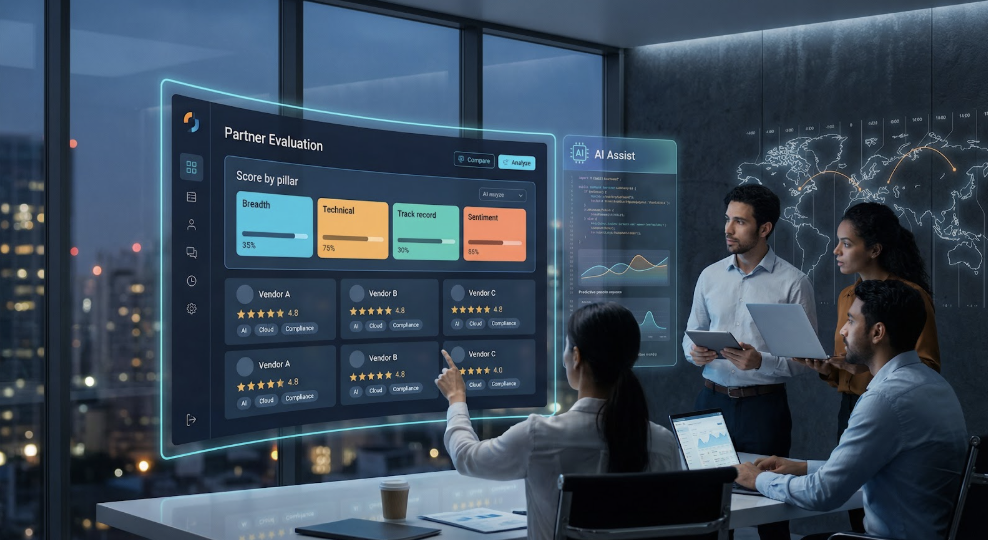
We did more than skim “Top 10” blog posts. Our team audited 15 independent lists, analysed thousands of Clutch and G2 reviews, and cross-checked the results with Gartner’s 2024 Magic Quadrant for Custom Software Development Services. Our goal was simple: highlight companies that excel in the data, not just in their marketing copy.
From that research we scored each contender on four pillars:
- Breadth of service: can they guide you from strategy workshops to post-launch growth?
- Technical excellence: certified engineers, modern stacks, airtight DevOps.
- Track record and innovation: provable wins, patented tech, design awards.
- Client sentiment: consistent 4.8-plus ratings and Fortune-logo references.
Firms earned bonus points for global reach and transparent processes. We also filtered out pay-to-play promotions, leaving an impartial field you can trust.
The result is a balanced roster that lets you compare a boutique MVP specialist with a 60-thousand-strong enterprise powerhouse on equal, measurable terms. In the next section you’ll see that comparison at a glance before we dig into each profile.
At-a-glance comparison
Before we zoom in on individual success stories, it helps to see the field side by side. The table below distills the essentials: founding roots, standout strengths, and what real clients say on Clutch. Scan it to spot patterns, then keep it handy as we tour each profile.
| Company | Founded | HQ | Core Edge | Notable Focus | Clutch Rating |
| Monstarlab | 2006 | Tokyo, Japan | Strategy-to-scale product builds | AI-accelerated delivery | 4.8 ★ |
| EPAM | 1993 | Pennsylvania, USA | Enterprise platform engineering | Large-scale digital transformation | 4.9 ★ |
| Globant | 2003 | Buenos Aires, AR / Luxembourg | Studio model for emerging tech | Creative XR, AI, gaming | 4.8 ★ |
| Thoughtworks | 1993 | Chicago, USA | Agile consulting + product build | Sustainability, DevOps coaching | 4.7 ★ |
| BairesDev | 2009 | Buenos Aires, Argentina | Near-shore dedicated teams | Top 1% LatAm engineering talent | 4.9 ★ |
| ScienceSoft | 1989 | Texas, USA | Compliance-ready solutions | Healthcare & finance security | 4.9 ★ |
| Itransition | 1998 | London, UK | Legacy modernization | Complex system integration | 4.8 ★ |
| Intellectsoft | 2007 | New York, USA | Emerging tech for enterprise | Blockchain, AR pilots | 4.9 ★ |
| Simform | 2010 | Orlando, USA | Cloud-native + AI builds | Serverless architectures | 4.8 ★ |
| Thoughtbot | 2003 | Boston, USA | MVP design craftsmanship | Startup-ready lean teams | 5.0 ★ |
| N-iX | 2002 | Lviv, Ukraine | Scalable backend & data engineering | Event-driven systems | 4.8 ★ |
Numbers tell only half the story. In the next section we bring each line of this grid to life with context—who they serve best, where they excel, and how they shrink risk for teams like yours.
1. Monstarlab: global reach at AI speed
Monstarlab thinks in roadmaps, not tickets, and its product development services blueprint focuses on building, modernizing, and enhancing products from initial strategy through scale. Born in Tokyo and now active across more than twenty countries, the firm pairs Japanese precision with a distributed talent pool that follows the sun.
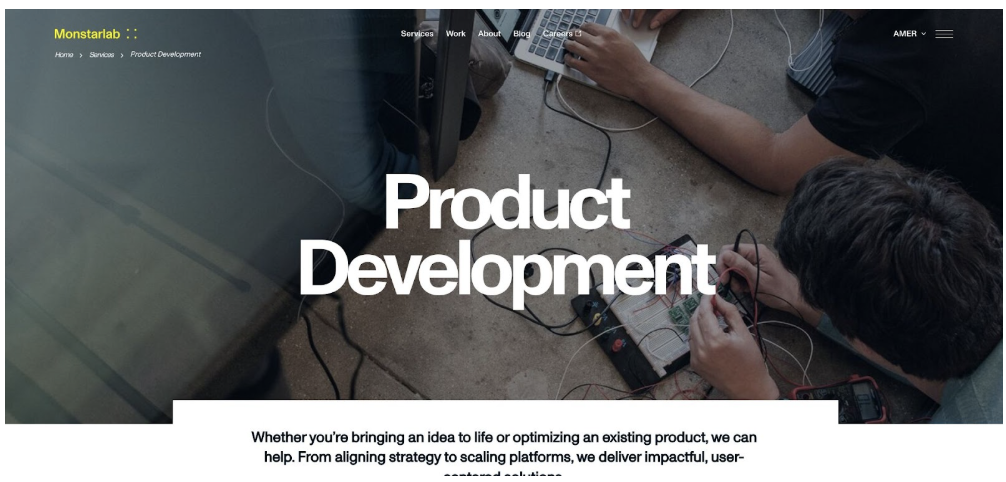
Monstarlab product development services website screenshot
Its secret weapon is Monstar X, an AI-assisted workflow that cuts weeks from a typical MVP cycle. Designers feed concepts into generative tools, engineers refine the output, and continuous testing locks in quality. Projects that used to take six months reach the market in half the time, freeing the budget for extra iterations instead of costly rewrites.
Beyond velocity, Monstarlab delivers cultural fluency. On a single project you might meet Danish product strategists, Dubai-based QA leads, and front-end specialists in Manila, each fluent in English and your business goals. That mix lets the team build region-ready features such as right-to-left layouts or local payment gateways users already trust.
Ideal fit: mid-market or enterprise teams planning multi-region rollouts or AI-driven experiences who cannot afford a long learning curve.
2. EPAM Systems: enterprise engineering without compromise
When scale is essential, EPAM leads the discussion. Sixty-thousand engineers in forty countries handle core-system rewrites, global streaming launches, and multi-cloud migrations with confidence.
EPAM enterprise software engineering services homepage screenshot
Brains match brawn. R&D labs stress-test AI, mixed-reality training tools, and composable commerce stacks, then wrap proven patterns into accelerators your team can apply on day one. You skip proof-of-concept detours and gain production-ready code sooner.
Clients also rely on EPAM Continuum, the design arm that layers pixel-perfect interfaces onto mission-critical back ends. Engagements feel like an in-house product group focused on clear KPIs rather than big-vendor red tape.
Ideal fit: Fortune-level organisations that need end-to-end ownership of complex, regulated, or high-traffic platforms.
3. Globant: creativity meets code in a studio model
Globant approaches each engagement like a film set: assemble the right studio of specialists, aim for impact, then roll that talent to the next project. Need AI-powered personalisation, a VR proof of concept, and a React front end that sings? Leads from the AI, Metaverse, and UX studios join one tight, cross-functional squad.
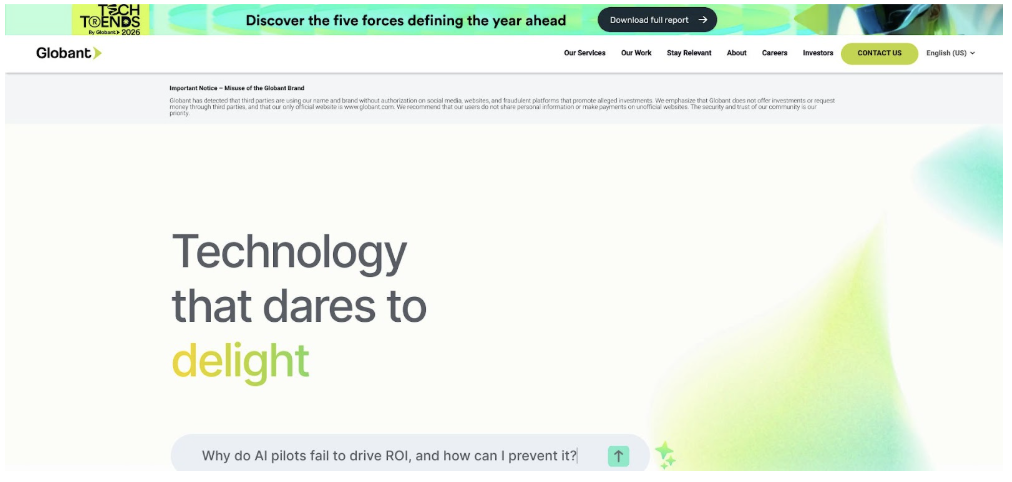
Globant digital studio model and AI services homepage screenshot
That studio DNA keeps work fresh. Designers test motion and game mechanics while data engineers wire real-time analytics that refine the experience with every click. Brands such as Disney and FIFA trust Globant with fan platforms where each second of lag risks loyalty.
Born digital in Latin America, Globant offers collaboration that overlaps the US workday while keeping blended rates below typical domestic shops, pairing creativity with fiscal discipline.
Ideal fit: enterprises and scale-ups chasing standout user experiences or adding emerging tech such as AI, AR, or Web3 without sacrificing delivery rigour.
4. Thoughtworks: where agile culture becomes competitive edge
Thoughtworks preached continuous delivery while most teams still shipped quarterly. That lead time translates into practice. Consultants embed with your product group, co-own the backlog, and teach modern engineering habits as they code. By the time version one reaches production, your developers deploy faster, test smarter, and sleep easier.
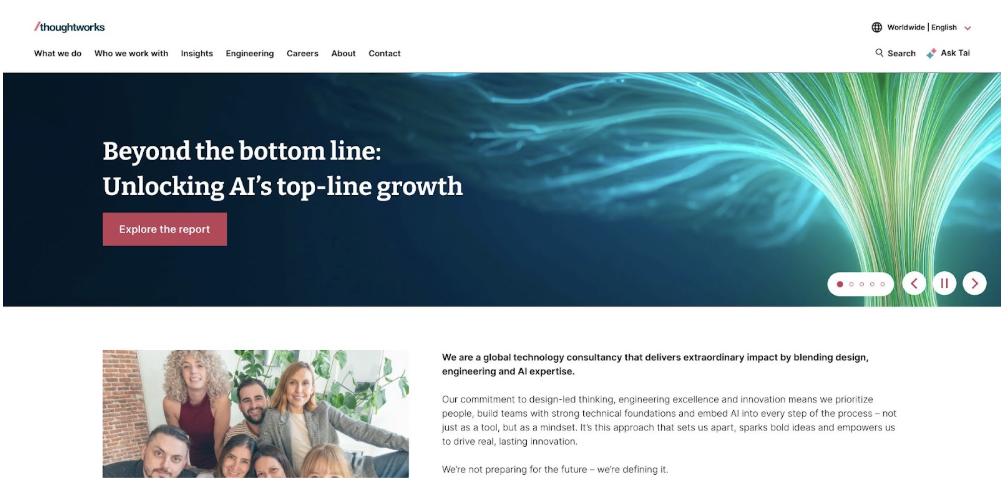
Thoughtworks agile technology consultancy homepage screenshot
Technology Radar, the firm’s twice-yearly trend report, previews methods they bring to your project. Whether it is event-driven microservices, green software metrics, or trustworthy AI, you gain practices proven in the field, not theory.
Impact outweighs slideware. Thoughtworks has delivered cloud-native banking apps inside a year, rebuilt airline e-commerce flows for daily releases, and launched tele-health platforms that scaled through lockdowns.
Ideal fit: organisations that want a high-quality product and a permanent upgrade to their own engineering culture.
5. BairesDev: near-shore talent that ships while you sleep
BairesDev built its reputation on a clear promise: source the top one percent of Latin American engineers and align them with US time zones. Clients spin up full agile squads in weeks, not quarters, and still join real-time stand-ups before lunch.
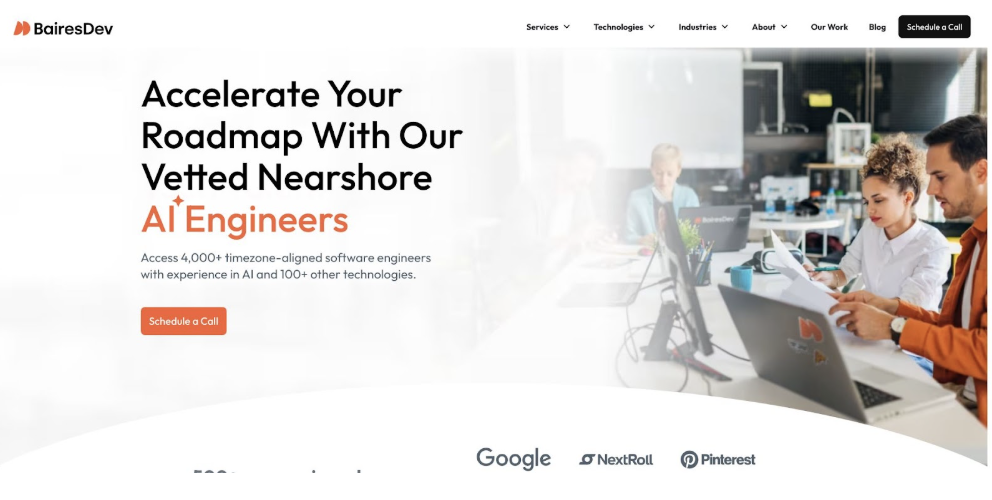
BairesDev nearshore software development homepage screenshot
Those squads arrive proven. Entrance exams cover algorithms, English fluency, and soft skills, so the developer who enters your Slack on Monday can push code by Wednesday. Google and Rolls-Royce have used this model to expand capacity without midnight calls.
Cost efficiency is a bonus, not the headline. Overlap matters most: shared hours for pairing, quick feedback loops, and faster releases that keep roadmaps on track when internal hiring stalls.
Ideal fit: North-American product teams that want extra velocity and skill depth without sacrificing real-time collaboration.
6. ScienceSoft: compliance first, failure never
Some products cannot wobble. Banking cores, HIPAA tele-health portals, and high-frequency trading dashboards demand six-nines uptime and audit-ready code. That is ScienceSoft’s comfort zone.
With roots dating to 1989, the team has outlived operating systems by sticking to disciplined engineering. ISO 9001 and 27001 certificates set the baseline; threat models, penetration tests, and traceable requirements weave through every sprint. Clients often invite ScienceSoft after a flashy partner stalls under regulatory pressure.
Depth does not imply outdated thinking. The firm modernises legacy COBOL, designs cloud SaaS platforms, and layers AI analytics on decades of transaction data while meeting GDPR, PCI, or FDA rules without a hitch.
Ideal fit: healthcare, fintech, or public-sector teams where compliance risk outweighs the appeal of experimental shortcuts.
7. transition: turning legacy liabilities into modern leverage
Many vendors promise digital transformation; Itransition delivers by diving into decades-old codebases and moving them, piece by piece, onto modern foundations without downtime. Think mission-critical payroll suites, airline reservation mainframes, and insurance platforms that date to Y2K.
The team begins with a forensic audit, maps business logic to new microservices, and builds middleware that lets old and new systems communicate while users see only faster screens. This incremental route cuts risk and keeps cash flowing when a full rebuild would stall revenue for a year.
Beyond modernisation, Itransition handles greenfield work from smart-building IoT dashboards to AI document processors. Even fresh projects gain from its integration strength: APIs land clean, data syncs flawlessly, and future migrations cost less because the groundwork is solid.
Ideal fit: organisations with valuable but aging software that must evolve without the downtime of a rip-and-replace.
8. Intellectsoft: enterprise-grade experiments with emerging tech
Intellectsoft thrives where corporate ambition meets cutting-edge ideas. Fortune 500 brands call when they need a blockchain loyalty wallet, an AR training app, or an AI triage bot, and they need it hardened for compliance, not just a proof of concept.
The company’s Innovation Labs start each engagement with a rapid ideation sprint. Architects outline the stack, designers craft wireframes, and a working proof lands in stakeholders’ hands within weeks. Once approved, the same squad scales the pilot into a full rollout. Their expertise in AI development allows them to integrate predictive models and generative tools directly into complex enterprise workflows, following established playbooks for security, QA, and cloud operations.
Global distribution keeps budgets practical. Product workshops happen in New York or London, while most engineering takes place in Eastern Europe, delivering Silicon Valley polish at mid-market rates.
Ideal fit: enterprises pursuing bold concepts such as blockchain, AR, or IoT while demanding governance and predictability from a mature software partner.
9. Simform: cloud-native craft for modern builders
If your roadmap looks like a cloud architecture diagram, Simform should be on your shortlist. The company specialises in serverless back ends, containerised microservices, and AI modules that plug into AWS or Azure pipelines.
Each engagement begins with an architecture sprint where cloud architects, data scientists, and UX leads design a blueprint tuned for auto-scaling and cost control. Small scrum teams then iterate quickly, demo weekly, and build observability into every deployment, so you view usage dashboards before the first marketing push.
Clients value the blend of US consulting hours and Indian engineering talent. Time-zone overlap ensures real-time stand-ups, while hourly rates remain budget friendly. One freight operator cut transit times by 25 percent after Simform rebuilt its logistics engine as Lambda functions tied to an AI optimiser.
Ideal fit: tech-savvy product owners who need production-ready cloud and AI strength without hiring a large internal team.
10. Thoughtbot: MVPs so polished they double as funding decks
Thoughtbot keeps teams small by design. A designer, a senior engineer, and a product strategist sit side by side with you, sometimes in person and always on Slack, to turn an idea into code users love. In about twelve weeks you leave with a production-ready MVP, full test coverage, and a design system your own developers can extend without friction.
Craftsmanship is visible. Open-source tools such as FactoryBot and Paperclip became Rails mainstays because maintainable code guides every decision. Each commit passes tests, every feature ships behind a flag, and daily deploys capture real feedback while rivals are still choosing tech stacks.
The firm also levels up your team. Pair programming, transparent pull-request reviews, and concise process docs help your engineers write better code long after the project ends. Investors notice; many clients secure their next round on the strength of that launch-ready demo.
Ideal fit: founders and innovation squads that prize user-centric design, impeccable code quality, and a transfer of best practices as much as the finished product.
11. N-iX: eastern-European backbone for data-heavy platforms
N-iX began by powering telecom networks and fintech cores where every millisecond matters. Two decades later the firm still prizes engineering rigour, now applied to event-driven microservices, big-data lakes, and cloud migrations that run at global scale.
Clients do not just rent coders; they gain a long-term extension of their own team. Dedicated squads in Lviv or Kraków overlap half the US workday and share Slack channels, branch policies, and OKRs. Because retention rates beat regional averages, institutional knowledge grows sprint after sprint instead of walking out the door.
N-iX architects favour future-proof patterns. Kafka streams drive real-time analytics, Terraform secures repeatable infrastructure, and observability is present from day one, so products withstand traffic surges and new-feature loads without rewrites. Recent wins include a streaming data platform that raised fraud-detection accuracy by 40 percent and an airline connectivity suite that keeps Wi-Fi stable at 35 000 feet.
Ideal fit: companies scaling quickly on the back end in fintech, telecom, or SaaS that need deep distributed-systems expertise and dependable team continuity.
Five trends steering product teams in 2026
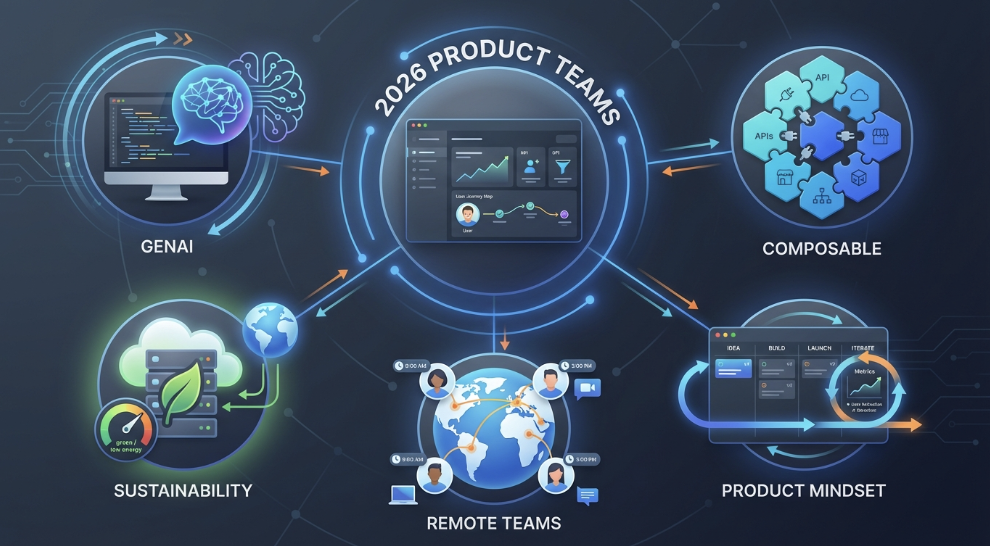
Generative AI shifts from novelty to necessity. A recent Google survey found that 90 percent of developers now rely on AI coding assistants, up from 14 percent two years earlier. That jump shortens delivery timelines and raises the bar: partners who embed AI in design, testing, and analytics cycles will outpace those who still code by hand alone.
Composable architecture moves to centre stage. Buyers no longer accept locked-down monoliths. Microservices, API-first design, cloud-native services, and headless components—together called MACH—let teams swap parts without major rewrites, enabling faster experiments and cleaner upgrades.
Sustainability joins the spec sheet. With cloud costs and carbon reports under review, more RFPs ask how code will sip rather than gulp energy. Thoughtworks co-founded the Green Software Foundation to formalise low-impact practices, and green metrics now sit beside uptime targets in many contracts.
Remote and near-shore collaboration becomes the norm. Pandemic playbooks matured into process: overlapping hours, video stand-ups, and asynchronous documents. Firms that perfected near-shore models such as BairesDev and Globant combine cost savings with real-time feedback, sparing teams from red-eye calls.
The project mindset fades in favour of product thinking. Leading partners stay after launch, track activation metrics, and iterate with user data instead of celebrating at version 1. Ongoing ownership turns vendors into allies whose revenue rises with your roadmap.
Taken together, these trends reward teams that combine speed with foresight. Choose a partner ready for all five and you future-proof your product before the first commit lands.
Buyer’s guide: how to pick the partner who delivers
Start with clarity, not code. Before booking discovery calls, sketch a one-page brief that lists the business goal, success metric, compliance rules, and launch window. A tight brief lets you gauge a firm’s strategic chops; the best partners ask sharp follow-up questions and challenge vague assumptions rather than nodding politely.
Next, match experience to risk. Modernising a core banking stack? Shortlist vendors with real fintech projects and ISO or SOC credentials. Launching a consumer MVP? Favour teams that showcase polished design and fast-cycle releases. Similar battles fought mean fewer surprises.
People beat logos. During proposals meet the actual lead engineer, designer, and delivery manager who will join your Slack. Listen for chemistry and curiosity. Do they explore user pain points or jump straight to buzzwords? Strong candidates explain trade-offs in plain English and outline a first sprint you can picture starting next Monday.
Process transparency calms budgets. Ask for a sample sprint board, test report, or cost burn-down from a past project. A confident partner shares screenshots, not excuses. Confirm ownership too: code, design files, and cloud keys should move to you on payment, free of hidden licences.
Pilot before you plunge. A two-week design spike or code audit costs little and reveals communication speed, documentation habits, and bug-fix etiquette. Treat that micro-engagement as a dress rehearsal; if the team shines, green-light the full show with confidence.
Conclusion
Choosing a digital product development partner is no longer about who can simply write code; it’s about who can accelerate outcomes while future-proofing your business. Use the evidence-first shortlist, trend insights, and buyer’s guide above to evaluate each contender through the lens of your unique goals. Commit to a partner that brings strategic depth, engineering excellence, and a collaborative culture, and you’ll transform market pressure into competitive advantage.