Content teams are producing more material than ever before. Between blog posts, whitepapers, email campaigns, social media copy, and product documentation, the average marketing department now manages a volume of written content that would have been unthinkable five years ago. AI tools have accelerated that output significantly, but they have also introduced a problem that many teams are only beginning to reckon with: originality at scale.
When you are publishing dozens of pieces per week across multiple writers, freelancers, and AI-assisted workflows, duplicate content and plagiarism flags become an operational risk. A single piece of flagged content can damage search rankings, erode client trust, and create legal exposure. And with Google’s March 2024 Core Update integrating the Helpful Content system directly into its core algorithm, originality is no longer just a best practice. It is a ranking signal.
The challenge is that detection alone does not solve the problem. Knowing that 12% of an article matches existing content is useful, but it does not tell you how to fix it. Content teams need tools that cover both sides of the equation: identifying plagiarism and duplicate content, and then resolving it efficiently enough to maintain production velocity.
This guide covers four AI-powered tools that address different parts of that workflow. Each one specializes in a distinct function, and together they form a complete plagiarism management stack for content operations at any scale.
Why Content Teams Need a Plagiarism Workflow, Not Just a Checker
Most organizations treat plagiarism detection as a final checkpoint. The article gets written, it gets edited, and right before publishing, someone runs it through a scanner. If it comes back clean, it ships. If it does not, someone manually rewrites the flagged sections, which often takes longer than writing the original draft.
This reactive approach breaks down at scale. When you are managing ten or twenty pieces of content per week, manual rework on flagged articles creates bottlenecks that disrupt the entire editorial calendar. Deadlines slip, editors become the bottleneck, and the team starts prioritizing speed over thoroughness.
A 2025 study by Turnitin and independent research firm Vanson Bourne surveyed 3,500 respondents across six countries and found that 95% believe AI misuse is occurring at their institutions in some form. While that statistic comes from academia, the underlying dynamic applies directly to content teams. AI-assisted drafting is now standard practice in marketing departments, and the content it produces carries structural patterns that both plagiarism scanners and AI detectors are trained to identify.
The smarter approach is to build a workflow that integrates detection and remediation as parallel steps in the production process, not as an afterthought. The tools below are designed to support exactly that kind of workflow.
Content teams that treat originality as an ethical obligation rather than a technical checkbox tend to produce better work across the board. When writers know that plagiarism removal is built into the process, they focus on getting ideas right in the first draft rather than spending mental energy worrying about similarity scores.
4 Best AI-Powered Plagiarism Tools for Content Teams
1. PlagiarismRemover.AI
Best for: Removing plagiarism from flagged content and cleaning AI-generated text
Website: plagiarismremover.ai
Detection tools tell you where the problem is. PlagiarismRemover.AI is built to fix it. The platform takes text that has been flagged for plagiarism or AI detection and rewrites it so that it reads as original, human-authored content. For content teams, its ability to remove plagiarism at the structural level fills the most time-consuming gap in the editorial workflow: the manual rework phase.
What separates PlagiarismRemover.AI from basic paraphrasing tools is the depth of its restructuring. Rather than swapping synonyms or shuffling a few words within a sentence, the tool rearchitects how ideas are expressed. It changes clause order, adjusts vocabulary at the sentence level, and modifies phrasing patterns while preserving the original meaning and tone. The result is content that passes both plagiarism scanners and AI detection systems without sacrificing readability or accuracy.
For teams that use AI tools during the drafting process, PlagiarismRemover.AI addresses the specific challenge of cleaning up content that carries the structural fingerprints of large language models: uniform sentence length, predictable transitions, and repetitive phrasing patterns. These are exactly the signals that tools like GPTZero and Originality.ai are trained to flag. Running AI-assisted drafts through PlagiarismRemover.AI before the editing phase removes these patterns early, which means editors can focus on substance and voice rather than rewriting for originality.
A detailed comparison of how different tools handle these challenges is available in this AI plagiarism analysis, which breaks down the strengths and limitations of various approaches to cleaning AI-generated content.
For content teams processing high volumes, PlagiarismRemover.AI’s ability to remove plagiarism at the sentence-structure level rather than the word level is what makes it operationally viable. The platform offers a free tier with paid plans starting at $4 per month, making it one of the most cost-effective solutions in the space.
2. Copyscape
Best for: Duplicate content detection for web publishers
Website: copyscape.com
Copyscape has been the industry standard for web-based plagiarism detection for over two decades, and for good reason. It is purpose-built for the specific challenge content teams face: ensuring that published web content is unique across the internet.
The platform works by scanning your text against its extensive index of web content and returning a detailed report showing any matching passages, including the source URLs and the percentage of overlap. For content managers who work with freelance writers or manage distributed teams, this is invaluable. It provides a clear, objective measure of originality that can be applied consistently across every piece of content before it goes live.
Copyscape Premium expands the tool’s capabilities significantly. It supports copy-paste text checking (not just URL scanning), PDF and Word document uploads, and batch searching of up to 10,000 pages in a single operation. The API integration is particularly useful for content teams with established workflows, as it allows automated plagiarism checks to be embedded directly into your CMS or content management pipeline.
The platform also offers Copysentry, an automated monitoring service that continuously scans the web for copies of your published content and sends email alerts when duplicates are found. For publishers and media companies concerned about content theft, this provides ongoing protection without requiring manual checks.
Pricing follows a pay-per-use model at $0.03 per search for up to 200 words, plus $0.01 per additional 100 words. Copysentry plans start at $4.95 per month for standard monitoring.
3. Grammarly
Best for: Writing quality, grammar correction, and plagiarism detection in one platform
Website: grammarly.com
Grammarly occupies a unique position in the content team’s toolkit because it combines writing improvement with plagiarism detection in a single interface. For teams that want to reduce the number of tools in their workflow, this consolidation is a significant advantage.
The plagiarism detection feature, available in Grammarly Premium and Business plans, scans content against billions of web pages and academic databases. It highlights matching passages and provides source links, giving editors a clear picture of where potential issues exist. While the detection is not as specialized as a dedicated tool like Copyscape, it serves well as a first-pass check that catches obvious issues during the editing phase.
Where Grammarly genuinely excels for content teams is in its writing quality feedback. The platform evaluates text for grammar, clarity, conciseness, tone, and engagement. It allows teams to set specific writing goals, including audience type, formality level, and intent, which tailors the feedback to the content’s purpose. For organizations that work with writers of varying skill levels, this creates a consistent quality baseline across all output.
Grammarly’s Business plan adds team management features, style guides, brand tone profiles, and analytics that track writing quality trends across the organization. The platform integrates with Google Docs, Microsoft Word, Slack, and most browsers, which means writers receive real-time feedback without leaving their primary work environment.
Research from Stanford’s HAI institute has highlighted that AI detection tools can identify machine-generated text with high accuracy on longer content, but also flagged significant reliability concerns, particularly around false positives for non-native English writers. This underscores why combining detection with human editorial judgment, supported by tools like Grammarly that improve writing quality at the source, produces better outcomes than relying on detection alone.
Grammarly Premium starts at around $12 per month. Business plans are priced per seat, starting at $15 per member per month with annual billing.
4. Plagicure
Best for: AI-powered content rewriting for originality
Website: plagicure.com
Plagicure rounds out this toolkit as a dedicated rewriting solution focused on transforming content into original, human-sounding prose. While it shares some functional overlap with paraphrasing tools, this plagiarism remover operates at a fundamentally deeper level, restructuring how ideas are expressed rather than simply substituting words.
The platform is designed for a specific use case that content teams encounter regularly: you have a draft that is substantively correct and editorially sound, but it triggers similarity flags or reads as AI-generated. Rather than sending it back to the writer for a time-consuming manual rewrite, Plagicure can process the content and produce a version that maintains the original meaning and structure while eliminating the patterns that cause flags.
This is particularly valuable for content teams that produce high volumes of material within narrow topical niches. When you are writing your fifteenth article about cloud security or your tenth product comparison in the same category, the natural tendency toward similar phrasing and structure increases. Plagicure helps break those patterns without requiring writers to artificially contort their language.
The tool works well as a final layer in the content pipeline. After detection and initial editing, content that still carries residual similarity or AI-like patterns can be run through Plagicure for a final originality pass before publication. This creates a consistent, repeatable cleanup step that scales with production volume.
How to Build a Plagiarism Workflow That Scales
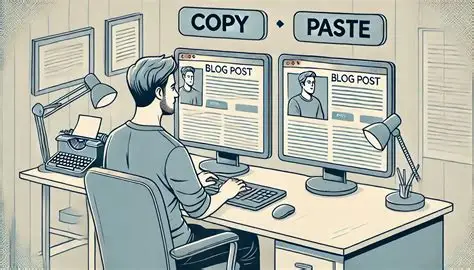
The four tools above are most effective when used as components of a structured workflow rather than standalone solutions. Here is how a typical content team might integrate them.
During the drafting phase, writers work in Grammarly to catch grammar, clarity, and tone issues in real time. This ensures that quality issues are addressed at the point of creation rather than discovered during editing.
Once the draft is complete, it moves to the editing phase. Here, an editor runs the content through Copyscape to generate a detailed similarity report. Any sections that match existing web content are identified with source links and overlap percentages.
For flagged sections, the editor uses PlagiarismRemover.AI to rewrite the problematic passages. This step replaces the traditional manual rework process with a faster, more consistent approach that maintains the original meaning while eliminating similarity.
As a final check before publication, content that was drafted with AI assistance or that operates within a crowded topical space gets processed through Plagicure to ensure it reads as distinctly human and original. The finished piece is then cleared for publishing.
This workflow adds roughly 10 to 15 minutes per article, compared to the 30 to 60 minutes that manual rework typically requires when plagiarism is caught at the final stage. Over the course of a week producing 10 to 20 articles, that time saving compounds significantly.
What Content Teams Should Evaluate When Choosing Plagiarism Tools
Not every content operation has the same needs, so it is worth understanding what to prioritize when building your stack.
Detection depth matters most for teams managing freelance writers or distributed contributors. Tools with larger databases and more granular reporting (like Copyscape’s source-level matching) give editors the context they need to make informed decisions about what needs reworking.
Rewriting quality is the critical factor for teams that use AI in their workflow. A tool that produces clean, natural-sounding rewrites without losing accuracy (like PlagiarismRemover.AI) saves significantly more time than one that requires heavy post-editing.
Integration capabilities determine how smoothly the tool fits into your existing pipeline. API access, CMS plugins, and browser extensions reduce friction and increase adoption across the team.
Scalability and pricing should match your production volume. Pay-per-use models work well for smaller operations, while flat-rate plans become more economical at higher volumes.
AI detection awareness is increasingly important. As more content teams incorporate AI tools into their workflows, the ability to identify and resolve AI-like patterns, not just traditional plagiarism, becomes a core requirement.
A broader overview of how different plagiarism removal tools compare across various use cases can help teams evaluate which combination best fits their specific workflow requirements.
Final Thoughts
Plagiarism management for content teams is no longer a single-tool problem. The combination of AI-assisted drafting, increasing publication volumes, and stricter algorithmic evaluation of content originality means that teams need a workflow, not just a checker.
The four tools covered in this guide address every stage of that workflow. PlagiarismRemover.AI handles the heavy lifting of rewriting flagged content. Copyscape provides the detection foundation. Grammarly ensures writing quality and catches issues at the source. Plagicure delivers the final originality layer.
Build the workflow. Integrate the tools. Ship clean content at scale.