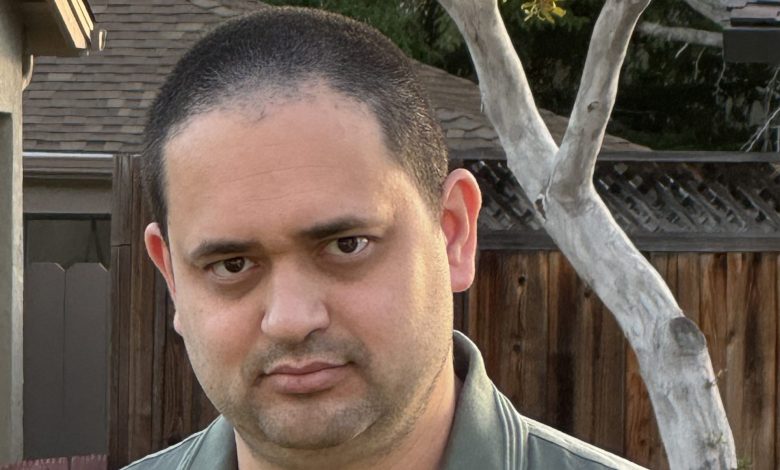
Artificial intelligence now shapes how people work, communicate, and solve problems. Deep learning systems help power everything from image recognition to language tools. Even so, many of these systems are still treated like black boxes. They work well, but people do not always know precisely why. Baruch Epshtein has built his career around narrowing that gap between performance and understanding. His focus is on the mathematical foundations of deep learning to make these systems more explainable, improvable, and ultimately more trustworthy.
Rather than only making models faster or larger, Epshtein studies their foundations. His research asks clear questions: how learning systems generalize beyond their training data, what limits they face, and what kinds of guarantees can be established about their behavior. This approach brings structure to a field that often advances more quickly in practice than in theory.
From Mathematics to the Foundations of Deep Learning
Epshtein began his academic path with two degrees in mathematics, completed at the Technion – Israel Institute of Technology in Haifa, and initially planned to pursue a career as a mathematician. During this period, he also worked professionally as a computer vision engineer. When deep learning began reshaping science and industry in the early 2010s, he saw that while AI systems were becoming increasingly powerful, many of their underlying mechanisms remained poorly understood. That gap captured his interest.
To explore these questions, he transitioned into a PhD in electrical engineering, specializing in machine learning. This shift allowed him to combine mathematical rigor with real-world AI systems. His goal was not only to build models that worked, but to understand why they succeeded and under what conditions they could be expected to perform reliably. This focus placed him at the center of ongoing debates about generalization, reliability, and theoretical guarantees in modern AI.
Foundational Contributions to Machine Learning Theory
Epshtein has authored three peer-reviewed academic papers addressing core questions in learning theory. His 2019 paper, co-authored with his advisor Professor Ron Meir, provided one of the first formal explanations for why autoencoders generalize well under specific assumptions. Autoencoders are widely used to extract structure from data, yet their effectiveness has long outpaced theoretical understanding. This work helped clarify the conditions under which such models can be expected to perform reliably and how they can support semi-supervised learning.
In 2022, Epshtein co-authored a paper that was accepted at NeurIPS, one of the most selective conferences in the field of artificial intelligence. The work derived generalization bounds for broad classes of deterministic models, an area previously dominated by results relying on randomness or probabilistic model selection. Rather than claiming that all learning can be deterministic, the paper showed that many commonly used architectures can admit meaningful theoretical guarantees without stochastic components. This result expanded the understanding of what structured, non-random systems can achieve and has implications for reliability and interpretability.
Bridging Theory and Real-World Application
Epshtein’s research is not limited to theory alone. He completed his PhD in 2020 while working at Mobileye, contributing to computer vision research for autonomous driving and driver-assistance systems. After relocating to the United States in 2021, he worked with Fei-Fei Li at her startup DawnLight, applying learning theory to detecting dangerous falls in elderly medical patients.
He later joined Ambient.ai as a senior applied research scientist, where he tested and deployed models informed by his theoretical work in real-world security and computer vision settings. These efforts demonstrated how foundational research can inform practical system design.
He also brings structured thinking from outside academia. As a member of a chess team, he helped win the 2016 national student chess team championship, an experience that reflects the patience, planning, and precision that characterize his research approach.
Resilience and Research Focus
Epshtein’s academic and professional development unfolded alongside significant logistical challenges. During the COVID period, he moved to the United States with his family while completing his doctoral work and maintaining full-time research roles. Balancing family responsibilities, international relocation, and advanced research required sustained focus and discipline. These circumstances reinforced his preference for careful, methodical inquiry over short-term results.
Advancing Understanding in a Rapidly Changing Field
Epshtein sees his future work as part of AI’s next phase—one focused not only on scale, but on reliability, data efficiency, and understanding. Today’s systems remain highly data-hungry and can struggle when operating outside their training conditions. He argues that deeper insight into generalization and principled use of prior knowledge will be essential for building AI systems that are safer and more dependable.
The central message of his work is that the mathematics behind deep learning matters. When researchers understand how and why models learn, they can design systems with clearer expectations and fewer unintended failures. By contributing to the theoretical foundations of modern AI, Baruch Epshtein is helping shape a future in which progress is guided not only by performance but by understanding.