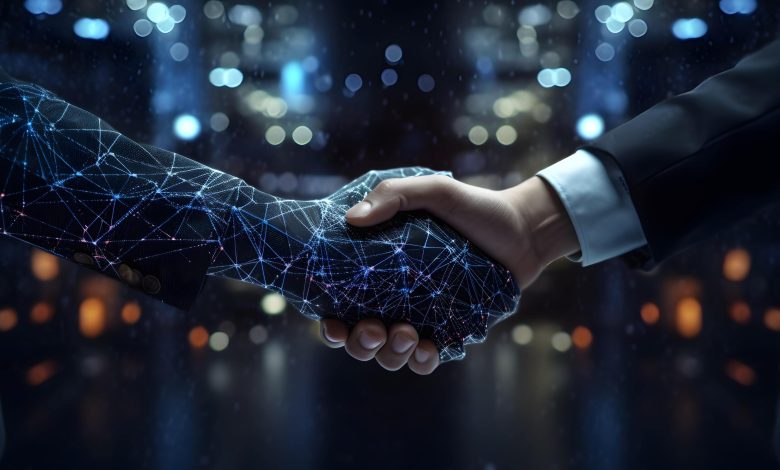
The digital world today finds itself in a paradoxical generation. Although Artificial Intelligence enables companies to achieve levels of efficacy that have never been seen before, at the same time, it has provided a “skeleton key” to malicious users. In reality, the biggest danger to enterprise security no longer lies in a physical attack on a firewall’s complexity but in imitation of the trusted voices.
In light of the fact that “phishing” emails are now indistinguishable from business emails due to the advent of Generative AI, the “digital handshake” – the verification of identity that servers do – is the most important level of protection in cybersecurity.
The Erosion of Visual Trust
For decades, users relied on the practice of spotting “tell-tales” in deceptive emails, like a misspelled domain name, a weird greeting, or a blurry company logo. Such tips are now obsolete, thanks to AI technology. Large Language Models (LLMs) can, to a terrifying extent, imitate a CEO’s writing style, while scripts can conduct attacks in dozens of languages at a time.
Since we can never again rely on our own eyes to check the legitimacy of an email’s origin, we are forced to rely on cryptographic proof. It is at this point that the holy trinity of SPF (Sender Policy Framework), DKIM (Domain Keys Identified Mail), and DMARC (Domain-based Message Authentication, Reporting & Conformance) becomes an absolute necessity.
Strengthening the Cryptographic Bond
Behind this technical defense is DKIM. It can best be described as an electronic wax seal on an envelope that verifies the sender’s legitimacy on the receiving end by ensuring that the wax seal has not been broken along the way by an “artificial intelligence man in the middle” attack when, in this case, an AI tries to modify the content being delivered in an email.
Nevertheless, key management can be so complex that issues arise concerning what is known as “configuration drift,” whereby the configuration settings drift out of date and cease to work. It is for this reason that the use of fourth-party diagnostic software has become necessary. With the help of an EasyDMARC dkim checker software application, IT administrators can check on the status of the records they maintain. This is important because even if they used the most expensive software solutions, they could still be impaired by merely syntactical errors within the DNS.
 Towards Automated Governance
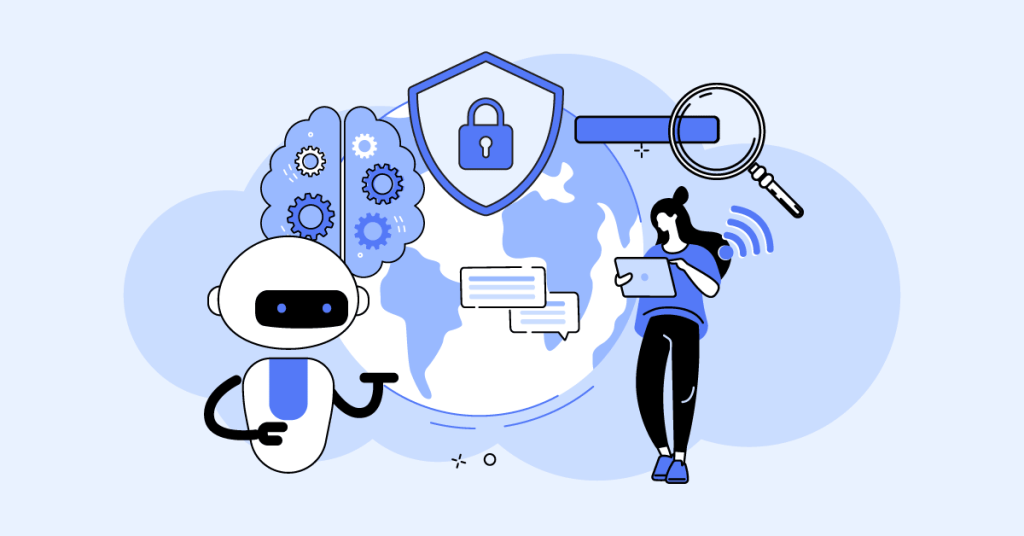
To make the transition from the passive security state to the active state means having a change in tactics rather than just having the tools. Organizations have been suffering in the “monitoring mode,” fearing that if the enforcement policies are too drastic, legitimate emails would never get through. Waiting in the AI era means being exposed.
Today, the analysis of the DMARC report is now being performed by the use of machine learning capabilities. Here, the valid third-party senders, such as the use of Mailchimp or Salesforce, are distinguished from possible attacks. Therefore, in the process of onboarding new marketing or HR apps by utilizing the services of an EasyDMARC dkim checker, organizations are able to determine if each voice they have given the right to speak on their behalf has indeed been signed.
The Future: Zero-Trust Email We’re evolving towards a “Zero Trust” communication architecture. In this approach, messages received in the email, regardless of the “From” address, are never considered trusted. Each message has to establish its identity by completing an elaborate identity handshake. But as AI grows in capability, so too must the tools we employ to protect our territory. Authentications with high fidelity are about much more than just battling spam. Authentications with high fidelity are about upholding the integrity of the brand. When a customer or business partner receives an email communication from one’s domain, one should not doubt but wonder if the message is a forgery authored by AI.
Conclusion
The race between threats and defensive mechanisms in AI is not over. But organizations can remain one step ahead if they anchor their emails using strong, proven security standards. This “digital handshake” is what trust in business is built on, make sure yours is solid