
It won’t come as a shock to say that AI will have a big impact in 2026. For one, worldwide spending in the industry is forecast to total $2.52 trillion this year, a 44% increase year-over-year, according to Gartner.
Yet despite this impressive prediction, the real challenge this year will be moving AI out of the foundational stages of the past couple of years into a period of execution where the technology becomes truly useful.
For example, the report from Gartner noted that spend on AI infrastructure and foundations make up the majority of these huge spending forecasts. Elsewhere, we can see that even OpenAI is looking to address to offset the massive infrastructure costs associated with running ChatGPT.
The company announced they would start to test ads for users on their Free and Go levels in the U.S., beginning with the first level of ad-testing to bring more revenue into the business.
This signals the much more fundamental teething problem associated with AI so far. Only a few companies are realizing extraordinary value from AI today. Many others are also experiencing measurable ROI, but their outcomes are often modest.
As the technology continues to evolve at speed, 2026 is set to be the year defined by value creation that builds on the year of widespread adoption in 2025.
Here are the trends that are taking shape this year, contributing to the next era of AI.
Engineering productivity sets new standards for developer teams
AI continues to be adopted by developers to help out with coding tasks in the hope of saving huge amounts of time across the software development life cycle and building new products more quickly.
Data from IBM found that teams using IBM’s Code Assistant reported average time savings of 59% on code documentation, 56% on code explanation and 38% on both code generation and test case generation.
This productivity gain not only helps products launch at a faster pace, but also promises to improve the developer experience, helping teams reduce time-spent on repetitive tasks.
However, these productivity gains will be limited if AI is used as a standalone tool.
This happens when AI productivity tools are applied as a standalone time-saver without considering the underlying engineering infrastructure. In these cases, AI can actually add to the complexity and expose underlying bottlenecks in the pipeline that have gone unnoticed.

Ness Digital Engineering (Ness) published a study that put engineering productivity under the spotlight. The study emphasizes that organizations that see tangible ROI focus equally on platforms, talent upskilling, process redesign, and change management.
The authors also called attention to how the rise of agentic AI is changing the LLM from a text generator into a decision-maker. Instead of just suggesting a fix, an ‘agent’ can now identify a bug, browse your repository to understand the context, write the patch, run the unit tests, and even self-correct if those tests fail.
In 2026, according to the company’s CEO Ranjit Tinaikar, we can expect to see new tools to enhance engineering productivity, address these underlying issues, remove bottlenecks to unlock unprecedented new speed across developer workflows.
AI in healthtech fuels rise in self-advocation and democratization
2025 marked a turning point for the healthcare innovation industry.
AI is transforming healthcare technology from workflow tools into mission-critical infrastructure that drives both revenue growth, margin expansion, and, most excitingly, better clinical outcomes.
The technology is transforming diagnosis, treatment planning, and patient monitoring faster than any previous healthcare technology. While benefits are clear, concerns around bias, data privacy, and accountability remain unresolved.
Looking ahead, the future of AI in healthcare depends on trust, regulation, and responsible deployment.
In 2026, we expect AI to democratize access to quality healthcare. 360 Health Data is building a resource platform with software development experts, Source Meridian, that
connects Spanish-speaking clinicians in Latin America with high-quality medical knowledge.
The platform will use AI to overcome language barriers and improve access to the latest studies and medical research findings, helping to improve patient care across Latin America.
The rise of wearable devices and health apps has also ushered in a new wave of self-advocacy amongst patients who are keen to take control of their health. The widespread acceptance of these devices and the way they handle individual data means that we can expect to see AI-powered health monitoring target specific use cases in 2026.
For example, German health-tech startup Deep Care was named an Honoree at the CES Innovation Awards in 2026 for its AI-supported resilience coach that recognizes stress signals in everyday working life and takes early countermeasures.
Chatbot adoption set to skyrocket
2026 is also set to see significant traction in chatbot technology thanks to AI. Chatbots themselves aren’t new, but the earlier iterations of the technology often left users frustrated with their limited capabilities and inability to answer questions outside of a limited script.
The rise of ChatGPT and generative AI changed this for good. While the new class of chatbots may appear similar on the surface, they differ significantly.

These applications run by AI boast predictive, autonomous decision-making and benefit from continuous learning and improvement. As the technology becomes more usable and useful by design it opens up an increased number of use cases and industries.
Chatbots and customer service have long gone hand in hand, but the evolution of AI means that chatbots are now being used by corporate multinationals to build powerful executive assistants or help research institutes with database queries to name just a couple of examples.
Integrated tools that incorporate elements like video or connect to other elements of digital infrastructure to boost automated capabilities will also be of prime importance this year.
For example, Quickblox offer white-label communication tools that help brands quickly build advanced messaging apps and chat solutions that fit their specific needs with QuickBlox SDKs and APIs.
Solutions like these help companies avoid the limitation of off-the shelf chatbots and communication tools without needing to invest heavily in a completely customized build.
Construction industry builds new future with AI
In 2025, AI attracted attention across the construction industry with 56% respondents to a global survey planning to allocate increased funds to AI technologies.
Despite this, 45% of respondents reported no AI implementation in their organizations, while another 34% are in early pilot phases, highlighting cautious experimentation rather than widespread operational use.
Adoption in 2026 is expected to increase significantly thanks to tailor-made AI tools for the construction industry that have the backing of venture capitalists.
Billdr raised $3.2M in a round led by White Star Capital and with participation from One Way Ventures, Desjardins Capital, asterX, and Formentera Capital. This funding will help software company Billdr relaunching its platform and AI-native operating system as an all-in-one operating system for small and mid-sized general contractors.
Billdr PRO is an all-in-one construction management platform for small and mid-sized general contractors (SMB GCs), covering sales, clients, team management, finances, and project management. The software unifies estimating, scheduling, to-dos, change orders, purchase orders, timesheets, daily logs, payments, communications, and procurement under one roof. It replaces the fragmented mix of spreadsheets, texts, and disconnected apps that 75% of SMB GCs rely on today.
AI innovation in the US diversifies beyond Silicon Valley
NovaWave Capital revealed plans to establish an AI-focused venture studio in Arizona, developed in partnership with the Arizona Commerce Authority. The initiative reflects a broader push to reinforce public-private funding models that support early-stage technology companies beyond traditional innovation centers.
Arizona has emerged as a focal point in that shift. In 2025, the state attracted more than $34 billion in new investment and nearly 28,000 projected jobs, with activity spanning semiconductors, aerospace, broadband infrastructure, and artificial intelligence.

The new venture studio, called WaveX, will focus on building AI-driven startups in healthcare, energy, sports, and media. Rather than functioning as a conventional accelerator, the studio is structured to embed venture creation, capital access, and commercialization support at early stages.
NovaWave Capital collaborates closely with a network of strategic partners in Asia, the Middle East and North America (including the U.S. states of West Virginia, Nevada and Arizona) and International NovaWave Capital collaborators from South Korea, Qatar, the UAE, Japan, and Saudi Arabia.
These collaborations underscore the global and cross-sector collaboration behind NovaWave Capital’s platform and its regional reach and impact across global innovation ecosystems.
AI transforms B2B sales, advertising and lead acquisition
In 2025, much of the narrative around AI looked at how the tool was being used by the public, from students and teachers through to creatives and individuals. Although B2B adoption was taking place, security and data privacy concerns acted as a barrier to widespread adoption across the B2B marketplace.
However, in 2026, we expect that to change. An increasing number of AI companies have been built to offer custom solutions that address common business pain points or address widespread needs in a particular industry.
The Boston Consulting Group notes that “humans and AI working together in sales can deliver significant improvements in new customer acquisition, upselling and cross-selling, churn reduction, pricing realization, and seller productivity.”
Guillermo Delgado Aparicio is the Global AI Leader for Nisum. He recently worked with a Fortune 500 retailer, boosting overall revenue by 7% after modernizing product search and discovery with AI. The lightweight API integration focused on improving search recall and relevancy, browse product ranking, product suggestions, and catalog feed integration.
Myuser is transforming the lead generation process for B2B clients with an intelligent assistant that automates the entire acquisition stage, from deep research on prospects, personalized outreach to booking meetings.
On the advertising front, ADvendio is harnessing AI-powered tools to help business users master omnichannel digital marketing with solutions that support ad sales, media buying, or combined deals – enhanced with AI.
Another shift, happening underneath the marketing layer is how financing itself has become a conversion engine. Jifiti is using AI to automate loan discovery, eligibility matching, and application flows directly at the point of sale, reducing friction. Instead of generating leads and handing them off, AI-enabled financing allows financial institutions to capture intent and convert it at the same time.
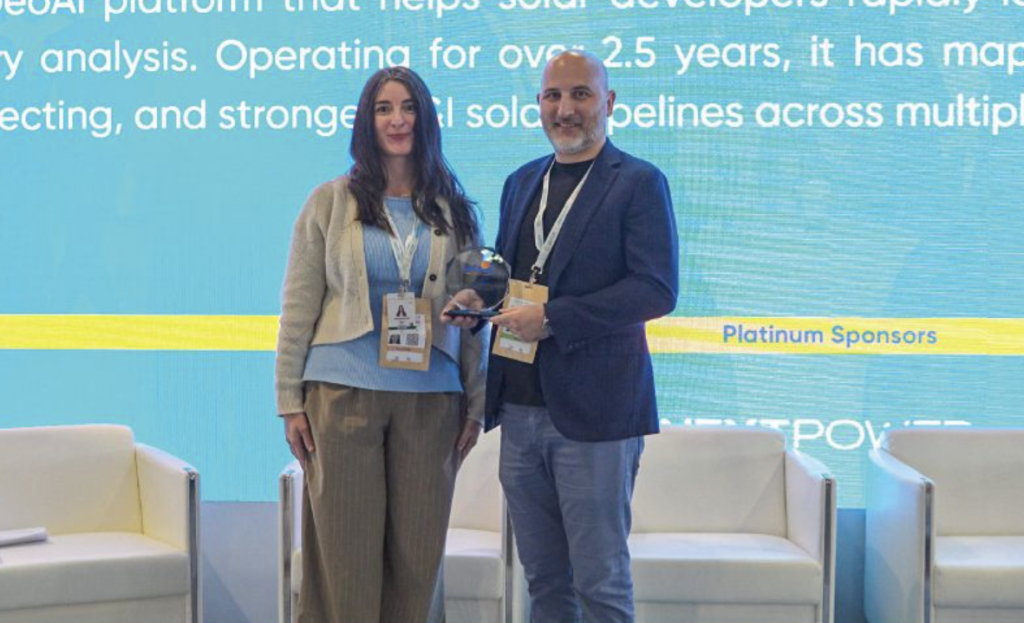
Finally, Planno, which was recently named the Solar Startup of the Year at the MESIA Solar Awards, is helping solar companies uncover qualified leads thanks to its unique prospecting tool that analyzes geospatial data to find areas ripe for rooftop solar adoption.
AI increases need for authentic company culture
Finally, the proliferation of AI across industries will fuel the need for a highly human-centered approach to things like company culture and communication.
Human storytelling, ethics, and authenticity are vital for brand trust in an AI-driven world. This is equally important for internal branding as it is for external branding. The disruptive nature of AI means employee engagement is at a record low, according to the Gallup State of the Global Workplace report for 2025.

Brands like Bands, led by Fernando Gaspar Barros, champions a revolutionary approach to building a powerful company culture that takes corporate teams away from the screens to participate in live festivals where executives take the stage alongside renowned artists. The company also helps brands take a lesson from the musicians’ playbook to boost loyalty and passion with their audiences.
Meanwhile, Prezent is making it easier to deliver hyper-personalized corporate communications that adjust tone and language based on individual audience members, to ensure that the message aligns with the C-suite executive, to the external funding body or a specific internal department.
AI governance to avoid overreliance on candidate hiring
A hiring model may rank certain candidates lower because similar profiles were hired less often in the past. An exam security system may flag behavior that looks irregular but is harmless. Or, a chatbot may provide an answer that is technically correct but unhelpful in the moment.
41% of IT, cybersecurity, risk, and fraud leaders say their company has hired and onboarded a fraudulent candidate.
Leaders are moving beyond fraud detection to preemptive security models, combining biometrics, deepfake detection, real-time forensics, and web monitoring to enhance security.
Because AI outputs often appear confident and precise, they can easily be mistaken for conclusions rather than signals. In each case, the system is functioning as designed. The issue arises when recommendations are accepted without considering the surrounding context.
Research and industry analysis, including perspectives published by Kryterion, a leader in secure test development and delivery solutions, highlight a growing gap between AI’s technical capabilities and its organizational use. AI does not create bias on its own. It reflects the data it is trained on.
If historical data includes unequal access, inconsistent evaluation, or outdated assumptions, AI can reinforce those patterns efficiently and quietly. As automation increases, it can become harder to see where those outcomes originate.
In response, 2026 is expected to see a stronger emphasis on governance models that define where automation ends and human judgment begins.
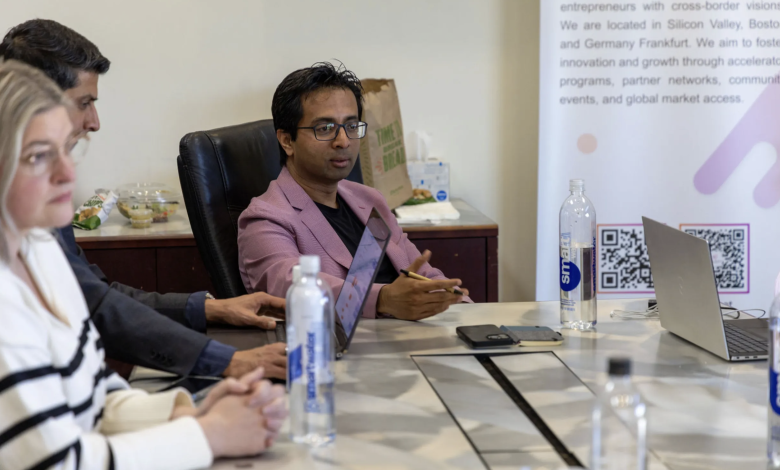
Article’s featured photo of Rajat Mishra, CEO of Prezent