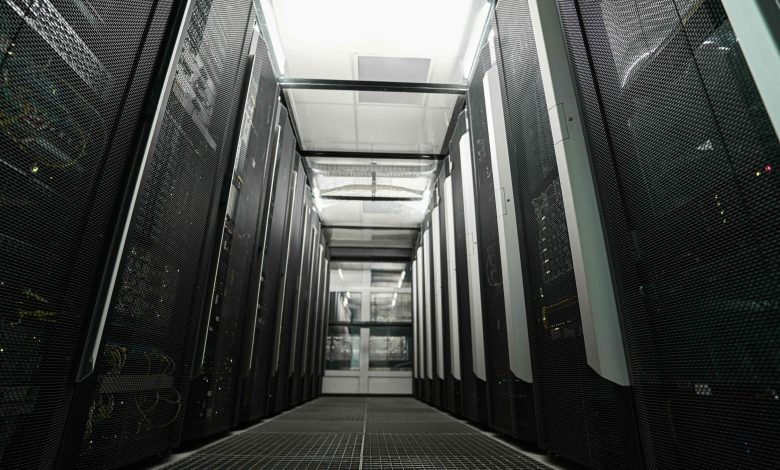
AI models don’t simply run on the cloud; they need concrete, steel, and electrons. That very real, physical foundation of data centers, power lines, and power generation must be financed, permitted, built, and managed.
And the financing needed to get AI off the ground is staggering. One recent estimate suggests that about $5.3 trillion in AI and data center-related investments will need to be raised in the next 24 months. About $4 trillion of that is expected to hit the bond market as new debt, a massive competition for investor capital.
To contextualize, that’s more than double the US federal government budget deficit of $1.8 trillion for FY 2025, and nearly the size of the fourth-largest economy in the world. More importantly, this is a stunning acceleration in infrastructure spending.
However, this level of investment, and the attached expectations for accelerated delivery, are colliding with an already-overburdened power grid and construction industry.
Keeping up means staying ahead and addressing the right risks, especially amid grid capacity constraints, power generation shortfalls, and workforce constraints.
I spoke to Hari Vasudevan, PE, Founder and CEO of KYRO AI, and Neil Shah, President & CEO of CFMA, to discuss how construction can keep up in the next 24 months.

With everything happening in the industry, the Power Grid can’t seem to keep up. Can you talk about som of the market trends occurring in the industry?
Hari Vasudevan: Global electricity demand from data centers is projected to more than double by 2030. The electric grid was designed for a different era, and alarm bells are ringing thanks to AI’s ballooning demand. Aging assets, generation constraints, extreme weather, and surge loads are combining to slow economic growth because infrastructure cannot keep up with the explosive pace of data center growth.
In response, U.S. utilities plan to invest more than $1 trillion by 2030 to meet demand growth. That means modernizing their systems, including new generation, transmission, and distribution upgrades.
We keep hearing about booming AI demand and bottlenecked jobsites, what’s happening here?
Neil Shah: This year, project pipelines are being rewritten around AI and data center work. Hyperscale facilities require enormous volumes of materials. Individual sites can call for large quantities of steel, copper, and electrical components whose supply chains are already tight.
A slip-up with a transformer or switchboard can easily stall a nine-figure project. Seemingly minor delays like this can have major cascading consequences like potential liquidated damages, scrambled capital plans, and most important, lost ground in the AI race. This affects not just the hyperscalers but also utilities counting on those facilities to come online.
Meanwhile, the construction labor market is at full capacity, a chronic issue that pre-dates the AI wave. Ongoing skills shortages driven by an aging workforce, competition with other sectors, and difficulty attracting new entrants are severely constraining the construction industry. Without construction, however, data center build-out and success in the global AI race aren’t feasible.
Therefore, AI data center demand, which concentrates technically demanding work in specific regions and timeframes, is forcing firms to rethink how they attract, retain, and deploy talent.
How are the hyperscalers playing a role here?
Hari Vasudevan: Utility executives are increasingly speaking up about these risks. Exelon’s CEO Calvin Butler has warned that the American electric grid’s ‘check engine light’ is on, and the uncoordinated AI data center growth could stress power systems. This would drive up costs if the disconnect between the rising electricity demand and the lack of incentives to build new power generation is not addressed immediately.
To counter this, many hyperscalers are signing long-term power purchase agreements, investing in dedicated generation, and exploring more direct roles in transmission and grid-scale assets. Hyperscalers’ risk profile is shifting closer to that of regulated utilities, with exposure to fuel costs, grid constraints, and regulatory decisions.
Utilities and hyperscalers need construction partners that understand how grid constraints and utility capital planning affect construction phasing and commercial operations. Successful construction firms must be able to grasp ‘project’ and ‘power’ to speak the language of both the hyperscalers and utilities. Construction firms that fail to anticipate this dynamic will get caught in the crossfire between hyperscalers demanding speed and utilities constrained by permitting and balance sheets. This is a recipe for failure. The firms that survive this crucible will be those that fundamentally transform how they operate.

What is the best approach here when it comes to the changing industry?
Neil Shah: Traditional, manually-intensive approaches to project and financial management are no longer sufficient. To keep up, construction firms need to modernize their own operations as aggressively as hyperscalers are forcing utilities to modernize the grid. Here’s how:
- Treat digitization as a balance sheet strategy, not just another IT project. Data is strategically applied to reduce working capital lock-up, smooth cash flow, and improve surety and lender confidence in an environment where competition for capital is fierce.
- Real-time analytics on finances, field productivity, safety, and logistics to give project leaders a live view of where risk is building, rather than discovering it after the fact.
- Predictive forecasting, using AI and machine learning on schedules, change orders, and cost data. These flags likely delays, supply shortages, and cash crunches before they hit, when there is still time to act.
- Automated tracking of labor hours, submittals, and payment workflows reduces friction in an environment where working capital is tight, and projects are too large to manage on spreadsheets.
- Humanize construction by using AI to monitor patterns such as extended shifts, excessive travel, and risky field behavior. This helps managers proactively adjust workloads, staffing, and support before those conditions escalate into safety incidents or burnout.
These tools have benefits beyond efficiency. As AI reshapes demand for power, labor, and capital, the winning construction firms are those that treat data, analytics, human capital, and automation as core capabilities.
The AI boom has the potential to rewire the global order, and construction sits at the center of that transformation. The real question is whether the American construction industry can evolve fast enough to help build an energy, power, and infrastructure system that keeps the US at the top of the global order.