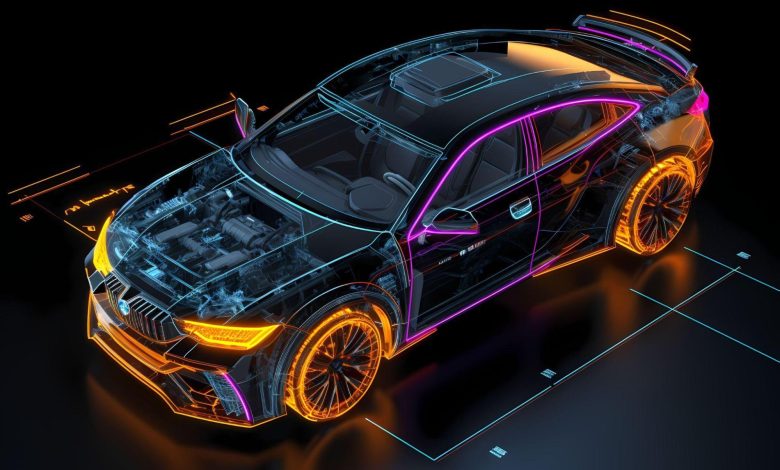
Modern automotive engineering utilizes artificial intelligence to enhance road safety through Advanced Driver Assistance Systems (ADAS). These technologies interpret environmental data in real-time to provide warnings or take corrective actions during a journey. The integration of complex algorithms allows vehicles to perceive hazards with a level of precision that often surpasses human capability.
Safety remains the primary objective for manufacturers developing these high-tech features. Reliable hardware is essential for these digital tools to function correctly over the lifespan of the vehicle. If you are considering a pre-owned vehicle equipped with these features, consulting FAXVIN reports can provide critical maintenance history to ensure the sensors have not been compromised by past accidents.
Sensor Fusion and Perception
Vehicles utilize a network of hardware components to gather a 360-degree view of their surroundings.
Camera-Based Vision
High-resolution cameras act as the primary eyes of the vehicle by capturing visual data for image processing. Sophisticated neural networks analyze these frames to identify lane markings, traffic signs, and pedestrian movement. Consequently, the software can differentiate between a stationary object and a moving cyclist with high accuracy.
Radar and Lidar Technology
Radio waves and light pulses provide depth perception that cameras occasionally lack in poor weather. Radar excels at detecting the speed and distance of other cars, whereas Lidar creates high-definition three-dimensional maps of the terrain.
The environmental factors that these sensors must mitigate to maintain accuracy include:
- Excessive glare from direct sunlight or high-beam headlights
- Heavy precipitation such as torrential rain or dense snowfall
- Accumulation of road grime and mud on the sensor lenses
- Extremely low temperatures affecting electronic calibration.
Ultrasonic Proximity Detection
Short-range sensors utilize sound waves to detect obstacles located in the immediate vicinity of the car. These components are primarily active during low-speed maneuvers such as parallel parking or reversing into a garage. Because they provide high-frequency feedback, they allow the driver to avoid minor collisions with stationary curbs or hidden poles.
Processing and Action Logic
The central computer of the vehicle must process gigabytes of data every second to make split-second safety decisions. This phase involves a logical hierarchy where the AI determines whether to alert the driver or intervene directly.
Adaptive Cruise Control
Advanced algorithms maintain a safe following distance by automatically modulating the throttle and brakes. The AI continuously calculates the rate of closure between the vehicle and the car ahead to prevent rear-end collisions. Furthermore, this system reduces driver fatigue during long-distance highway travel by managing speed fluctuations.
Lane Keeping Assistance
Electronic power steering systems receive commands from the AI to keep the vehicle centered within its lane. If the cameras detect an unintentional drift toward the shoulder, the system applies gentle torque to the steering wheel.
Emergency Braking Protocols
Autonomous Emergency Braking (AEB) serves as a final layer of defense when a collision appears imminent. The system calculates the time-to-collision and applies maximum braking force if the driver fails to react to initial warnings. This rapid intervention significantly reduces the kinetic energy of an impact or avoids the crash entirely.
Technical Calibration and Maintenance
Precision instruments require exact alignment to ensure the artificial intelligence receives accurate spatial data. Even a slight deviation in sensor mounting can lead to significant errors in hazard detection or distance estimation.
Static and Dynamic Recalibration
Technicians perform specialized calibration procedures after common repairs like windshield replacements or suspension adjustments. Static calibration involves using target boards in a controlled environment, whereas dynamic calibration requires driving the vehicle at specific speeds. These steps reset the sensor parameters to match the factory specifications of the manufacturer.
Software Update Cycles
Automakers frequently release over-the-air updates to refine the decision-making logic of the assistance systems. These patches can improve the ability of the car to recognize specific objects or react more smoothly to traffic changes. Regular updates ensure the vehicle hardware utilizes the latest advancements in neural network training.
Impact of External Damage
Small cracks in a windshield or minor fender benders can obstruct the field of view for cameras and radar units. Owners must inspect sensor housings for debris or structural damage to maintain system integrity. A compromised sensor may provide false positives or fail to detect a legitimate obstacle in the path of the vehicle.
Future Safety Standards

The continuous evolution of machine learning ensures that driver assistance systems become more reliable with every software update. Connectivity between vehicles will eventually allow cars to share safety data about road hazards before they are even visible. This technological progression represents a fundamental shift toward a future where human error is no longer the primary cause of traffic fatalities.
Refinement of these digital platforms relies on massive datasets collected from millions of miles of real-world driving. As processing power increases, the ability of the car to interpret complex urban environments will continue to improve. These advancements provide a robust foundation for the eventual transition to fully autonomous transportation networks.