Artificial intelligence is rapidly becoming part of everyday manufacturing supply chains. From forecasting demand and scheduling production to inspecting quality and managing deliveries, AI offers speed and efficiency where manual processes once dominated. However, its use introduces new risks that can disrupt operations and lead to costly legal disputes. Understanding these risks and how to manage them is now essential for every supply chain stakeholder.
In this article, Simon Key and Dominic Simon of Nelsons discuss how AI is transforming manufacturing supply chains, the operational and legal risks it introduces and practical strategies for mitigating those risks.
How AI is being used in manufacturing supply chains
AI is now embedded across multiple touchpoints in manufacturing supply chains, including information flows, production, quality control and logistics.
Information flows
Traditionally, information flows in supply chains, such as demand forecasts, order statuses, inventory levels, and delivery timescales were managed manually by humans across siloed departments. Some consider that this approach was slow, reactive, and prone to errors, often resulting in delays and inefficiencies. AI has fundamentally changed this dynamic by enabling real-time, automated exchange of information across the entire supply chain network, both upstream and downstream.
Production
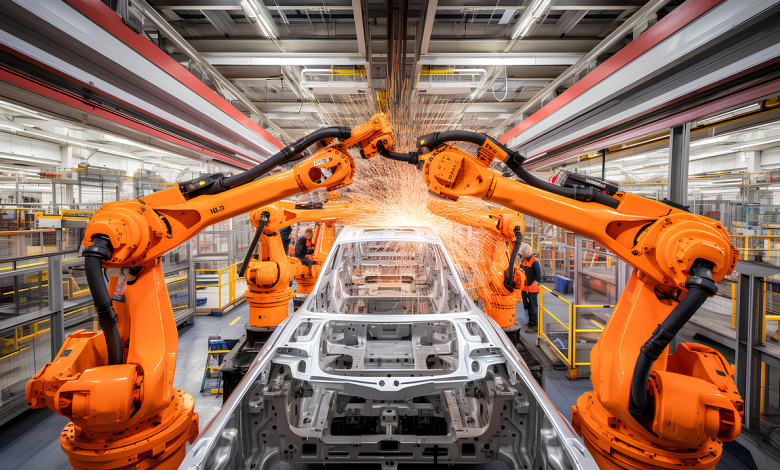
Automation, robotics, and predictive capabilities are being used in production processes. At the Toyota Research Institute, AI is being used to minimise design alterations by integrating engineering requirements earlier in the creative process. For example, designers can input text requests for specific design attributes, such as “sleek” or “SUV-like” based on a prototype and performance criteria.
Many supply chain stakeholders are now using machine learning models to forecast market demand and adjust production levels, helping to prevent overproduction, stock shortages, and lost sales. Unilever, for example, is using AI to analyse weather, sales and inventory data to improve its ability to meet demands and cut waste.
AI-powered predictive maintenance tools are also being used to minimise downtime and optimise resource allocation by anticipating equipment failures before they occur. Sensors can feed equipment data such as temperature, vibrations, pressure, humidity, and energy consumption into machine learning models, which then predict failures before they happen. This allows for proactive maintenance, meaning repairs or part replacements can be scheduled in advance rather than waiting for a breakdown, enhancing production efficiency.
Quality control
AI is also being used to enhance quality control by removing or reducing the need for time consuming and inconsistent manual inspections. By using computer vision and deep learning to inspect products and product lines to detect defects, manufacturers can ensure more consistent standards.
Tesla and BMW, for example, are using AI to inspect vehicle components before they leave the production line, and electronics manufacturer Matroid is using AI to inspect circuit boards and identify soldering issues, hairline cracks and missing components.
Logistics
AI is being used in logistics to optimise delivery routes, enable real-time shipment tracking, and automate rerouting when disruptions occur. DHL uses AI to optimise routes by analysing traffic, vehicle capacity, and delivery windows, reducing time, fuel use, and emissions. FedEx applies dynamic route optimisation and predictive analytics to adjust plans in real time for traffic, weather, and constraints.
AI also enables real-time shipment tracking via IoT sensors and predictive systems. DHL monitors packages minute by minute and reroutes automatically when delays occur. FedEx’s SenseAware ID and FedEx Surround provide continuous location updates and predictive alerts.
On factory floors, robots equipped with machine vision and advanced AI algorithms are performing tasks traditionally handled by humans, enhancing efficiency, reducing personal injury risk and allowing human effort to be concentrated elsewhere.
Systemic supply chain risks
While AI can improve efficiency and decision-making, its integration into supply chains introduces complex systemic risks.
AI outputs depend on data quality. Incomplete, inaccurate, or biased data can distort predictions and decisions. If input data does not reflect real-world conditions, consequences can be severe.
Model training can also cause errors through overfitting or underfitting. Overfitting makes models highly accurate in controlled scenarios but unreliable in new conditions. Underfitting occurs when models are too simplistic, missing key patterns.
AI systems may also degrade over time due to algorithmic drift as real-world conditions change without updates. Parameter misconfiguration or unintended interactions between multiple AI systems can also lead to unpredictable behaviour. In complex supply chains, misalignments between independent AI tools can amplify errors.
AI can also produce outputs that are technically correct but lack contextual judgement. Unlike humans, AI does not inherently understand business priorities, contractual obligations, or regulatory requirements unless explicitly programmed.
When AI systems fail, consequences often ripple through multiple tiers of the supply chain. The following sections illustrate how these risks arise.
Faulty information flows
A major risk is the cascade effect of model errors. If an AI forecasting system misinterprets demand signals, it can bullwhip into production issues. For example, a manufacturer’s AI may forecast a surge in demand and increase output, while a logistics partner’s AI predicts a slowdown, reducing readiness and causing costly inefficiencies. Beyond commercial impact, such scenarios can lead to complex, expensive legal disputes.
Production faults
A misconfigured or unsuitable AI tool in production, or misuse of a suitable tool, can cause faults that often go undetected until products reach distributors or end-users. Distributors and retailers may seek compensation for lost sales and recall costs, while end-users could pursue claims for defective goods or personal injury. Regulators may intervene if safety standards or compliance obligations are breached.
Quality control failures
Quality control failures pose significant risk. If an AI system at a component supplier misses a defect, legal consequences may follow. If the issue is widespread, costly recalls and a high volume of claims may follow.
Predictive maintenance risks
If staff are not adequately trained to understand predictive maintenance alerts, critical issues may be missed. The same risk applies if the predictive maintenance software is faulty. For example, if an AI system predicts that machinery is operating within safe limits when in fact a component is degrading, the result could be catastrophic equipment failure. Legal exposure may arise from workplace injury claims or missed delivery deadline.
Logistical issues
If AI in logistics malfunctions or receives inaccurate data, deliveries may be delayed or misrouted. For example, an AI tool might wrongly prioritise shipments due to flawed traffic or capacity data. Severe cases can disrupt downstream production schedules and trigger disputes between manufacturers, carriers, and customers.
Cybersecurity risks
AI systems depend on connected networks and real-time data, making them prime targets for cyberattacks. A breach could distort data, disrupt production, or halt logistics, causing reputational damage and legal claims.
“Slopsquatting” is an emerging threat where attackers create fake software components that appear legitimate. If integrated into systems, these can introduce malware, leading to security breaches and operational disruption.
Mitigating Risks
Proactive risk management reduces disruption and strengthens the organisation’s position in regulatory inquiries or legal disputes. The objective should be a coherent approach combining legal, operational, and technical safeguards, scaled to the organisation’s risk profile and the criticality of each AI use case.
Contractual protections
Agreements between supply chain stakeholders should set out roles and responsibilities for the deployment and oversight of AI systems, including who is accountable for configuration, monitoring and updates.
Force majeure (“act of god”) clauses, which are clauses that excuse parties from liability when extraordinary events beyond their control prevent them from fulfilling contractual obligations, may be especially useful, depending on their wording.
Limitation of liability clauses cap the amount or type of damages one party can claim, while indemnity clauses require one party to compensate the other for certain losses. Both can help allocate risk but may be challenged depending on wording and context.
Insurance
Traditional insurance policies may not cover AI-related risks, so supply chain stakeholders should engage insurers early to negotiate tailored coverage. Cargo, business interruption, and liability policies are examples of cover where AI related risks may be excluded, limited, or omitted.
Human oversight
Effective risk management requires role-specific training, so staff understand how AI systems work and to use them responsibly. Training should be ongoing to reflect evolving technologies and risks. Stakeholders should also foster a culture of accountability and openness. Personnel must feel confident questioning AI-driven decisions and have clear channels to report concerns.
Continuous monitoring
Ongoing monitoring may help to ensure that AI systems remain reliable, compliant and aligned with operational objectives. This may include real-time oversight across the supply chain, internal and external audits and robust record-keeping and data tracking. These practices may support the early detection of issues and inform appropriate corrective or risk prevention measures.
Phased integration
Phased integration of AI and running pilot schemes in isolated workflows can build confidence and reduce risk by allowing teams to observe performance under real-world conditions before full deployment. This approach enables early detection of technical issues and operational bottlenecks. It also provides an opportunity to gather feedback and refine processes.
Contingency and scenario planning
Contingency and scenario planning may help supply chain stakeholders anticipate how AI systems will perform under a range of “what-if” scenarios and establish contingency plans. Digital twin technology can simulate adverse conditions and stress-test AI decisions without affecting live operations, which may help to reveal vulnerabilities and enable the refinement of recovery strategies before real incidents occur.
Technical safeguards
Specialist input from suppliers or consultants may be needed to ensure AI systems integrate smoothly with existing infrastructure and include fail-safes, such as the ability to override, pause, or switch to manual control if they malfunction or behave unexpectedly.
Supply chain stakeholders should also maintain strong cybersecurity where AI systems process sensitive or operational data. In supply chains, breaches can expose supplier information, disrupt logistics, and damage trust. Robust protection against unauthorised access, data leaks, and cyber threats is critical to safeguarding continuity and relationships.
Conclusion
AI is transforming supply chains, but comes with risks that, if not managed, can cascade across multiple tiers, amplifying disruption and legal exposure. Supply chain stakeholders should adopt legal, organisational, and technical risk mitigation strategies to prevent issues before they arise and avoid reputational damage, costly legal claims, strained commercial relationships, and regulatory action. Acting early not only safeguards operations but positions organisations to thrive in an AI-driven future.
Supply chain stakeholders should also recognise that risks are not static. AI technologies are evolving rapidly, and modern commerce is increasingly dynamic, driven by globalisation, digitalisation, and shifting consumer demands. This pace of change means risk profiles can shift quickly.
Compounding this is the fact that AI itself remains in its early stages, with organisations still learning how to deploy it effectively. This learning curve introduces significant unknowns into supply chains, making it essential to frontload planning and embed safeguards early on.
Moving forward, supply chain stakeholders must be able to adapt, continuously monitor developments and tailor risk management strategies to reflect new supply chain threats and opportunities posed by AI.