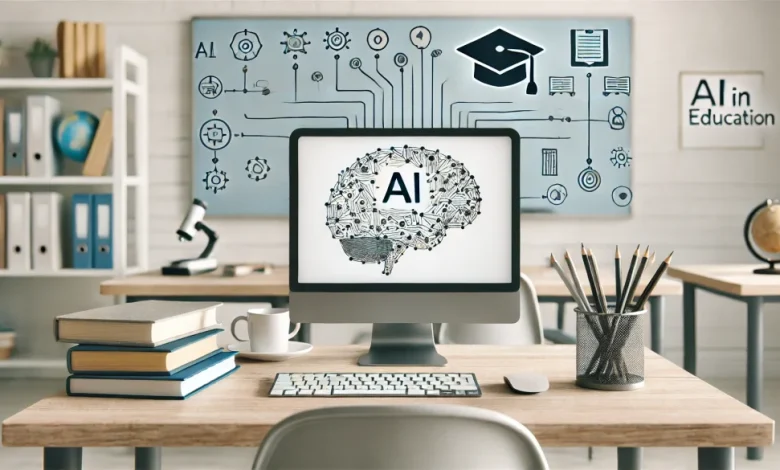
You may have noticed that Artificial Intelligence (AI) is very quickly transforming how education is perceived by students. Whether it is personalised tutoring systems or even automated feedback tools, AI is providing students with the power to learn more efficiently and independently than ever before. However, whilst AI can significantly supplement your studies, it cannot replace the structured learning environment that you will find in a traditional school or an online learning provider. Instead, the most effective educational model appears to be a combination of AI-powered support with a formal, curriculum-based learning.
How AI Enhances Student Learning
One of the things that stand out with AI is its strengths in education and how it is able to personalise chats. AI-driven platforms can analyse a student’s performance in real time, picking up on knowledge gaps, and even adapt content to suit pace and ability levels of learners. This enables learners to revisit difficult concepts, practice targeted exercises, and receive instant feedback as soon as they type in their requests. This is something that can be difficult to achieve in a large classroom setting.
AI tools are also able to support students whilst using intelligent tutoring systems with automated essay scoring, language translation and even help with study planning assistance. For example, AI chatbots can explain complex topics in a way that is easy for learners to understand as well as generate practice questions or summarise lengthy reading materials, picking out the key points. This kind of support can help students reinforce lessons outside of classroom hours and improve their understanding and retention abilities.
In addition, AI can boost productivity levels as students can use it to create revision schedules, test their knowledge and even put together simulated exams. The provision of feedback on drafts before submission, when used responsibly can promote active learning as long as learners remember that they still have to submit their own work when completing assignments or tests.
The Limits of AI in Education
Whilst there are many advantages, AI still has clear limitations, such as lack of human judgement, emotional intelligence and the expertise that a teacher can bring to the learning process. Education is not just about absorbing information, if it was that easy, learners would simply have to memorise all the answers to their chosen subject. Critical thinking, discussions and guidance are all important elements which can be delivered through structured education.
Traditional schools and accredited online learning providers spend time carefully putting together a curriculum which aligns with the awarding body’s standards. Lessons and assessments are carefully assessed and moderated to ensure that the learning outcomes are shown clearly, enabling Teachers to identify any complex situations that AI may overlook. They are then able to provide detailed guidance to learners, meeting their individual needs.
A structured learning environment is also able to teach soft skills such as communication, discipline and time management through the help of interaction, presentations and written projects. This is something that AI alone is unable to replicate.
AI as a Supplement, Not a Substitute

Educators are not against AI and do believe that the most effective approach is to use it as an add on study tool rather than a complete replacement for the traditional education routes.
Students who are enrolled in traditional schools or online programmes can use AI to help reinforce classroom learning as well as help with creating practice tests, but the information they put in should be very specific to ensure that the chatbot is checking the exact same specifications that they are studying. In addition to AI-based tools, students often explore structured revision platforms such as PrepAway.com to access organised study materials and practice resources that align with formal certification requirements.
For example, learners studying through an established provider such as Learn Now, will receive their structured course, aligned to the exact specification used by the awarding body and this will provide comprehensive subject coverage. AI can provide flexible reinforcement as a top up.
This blended approach utilises the strengths of both systems providing structured guidance from qualified educators and support which is adaptive from intelligent technology.
The Future of AI in Education
AS AI continues to evolve, its role in education will expand as more information is accessed, however, its purpose should always remain supportive as human intervention can’t be replaced.
Technology works at its best when integrated into a stable educational framework, prioritising curriculum integrity, the expertise of a teacher and the developmental factors of the individual student.
Conclusion
Whilst AI is a powerful tool and provides considerable enhancements to learning outcomes, a structured education delivered either in the classroom or an accredited online provider remains at the forefront. With the combination of both, students can achieve more balance and a learning experience that covers all angles.