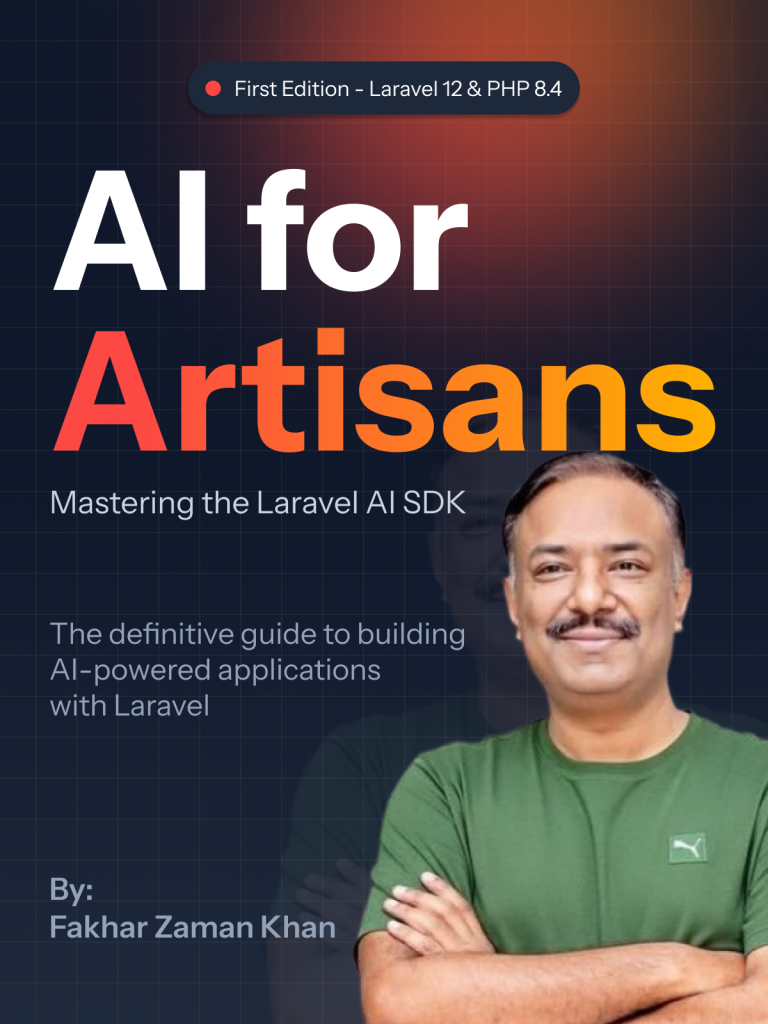
In the rapidly evolving world of artificial intelligence and enterprise software development, technical breakthroughs rarely come from theory alone. The most transformative innovations emerge when experienced engineers translate complex technological shifts into practical systems that businesses and developers can actually use. One notable example of this applied innovation is the work of software architect and technology leader Fakhar Zaman Khan, whose new 2026 book AI for Artisans: Mastering AI Architecture in Laravel offers a practical methodology for integrating artificial intelligence into real-world software systems, without leaving the Laravel ecosystem.
For years, many Laravel developers have watched the AI revolution from the sidelines. The dominant narrative pushed them toward Python, LangChain, and unfamiliar toolchains, creating a barrier that kept PHP and Laravel practitioners out of the AI conversation. Khan’s book changes that.
AI for Artisans demonstrates that Laravel developers can build production-grade AI systems entirely within their existing stack, using the Laravel AI SDK and modern AI services.
No Python. No LangChain. No context switching. Just the framework they already know, extended with intelligent capabilities.

Figure 2: Laravel and AI integration concept.
At a time when organizations around the world are rushing to adopt artificial intelligence, many developers struggle to bridge the gap between experimental AI tools and stable production systems. Khan’s book addresses precisely this challenge. Rather than presenting AI as a novelty feature or experimental add-on, AI for Artisans introduces a structured framework that treats AI as a core architectural layer in modern software platforms. As the book explains, artificial intelligence is no longer simply an optional feature within applications; it has become a foundational component of modern digital infrastructure.
The book provides practical guidance for software engineers, architects, and technology founders who want to build production-grade AI systems using the Laravel framework and the Laravel AI SDK. Instead of focusing on theoretical machine learning models, Khan emphasizes repeatable engineering systems, including:
- AI architecture patterns
- Workflow automation strategies
- Prompt engineering methodologies
- Scalable deployment frameworks designed for enterprise environments
This pragmatic approach is positioned to resonate strongly within the Laravel community because it addresses one of the most pressing problems facing the industry today: the gap between experimentation and operational deployment. Many organizations can build impressive AI demonstrations, but many struggle to implement AI systems that remain secure, scalable, and economically sustainable in production environments. Khan’s work focuses precisely on solving this problem, and does so in a way that speaks directly to Laravel developers.
A Methodology for Production-Grade Artificial Intelligence
One of the central contributions of AI for Artisans is the introduction of structured architectural patterns for AI-enabled software systems. The book explains that AI integrations often fail because teams treat AI outputs as stable dependencies rather than probabilistic systems requiring structured controls and validation layers. To address this challenge, Khan outlines a systematic engineering pipeline built around stages such as:
- Classification
- Information retrieval
- Generation
- Validation
- Operational action
By presenting AI development as an engineering discipline rather than a novelty feature, the book provides developers with a framework for building systems that remain reliable even as underlying models evolve. The methodology includes operational safeguards such as:
- Version-controlled prompts
- Schema validation
- Evaluation datasets
- Cost monitoring
- Security constraints
These practices enable organizations to deploy artificial intelligence responsibly while maintaining predictable system behavior.
Equally important is the book’s emphasis on workflow automation and intelligent orchestration, which has become a defining trend within modern enterprise technology.
Rather than relying solely on standalone AI features, Khan demonstrates how AI can be integrated into broader automation pipelines that combine data retrieval, application logic, and intelligent decision-making, all within Laravel. This architecture allows businesses to automate complex operational workflows while maintaining transparency and control over automated processes.
As organizations increasingly rely on AI-enabled platforms to manage customer interactions, operational data, and decision-support systems, such architectural guidance has become highly valuable to developers and technology teams worldwide, especially those who have long felt excluded from the AI conversation.
Transforming Engineering Culture Through Practical Knowledge
Beyond its technical frameworks, AI for Artisans aims to have a significant cultural impact within the developer community. Khan’s philosophy emphasizes the idea that engineering leadership is not only about building scalable systems, but also about cultivating scalable talent.
This philosophy is reflected throughout the book and across Khan’s broader career. As founder and Chief Executive Officer of Soft Pyramid, he has led the development of dozens of enterprise-grade software platforms for organizations operating across industries such as:
- Real estate
- SaaS
- E-commerce
- Education technology
Under his leadership, the company has grown into a substantial engineering organization delivering complex AI-enabled automation systems and enterprise digital platforms for international clients. At the same time, Khan has consistently invested in knowledge sharing and developer education, helping engineers understand not only how AI tools work but how to integrate them responsibly into production environments.
His role in organizing major developer conferences, mentoring engineering teams, and leading technical workshops has further amplified the influence of the ideas presented in his book. Through these initiatives, developers across the community have gained access to practical training in automation architecture, scalable software design, and AI-driven development practices.
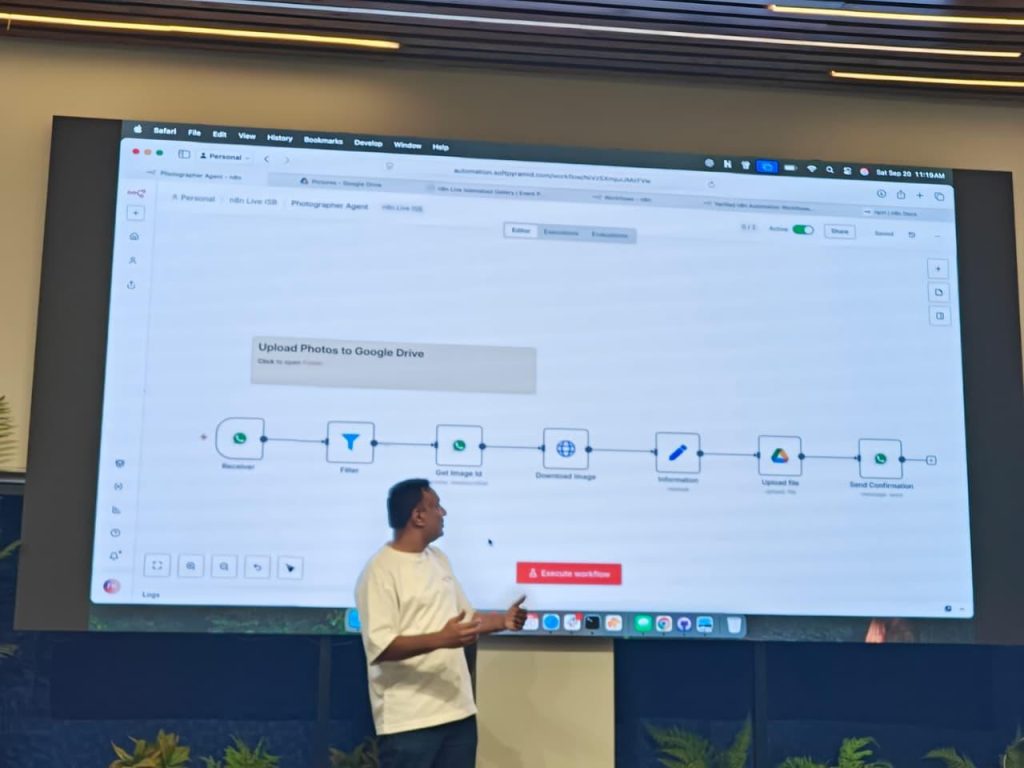
Figure 4: Fakhar Khan / Soft Pyramid team at n8n Live Islamabad — hands-on automation workshop.
Leadership Beyond the Codebase
Khan’s contributions to the technology sector extend far beyond writing software or publishing technical guidance. He actively participates in shaping the broader innovation ecosystem through leadership roles in major industry initiatives.
He serves as:
Judge for the Pakistan Software Houses Association (P@SHA) ICT Awards
International judge for the World Startup Championship
He evaluates emerging technology startups on innovation, scalability, and engineering depth.
These roles place him in a position to influence the next generation of founders, developers, and technology entrepreneurs, helping establish higher standards for engineering excellence and sustainable innovation.
At the same time, Khan continues to advocate for practical AI adoption through technical publications, training programs, and industry collaboration. His ongoing series of articles and developer resources expands on the ideas introduced in AI for Artisans, providing step-by-step guidance for building AI-native software systems that combine automation, data intelligence, and scalable architecture, all within the Laravel ecosystem.
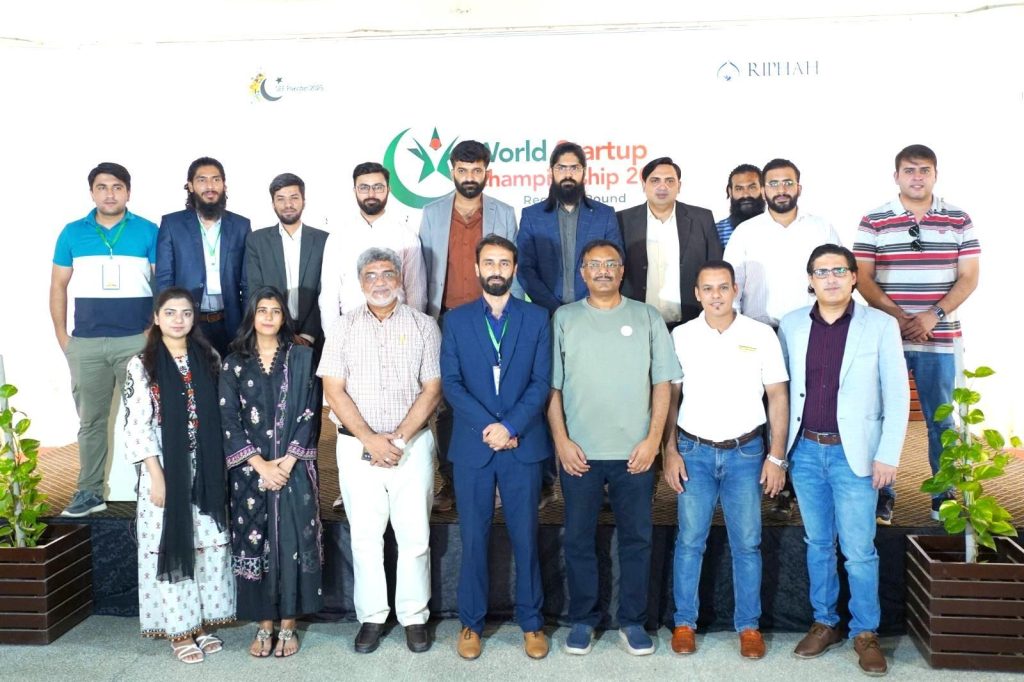
Figure 5: Khan at World Startup Championship.
Leading the Industry From the Front
Today, Fakhar Zaman Khan stands at the intersection of software architecture, automation engineering, and artificial intelligence innovation.
Through his leadership at Soft Pyramid, his technical publications, and his community initiatives, he has helped shape how developers approach AI-enabled software systems in a rapidly evolving technological landscape.
What distinguishes Khan’s impact is not only his ability to build sophisticated technology platforms, but also his commitment to raising the technical capacity of the broader engineering community. By documenting practical methodologies for integrating artificial intelligence into enterprise systems using Laravel and the AI SDK, AI for Artisans is more than just a technical book. It represents a blueprint for how Laravel developers can participate fully in the age of AI, without abandoning the tools and frameworks they already master.
As artificial intelligence continues to transform industries worldwide, the demand for leaders capable of translating emerging technologies into stable, scalable infrastructure will only grow. Through his work as an architect, entrepreneur, educator, and author, Fakhar Zaman Khan is helping lead that transformation from the front, and opening the door for Laravel developers who are ready to step through.

Figure 6: Fakhar Zaman Khan.