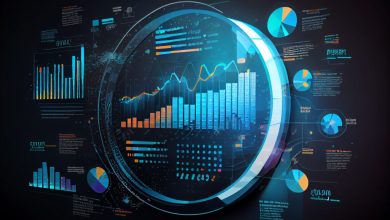
Finance has always relied on speed, precision, and trust. But in today’s digital economy, those qualities are being redefined by artificial intelligence. What once required teams of analysts, long processing cycles, and manual oversight can now be executed in seconds through intelligent automation. From payment processing to risk assessment, AI is reshaping how modern financial ecosystems operate.
The transformation is not limited to banks or hedge funds. E-commerce companies, fintech startups, global enterprises, and even individual investors now interact with AI-powered systems daily—often without realizing it. Automation has moved from being a back-office efficiency tool to becoming the backbone of modern finance.
Smart Transaction Processing and Intelligent Exchanges
One of the most visible applications of AI in finance is transaction automation. Every second, millions of payments move through global systems. Monitoring these flows manually would be impossible. AI-driven systems analyze patterns in real time, identifying anomalies, flagging suspicious activity, and optimizing transaction routing for speed and cost efficiency.
In digital asset environments, automation plays an even more prominent role. Platforms operating as a crypto exchange rely heavily on machine learning algorithms to match orders, manage liquidity, and detect market manipulation. These intelligent systems process vast volumes of data—from price movements to trading behaviors—ensuring transactions execute smoothly even during volatile market conditions.
Automation improves financial ecosystems in several key ways:
- Real-time fraud detection – AI scans transactions instantly to detect unusual patterns.
- Dynamic fee optimization – Algorithms adjust pricing structures based on network demand.
- Liquidity management – Smart systems balance supply and demand to reduce slippage.
Beyond trading environments, AI also optimizes cross-border payments. Intelligent routing systems select the most efficient settlement path, reducing delays and minimizing intermediary costs. For businesses operating globally, this means faster settlements and more predictable cash flow.
Another important area is compliance. Regulatory requirements vary across jurisdictions, and manual verification processes can slow operations. AI-powered compliance tools automate identity verification and transaction monitoring, helping companies maintain regulatory standards without sacrificing speed.
AI in OTC Markets and Institutional Services
While automated exchanges serve retail users efficiently, institutional investors and large-volume traders often require customized solutions. This is where AI-driven automation extends into over-the-counter (OTC) markets. Unlike open exchanges, OTC environments facilitate large transactions directly between parties, minimizing market impact.
AI enhances OTC operations by intelligently matching buyers and sellers, analyzing market depth, and predicting optimal execution windows. Platforms such as https://aexchanger.com/otc demonstrate how digital infrastructure can integrate automation into private trading services. By combining data analytics with personalized execution strategies, these systems deliver precision and discretion to institutional clients.
In OTC settings, AI supports:
- Price discovery – Aggregating market data to determine fair value.
- Execution timing optimization – Reducing volatility risk during large trades.
- Risk management modeling – Simulating scenarios before transactions are finalized.
The broader implication is that automation is no longer reserved for retail-scale activity. High-value financial operations increasingly rely on predictive analytics and intelligent algorithms to reduce risk and enhance performance.
Predictive Analytics and Financial Forecasting
Beyond transaction processing, AI plays a transformative role in forecasting. Financial ecosystems generate enormous datasets—historical prices, consumer behavior patterns, macroeconomic indicators, and social sentiment metrics. Machine learning systems can process this information far more efficiently than human analysts.
Predictive models identify trends that might otherwise go unnoticed. For example, AI can detect correlations between consumer spending behavior and seasonal shifts, enabling businesses to prepare liquidity strategies in advance. Investment platforms use similar tools to forecast volatility and recommend portfolio adjustments.
What makes AI particularly powerful is its ability to learn and adapt. Traditional financial models rely on static assumptions. In contrast, machine learning systems refine themselves continuously as new data becomes available. This adaptability allows institutions to respond more effectively to rapidly changing market conditions.
Risk Management and Security Enhancements

Security is a foundational pillar of financial ecosystems. As digital finance expands, so do threats. Cyberattacks, phishing schemes, and fraud attempts grow increasingly sophisticated. AI-driven security systems provide a dynamic defense layer.
Unlike static rule-based systems, AI learns to recognize evolving attack patterns. It identifies anomalies not only based on predefined criteria but also by detecting subtle behavioral deviations. This proactive defense mechanism significantly reduces exposure to fraud and data breaches.
Risk management extends beyond cybersecurity. Financial institutions use AI to assess creditworthiness, detect systemic risk, and model stress scenarios. By simulating thousands of potential outcomes, intelligent systems provide decision-makers with data-backed insights that improve resilience.
Personalized Financial Experiences
AI-driven automation is not solely about institutional efficiency—it also enhances user experience. Personalized dashboards, intelligent chatbots, and automated financial assistants make complex systems more accessible to everyday users.
These tools can recommend saving strategies, optimize investment allocations, and even automate recurring transactions based on user behavior. For businesses, personalization fosters stronger customer relationships and higher engagement. For individuals, it simplifies financial decision-making.
The integration of AI into user interfaces reflects a broader shift in financial ecosystems: from rigid, one-size-fits-all structures to adaptive, user-centric environments.
The Future of Automated Finance
As artificial intelligence continues to evolve, financial ecosystems will become increasingly autonomous. Smart contracts, algorithmic treasury management, and decentralized finance protocols are already laying the groundwork for systems that operate with minimal human intervention.
However, human oversight remains essential. Ethical considerations, regulatory compliance, and strategic decision-making require judgment beyond algorithmic analysis. The future likely lies in collaboration—where AI handles speed and scale, while humans guide vision and responsibility.
AI-driven automation is not replacing finance; it is redefining it. By enhancing efficiency, strengthening security, and enabling predictive intelligence, artificial intelligence is shaping a financial landscape that is faster, smarter, and more resilient.
In a world where transactions occur in milliseconds and markets shift instantly, automation is no longer optional—it is foundational. The financial ecosystems that embrace AI today are building the infrastructure of tomorrow.