
When grappling with personal challenges, the support structure provided by a therapy group can be invaluable. Studies show that participants in group therapy often experience significant improvements in mental health, with reported benefits such as increased sense of community and shared learning. However, finding the right therapy group is not a one-size-fits-all process; personal needs and the group’s dynamics play crucial roles.
For decades, this search has been a largely analog process of word-of-mouth, online directories, and hopeful trial-and-error. But now, a new frontier is emerging. Artificial intelligence is beginning to reshape how we approach mental healthcare, moving from simple chatbots to sophisticated matching systems that promise to take the guesswork out of finding your therapeutic community.
Understanding what to look for in a therapy group is critical for ensuring the experience is beneficial and healing. In this article, we’ll explore essential factors to consider—and how new AI-driven tools are making the selection process smarter, more personalized, and more effective than ever before.
Identifying Your Needs: A Key Step—Now Powered by AI
The first step in selecting a therapy group is recognising your specific needs. Whether you seek support for stress, depression, anxiety, or another mental health challenge, defining your goals is fundamental in finding a group that can provide appropriate support. An analysis of therapy outcomes indicated that individuals with clear objectives reported a 70% better improvement rate.
This is where AI is making its first major impact. Imagine a tool that doesn’t just ask what you’re struggling with, but analyzes your responses to nuanced questions about your communication style, your triggers, and your personal goals. Using natural language processing (NLP), AI can now help you articulate needs you might not have the words for. It can sift through thousands of therapist profiles and group descriptions to find specialists—such as an addiction or trauma therapist—whose approach aligns with your specific situation.
Consider factors such as the intensity of your issues, desired frequency of meetings, and whether you require a specialist. The Providence Therapy Group, for example, provides tailored sessions to meet diverse therapeutic needs. They showcase the importance of identifying therapists with the right expertise and approach.
AI algorithms can now act as a pre-screening concierge. They can analyze a potential therapy group’s focus, the therapist’s published materials, and even anonymized outcomes to gauge compatibility. This allows you to identify potential therapy groups and reach out to them already armed with data, making the conversation about your goals more targeted. Most will be willing to discuss your goals and their group’s focus, helping you gauge compatibility before you commit. It’s still beneficial to attend an introductory session, if available, to experience the group’s dynamics firsthand, but AI ensures your shortlist is more qualified than ever.
Essential Qualities of Effective Therapy Groups—Quantified by Data
Seeking out therapy groups that demonstrate key qualities such as openness, empathy, and a non-judgmental atmosphere is central to establishing trust and promoting healing. Historical data indicate that groups that maintain these qualities tend to retain members for longer periods, suggesting higher levels of participant satisfaction.
Another critical element to consider is the group’s confidentiality policy. This fosters a safe environment where members feel comfortable sharing their thoughts and feelings. Effective groups also have clear guidelines for interactions and respect among members, which help prevent conflicts and ensure a supportive setting for all participants.
So, how can AI assess something as intangible as empathy? New research is exploring the use of sentiment analysis and interaction pattern recognition within online therapy platforms (with strict privacy safeguards). By analyzing communication patterns in a way that protects individual identities, AI could theoretically help facilitators understand the group’s emotional temperature. It could flag when the group’s empathy levels are dipping or when the non-judgmental atmosphere is being challenged, allowing the therapist to intervene proactively.
As you evaluate different therapy groups, you might soon be able to inquire about more than just policies and member turnover rates. AI could provide anonymized insights into group cohesion and participant satisfaction, offering a data-driven glimpse into how the group maintains its core values and supports its members consistently over time.
How Group Composition Influences Your Healing Journey—Optimized by Algorithms
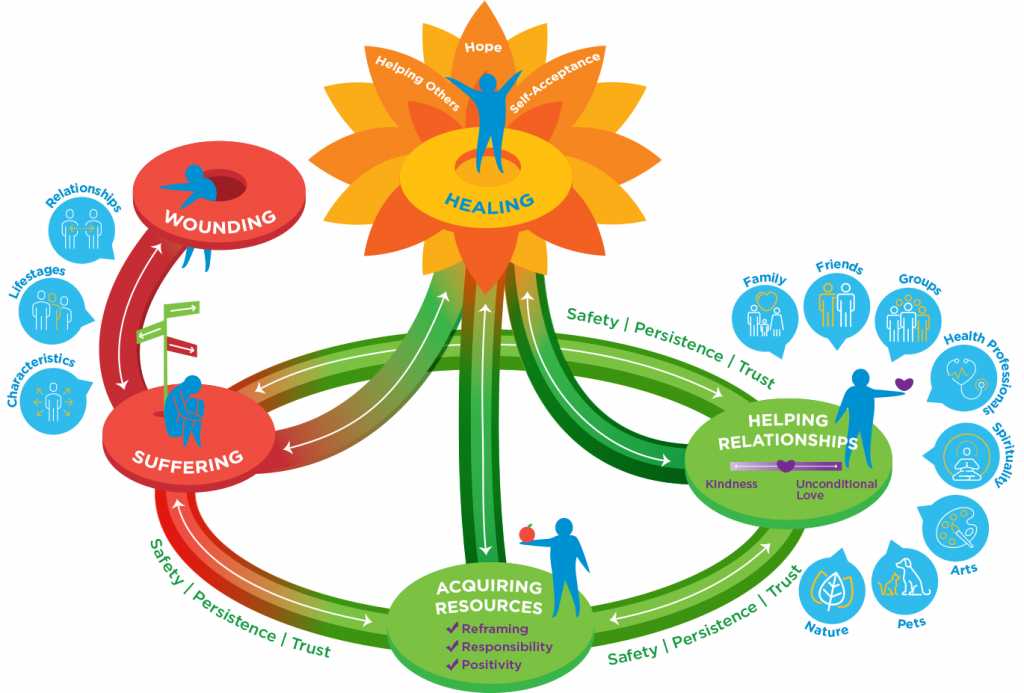
The mix of individuals within a therapy group can substantially affect your healing process. Groups composed of members at varying stages of recovery can offer valuable perspectives, while those in similar stages of healing can foster relatability. For example, some may prefer a group with diverse backgrounds and experiences, which can lead to richer discussions and a broader understanding of different coping strategies.
Research has shown that group cohesiveness can greatly enhance individual outcomes. This is often a result of the supportive dynamics that develop between members who share common struggles and goals. When people feel they are not alone in their experiences, they are more likely to engage openly and benefit from the sessions.
This is perhaps the most exciting area for AI application: predictive matching. Instead of you manually searching for a group, imagine an AI that considers your personality traits, your therapeutic goals, and your preferred interaction style. It could then match you with a group where the algorithm predicts a high likelihood of cohesiveness. It can balance the “chemistry” of the group, ensuring a mix of perspectives (members at varying stages) while maintaining a core of relatability (shared core struggles).
Before joining, you can ask about the group’s composition and the typical member profile. In the near future, AI-driven platforms might be able to recommend the ideal group size for you—suggesting a smaller group for more individual attention or a larger one for a wider array of perspectives and experiences—based on data from thousands of previous successful pairings.
Evaluating the Therapist’s Role—Augmented, Not Replaced
The therapist’s role is pivotal in guiding the group and fostering a beneficial therapy environment. Look for therapists who are not just facilitators, but also active contributors to the group’s progress. Those who are skilled at managing group dynamics, while being attuned to individual needs, create a balance that encourages personal growth within the group.
Experience and specialization are significant factors to consider. A therapist with years of experience and specialised training in group dynamics will likely navigate the complexities of group therapy more effectively. They can also adapt their approach to meet the group’s evolving needs.
AI will not replace the therapist, but it can become an invaluable tool for them. Imagine a “co-pilot” for the therapist that provides real-time, anonymized feedback on group dynamics. It might note that a quiet member hasn’t spoken in several sessions or that a particular topic consistently generates high engagement. This allows the therapist, with their specialized training and human intuition, to adapt their approach with deeper insight. They can then foster a balance that encourages personal growth within the group more effectively.
Before committing to a therapy group, request a meeting with the therapist or conduct research on their background and practice philosophy. Soon, you might also be able to review anonymized data on their group’s outcomes or see how their facilitation style is augmented by new technological tools. Their qualifications, approach, and rapport with the group will always be instrumental, but understanding how they leverage data can be a sign of a forward-thinking, effective practitioner.
Selecting the right therapy group requires a careful consideration of your personal needs, the group’s qualities and composition, and the therapist’s role in the group’s dynamics. Understanding these factors can guide you toward a supportive environment that not only aligns with your goals but also enhances your journey to wellness. As AI begins to weave its way into the fabric of mental healthcare, it promises to make this critical search less of a leap of faith and more of a precise, data-informed step toward healing.