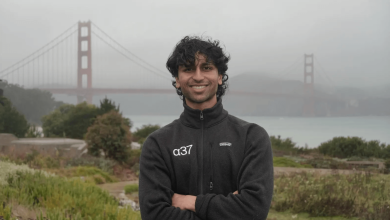
As enterprises accelerate AI adoption, many initiatives still struggle to move beyond pilots and proof of concepts. In this interview with AI Journal, Sumit Shah, a seasoned product expert with nearly two decades of experience building and evolving mission-critical enterprise systems, shares why technical sophistication alone does not guarantee business impact.
Having begun his career as a developer and later progressed into roles spanning architecture, product ownership, and product strategy, Shah has worked closely with global organizations across agriculture and energy, including Cargill, ADM, CHS Inc., ExxonMobil, Shell, and Tesoro. Drawing on that experience, he explains why enterprise AI must be treated as a product rather than a standalone technical project, how adoption and workflow integration determine long term value, and why reliability, governance, and explainability are essential when embedding AI into complex, regulated environments.
To start, how did you get started in your career, and how did your path from developer to product owner and product expert shape the way you think about building technology today?
I started my career as a software developer, working on large, mission-critical enterprise systems that customers use to support their businesses. I learned that just writing good code or good design alone is not good enough for these enterprises, which need reliability, scale, and robustness. Systems must perform with high predictability daily. As I grew into the senior roles of architect and product owner, my perspective evolved to better understand the strategic reasons these large enterprise systems are built and who they serve. Becoming a product expert taught me that technology only matters if it creates sustained business impact. Today, that journey shapes everything I do. I think in terms of business process flows, outcomes, and adoption, not just features or models.
You argue that many enterprise AI initiatives fail because they are treated as standalone technical projects. From your experience, what are the most common signs that an AI effort is missing a true product mindset?
When AI is treated as a solution rather than as a technology for building the solution, it can be a significant red flag. This implies that the benchmarks, rather than the business value that the project brings, are used to measure project success. The other indicator is the addition of AI as an overlay on business processes rather than integrating it into them, to ensure solutions are intelligent. Another failure that I observe is the lack of ownership. When nobody is responsible for adopting, performing the operations, or long-term development, then the project is likely to halt following the pilot phase.
How does product thinking change the way AI solutions should be designed, prioritized, and measured in large enterprises compared to a purely algorithm-driven approach?
Product thinking flips the starting point of enterprise AI. Rather than asking which algorithm to build, it begins with the business question: What decision needs to be made, and which workflow needs to improve? This shift eliminates much of the wasted effort that comes from building isolated models. Prioritization of AI solutions should be determined based on their business impact and decision leverage, and not on technical novelty. A simple model embedded in the right end-to-end workflow, connected to data, systems, and people, can deliver more value than a technically sophisticated model that has impact outside daily operations. Measurement also expands beyond accuracy metrics to include faster decision cycles, reduced operational risk, improved compliance, and the organization’s ability to scale and sustain AI-driven outcomes.
In highly complex industries like energy and agriculture, what does it look like to successfully align AI capabilities with real-world business workflows rather than abstract use cases?
In these industries, what matters are real operations, measurable results, and the way data flows between different parts of the organization. Good AI projects start by figuring out what’s really happening on the ground, who makes which decisions, where the data sits, and how information gets passed around between teams and systems. AI creates genuine value when it’s woven into these existing workflows, so the insights don’t just live inside a model somewhere but help people act and improve results across the business. When AI tools stay siloed or get built around theoretical use cases, they tend to go nowhere. But when you build AI into the connected, full-picture processes people already use, it becomes part of how work gets done every day and delivers real operational results you can see.
User adoption is often overlooked in enterprise AI discussions. What role does adoption play in determining whether an AI initiative delivers long-term value, and how should product leaders account for it early on?
What makes the difference between a great demo and business value is adoption. Even the best model will not be used because users will not trust the system, understand its suggestions, or see a direct effect on their everyday work. Product leaders need to design for adoption from the beginning. That means explainability, confidence scores, human-in-the-loop controls, and clear boundaries for automation. AI is not about removing human judgment—it is about strengthening it. When it happens, trust grows and adoption follows.
Drawing from your work with global organizations like Cargill, Shell, and Exxon, what lessons have you learned about integrating AI into existing mission-critical systems without disrupting operations?
You do not replace mission-critical systems; you evolve them. AI must be integrated into the current architectures and workflows with respect to the ownership of data, data governance, and the business rhythm to continue functioning. The best deployments are narrow, high-value use cases that remove manual labor or reduce risk, and can be expanded as trust and functionality increase. There should be strong fallback paths, backward compatibility, and operational ownership. When AI is integrated into the decision-making process and data and processes, rather than developed as a standalone model, innovation can grow without compromising the reliability that mission-critical processes require.
As a product expert leading AI-driven initiatives in regulated environments, how do you balance innovation with reliability, compliance, and trust from enterprise customers?
In regulated enterprises, AI systems should be transparent, auditable, and explainable. It is important to know how decisions were made and with what level of confidence and not just capturing the outputs of these AI systems. It also means being explicit about what AI should not do. Clear guardrails increase customer trust. When customers know its limitations and capabilities, they can be much more comfortable adopting AI.
Looking ahead, what advice would you give to enterprise leaders who want to ensure their AI investments create lasting business value, and what mindset shift do you believe is most urgent right now?
The biggest shift is realizing that AI is a product. That means putting as much energy into product leadership, change management, and real integration as you do into models and data.
The companies that truly succeed with AI are the ones that embed it closely into their strategy, everyday workflows, and the people doing the work. AI isn’t a magic shortcut to transformation; it’s a steady, product-led journey toward consistently making better decisions at scale.