In the digital economy, trust has become one of the most valuable yet fragile currencies. Every interaction—whether professional networking, online dating, financial transactions, or remote hiring—relies on assumptions about identity. But in an era of synthetic media, AI-generated avatars, deepfakes, and anonymous accounts, verifying who someone truly is has become increasingly complex.
Artificial intelligence is not only contributing to this transformation—it is also helping solve it. Among the most impactful developments in recent years is face-based search technology powered by AI, which is reshaping how digital trust is established, maintained, and protected.
As visual content dominates the internet, AI-driven facial recognition systems are emerging as a critical tool in identity intelligence, fraud detection, and open-source investigations.
The Trust Deficit in a Visual Internet
We live in a visual-first world. Social media platforms prioritize images and video. Professional branding depends on profile photos. Even messaging apps now encourage visual verification. Yet images are easier to manipulate than ever before.
Deepfake technology, AI-generated portraits, and identity theft schemes have created a growing “trust deficit.” Fraudsters can create synthetic identities using stock photos, stolen images, or generative AI tools. In financial scams and catfishing cases, fake profile pictures are often the first point of deception.
Traditional identity verification methods—email confirmation, phone numbers, or document uploads—are no longer sufficient in many contexts. Visual identity, once assumed to be authentic, now requires verification itself.
This is where AI-powered face recognition and search systems enter the equation.
How Face-Based AI Search Works
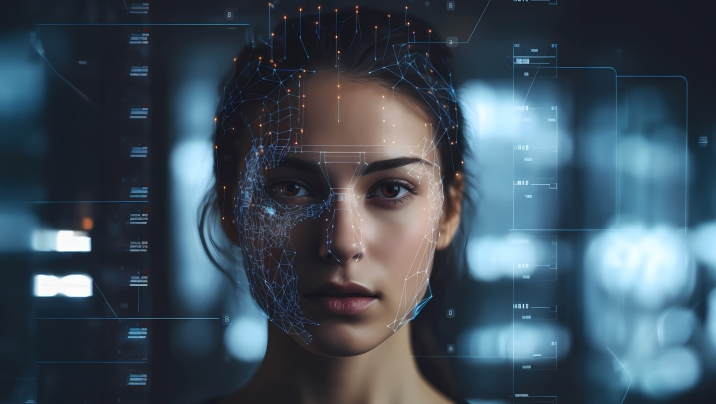
Modern face-based search technology relies on computer vision models trained to detect and encode facial features into mathematical representations. Rather than storing images as raw pixels, advanced AI models convert facial structures into unique embeddings—a form of biometric signature.
When a user uploads an image, the system compares that encoded facial representation against vast indexed datasets. It searches for visual matches across publicly available sources, databases, and digital footprints.
Unlike basic reverse image search tools that rely on metadata or exact image matches, AI-driven facial systems analyze structural features: the geometry of the eyes, nose, jawline, and other distinct markers. This allows the system to identify matches even if the image has been resized, filtered, cropped, or altered.
The result is a more resilient and intelligent way to verify digital identities.
Strengthening Digital Investigations
Face-based AI search is increasingly used in:
- Online fraud detection
- Catfishing and impersonation investigations
- OSINT (Open-Source Intelligence) workflows
- Risk assessment and background research
- Online marketplace verification
For example, if a profile photo appears suspicious, an investigator can run an ai face search to determine whether that image appears elsewhere online under a different name. If the same face is associated with multiple identities across platforms, it may signal fraudulent behavior.
This capability is particularly relevant in industries where digital relationships precede real-world interaction. Remote hiring, online investing, freelance marketplaces, and dating apps all depend on initial trust signals—often visual ones.
By introducing AI-powered verification, platforms and individuals gain a more data-driven approach to assessing credibility.
The Role of AI in Fraud Prevention
Digital fraud continues to scale globally. Identity theft, romance scams, and synthetic identity fraud represent billions of dollars in losses annually.
Fraudsters often rely on stolen photos sourced from social media or stock photography websites. In some cases, AI-generated faces—created using GANs (Generative Adversarial Networks)—are deployed to build convincing yet entirely fictional personas.
AI-based facial search tools create friction in this ecosystem. By allowing users to trace the origin or duplication of profile images, these systems reduce the anonymity advantage that bad actors rely on.
Moreover, as AI improves, systems are becoming capable of detecting inconsistencies in facial data, synthetic artifacts, or signs of digital manipulation. This combination of search and detection strengthens overall digital resilience.
Ethical Considerations and Privacy Concerns
The rise of face-based AI search technology inevitably raises ethical questions.
Facial data is highly sensitive biometric information. The balance between digital safety and privacy must be carefully maintained. Transparency, compliance with data protection regulations, and responsible data sourcing are essential for long-term sustainability.
Responsible providers focus on:
- Using publicly available data
- Ensuring legal compliance across jurisdictions
- Avoiding unauthorized biometric surveillance
- Maintaining secure storage and encryption standards
The goal is not mass surveillance but risk mitigation and voluntary verification.
The ethical future of facial AI lies in consent-based use cases and transparent applications that empower individuals rather than exploit them.
From Surveillance to Personal Risk Management
Historically, facial recognition technology was associated with government surveillance or law enforcement applications. However, the modern evolution of face-based search is shifting toward individual empowerment.
Consumers are increasingly proactive about protecting themselves online. Whether verifying a potential business partner, checking a suspicious dating profile, or investigating online impersonation, individuals want tools that allow them to independently assess digital risk.
This shift transforms face-based AI from a surveillance tool into a personal security instrument.
In the broader AI ecosystem, this represents a significant narrative change: artificial intelligence is not only automating processes but also reinforcing digital accountability.
The Intersection of AI, OSINT, and Digital Due Diligence

Open-source intelligence has evolved dramatically in the past decade. What once required advanced investigative skills is now partially automated through AI.
Face-based search technology integrates seamlessly into OSINT workflows. Journalists, cybersecurity analysts, and compliance professionals use visual AI to cross-reference identities, validate sources, and detect inconsistencies.
In sectors like fintech, recruitment, and digital marketplaces, enhanced due diligence processes increasingly incorporate AI-based visual checks.
As remote interactions become the norm rather than the exception, identity verification will continue moving toward intelligent automation.
Looking Ahead: The Future of Face-Based Search Technology
The next generation of face-based AI systems will likely integrate:
- Multi-modal AI (combining facial data with behavioral patterns)
- Real-time verification tools
- Deepfake detection layers
- Stronger privacy-preserving architectures
- Federated learning approaches for biometric security
As generative AI becomes more sophisticated, verification AI must evolve in parallel. The future of digital trust depends on this balance.
Face-based search technology is not a standalone solution—but it is becoming a foundational layer in digital identity infrastructure.
In a world where anyone can generate a hyper-realistic face in seconds, the ability to verify visual authenticity will define the next chapter of digital interaction.
Conclusion: Rebuilding Trust in an AI-Driven World
Artificial intelligence has introduced new challenges to digital trust, but it is also offering powerful solutions. Face-based search technology represents one of the most practical and immediate responses to visual identity fraud.
By combining computer vision, biometric encoding, and large-scale data indexing, AI systems are transforming how individuals and organizations evaluate authenticity online.
The future of digital trust will not rely on blind confidence. It will rely on intelligent verification.
And as AI continues to evolve, face-based search technology will play a central role in ensuring that the digital identities we encounter are not only compelling—but credible.