When I think back on my career — moving between pharma, diagnostics, surgical robotics, and now medication management — the common thread hasn’t been the technology. It’s been the people relying on that technology. Early in my diagnostics days, I saw how a small improvement in accuracy or turnaround time could completely change a patient’s path. These experiences made me far less interested in flashy features and far more focused on whether an idea actually helps the healthcare practitioners doing the work and the patients they are serving.
That mindset shapes how I think about autonomous medication management – where pharmacy operations can become increasingly connected and predictive through the powerful combination of automation and AI-enabled intelligence. The concept isn’t new, but the urgency behind it certainly is. Pharmacies are carrying the weight of staffing shortages, drug supply disruption, and rising costs, all while trying to keep patients safe and workflows streamlined. The old, manually driven model simply can’t keep up with the complexity of today’s healthcare environment.
The Pressures Health Systems Face Are Real
Right now, more than 80% of pharmacy directors report perceived shortages of experienced technicians, and about 60% report perceived shortages of clinical specialists and clinical coordinators. Hospital expenses are rising, and drug costs continue to climb. In fact, In the first half of 2025, New York City-based Memorial Sloan Kettering Cancer Center reported an operating loss of $113.2 million.
Technology won’t solve every structural challenge, but it can dramatically reduce the daily friction through:
- Fewer emergency orders
- Less medication waste
- More predictable workflows
- Fewer manual reconciliations
- And most importantly, more time for clinicians to spend with patients
Across the industry, organizations are shifting from “How do we get through this week?” to “How do we build something more resilient for the next decade?”
Autonomous medication management is designed to transition those manual, error-prone activities with smarter, safer, and more predictive workflows. But to get there, we need three things working together: automation, meaningful data insights, and connected systems.
The Three Pieces That Have to Work Together
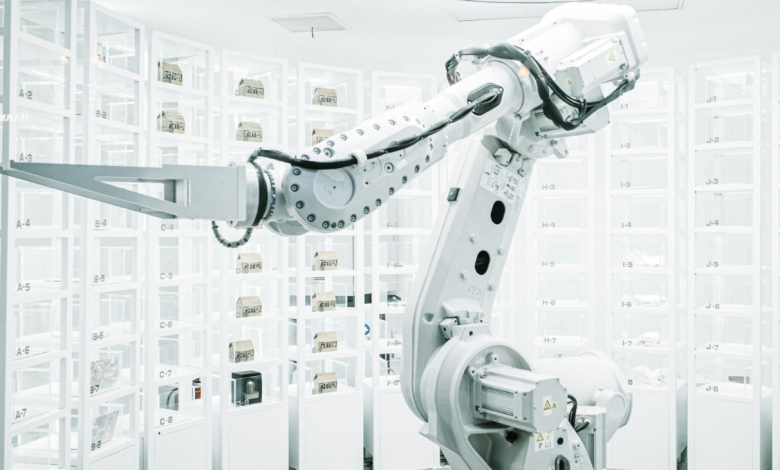
The first piece is automation and robotics. These solutions aren’t about reducing pharmacy staffing; they’re about taking the cognitive, temporal, and repetitive administrative burdens off them so that pharmacists can practice at the top of their license, contributing to higher value activities that help to drive improved clinical and operational outcomes.
The second piece is data. And this isn’t just dashboards, but real and true insights:
- What’s on the shelf?
- What’s about to expire?
- What’s being used in unexpected ways?
- When will a shortage hit?
That’s where predictive analytics start to make a real difference. Instead of responding to a crisis, you can see it coming and effectively plan around it.
And the third piece is interoperability. It sounds like a technical detail, but in practice it means something simple: ensuring visibility across a growing health system. Now central pharmacy can see what’s happening on nursing floors or anticipate what the surgical department will need for the next week, for example, helping to break down silos through a consistent, connected flow of data.
As more care shifts outside the hospital to outpatient sites, infusion centers, specialty clinics, and eventually the home, medication management needs to follow. That’s where interoperability becomes even more important. A patient should experience the same level of medication dispensing safety regardless of where they receive care. The industry is moving toward a more connected ecosystem, where the right medication reaches the right place and the right patient at the right time with far less manual effort behind the scenes and fewer opportunities for mistakes.
Why Predictive AI Matters, and Where We Need to Be Careful
In the past, medication management has been reactive. A cabinet runs low on a medicine or supply item and someone calls central pharmacy for a refill. A shortage hits, and teams scramble to adapt. AI can help us break that cycle, surfacing early warnings, identifying usage patterns, and helping health systems make better decisions about how to allocate resources.
Home Depot’s system will anticipate the need for snow shovels in certain regions in November. They can then tell you not only whether your local store has one, but exactly what isle, shelf, and exact bin it is located in. Simple, predictable, and efficient. There is no reason healthcare shouldn’t expect the same level of visibility and predictability for life-saving medications.
But I’m also very aware of the limits. Healthcare is full of unexpected variables. AI should augment human judgment, not override it. The role of a pharmacist or nurse is irreplaceable. If the technology doesn’t make their work easier and safer, we’ve missed the mark.
What the Next Decade Could Look Like
As I look ahead, the technologies I expect to be most disruptive aren’t necessarily the flashiest. They’re the ones that create a sense of continuity across the medication-use process, like:
- Robotics that can support more complex workflows and ease cognitive and temporal burdens
- AI models that don’t just predict demand but support individualized clinical decisions
- A fully traceable medication journey, from manufacturing through every point of care
If we achieve these, the impact will extend far beyond pharmacy. It will change how healthcare operates.
Autonomous medication management isn’t about removing the human element. It’s about giving people time back to focus on what matters most. AI and automation are powerful tools, but their greatest value is in enabling clinicians to most efficiently and effectively return to the humanity of their work.